


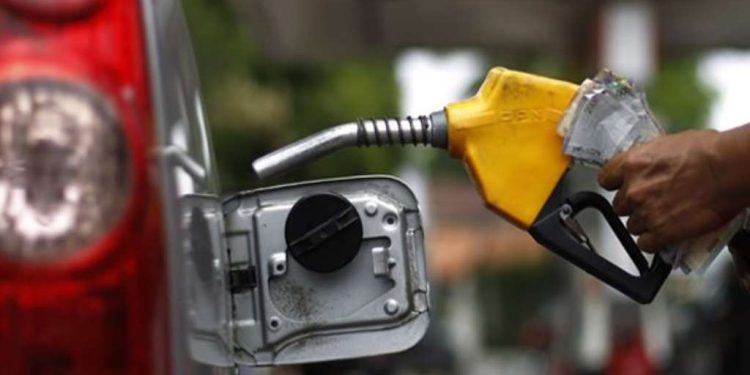
Renewed pressure at the fuel pumps looms as international oil prices edge towards US$90 per barrel, raising questions about whether government may be forced to intervene to cushion consumers if the trend persists.
Brent crude rose to about US$88.50 per barrel on Friday, August 14, amid renewed concerns about disruptions to global oil supplies. The benchmark has also traded around the US$90 mark in recent days.
For Ghana, higher global crude prices matter because petroleum products are priced within a deregulated market.
Under the National Petroleum Authority’s pricing framework, petrol, diesel and LPG prices reflect international market prices and other components of the price build-up, including exchange rates, taxes, levies and margins. The NPA sets price floors, while Oil Marketing Companies determine their actual pump prices.
That means sustained increases in international petroleum prices, particularly if accompanied by exchange-rate pressures, could eventually feed through to pump prices.
What is happening to petrol prices?
The latest NPA figures indicate that the price floor for petrol has fallen in the second pricing window of August, from GH¢14.53 to GH¢13.92 per litre.
That represents a reduction of GH¢0.61 per litre, or 4.2%.
LPG has also recorded a marginal decline, with its price floor falling from GH¢11.06 to GH¢10.98 per kilogram, a reduction of GH¢0.08, or about 0.7%.
At first glance, these reductions appear positive for consumers. But the picture is more complicated.
The NPA’s price floor is a minimum benchmark and does not represent the final price motorists necessarily pay at the pump.
The floor excludes components such as premiums charged by International Oil Trading Companies, the operating margins of Bulk Import, Distribution and Export Companies, as well as marketers’ and dealers’ margins. These are determined separately.
This explains why some Oil Marketing Companies may sell petrol above the NPA floor even when the official benchmark has declined.
Why is government intervention back?
The immediate concern is the direction of international oil prices.
If Brent crude remains close to or moves decisively above US$90 per barrel, the cost of importing refined petroleum products could rise. That could put upward pressure on domestic pump prices in subsequent pricing windows.
The pressure is particularly important because government has already intervened on diesel, while petrol is currently more exposed to market movements.
In August, government directed a GH¢2-per-litre reduction in the regulatory margin on diesel for one month as part of measures to cushion consumers from rising fuel prices.
The intervention effectively creates a contrast between the two major transport fuels: diesel is receiving temporary policy support, while petrol is being left more directly to market forces.
That could become politically and economically difficult if petrol prices begin rising sharply.
Who is affected?
The first and most visible impact will be on motorists. But the consequences are much broader.
Petrol is a critical input into Ghana’s transportation and distribution system. Higher fuel costs can increase the cost of moving people and goods, putting pressure on transport fares and the operating costs of businesses.
For households, this could translate into higher expenditure on transportation and potentially higher prices for goods and services as businesses pass some of their additional logistics and operating costs on to consumers.
Small businesses and informal operators could be particularly vulnerable because they often have less room to absorb increases in operating costs.
The wider concern, therefore, is not simply how much it costs to fill a tank, but how sustained increases in fuel prices could feed into the broader cost of living.
What the diesel movement tells us?
Diesel is already moving in the opposite direction to petrol and LPG.
Its price floor increased from GH¢14.97 to GH¢15.19 per litre in the second August pricing window—a rise of GH¢0.22, or 1.5%.
The increase comes after government intervention had previously pushed the diesel floor down from GH¢16.97 to GH¢14.97 per litre.
This suggests that, even with policy support, market pressures can begin to reassert themselves as international prices and other pricing components change.
It also highlights the temporary nature of government interventions.
Petrol could become the next pressure point
The key issue is what happens if global oil prices continue rising.
Ghana’s petroleum pricing system is designed to allow international market movements to feed through to domestic prices.
That helps reduce the fiscal burden associated with permanently subsidising petroleum products, but it also means consumers bear more of the immediate impact when global prices rise.
Government has previously used temporary interventions to moderate those increases. In April, for example, it announced measures to absorb part of rising petroleum costs, including GH¢2 per litre on diesel and GH¢0.36 per litre on petrol.
Those interventions demonstrate that government has policy tools available when market conditions become particularly difficult.
The question is whether those tools will be deployed again—and whether petrol will be included—if international crude prices remain elevated.
What is the way forward?
The next few weeks will be critical. Three factors will largely determine the direction of petrol prices:
First, international oil prices. A sustained rise in Brent crude would increase the cost of petroleum imports and place upward pressure on domestic prices.
Second, the cedi-dollar exchange rate. Because petroleum products are traded internationally in US dollars, movements in the cedi can either amplify or offset changes in global oil prices.
Third, government policy. If market pressures translate into sharp increases at the pump, government will have to decide whether to allow the full cost to pass through to consumers or temporarily reduce some margins, taxes or levies to provide relief.
The trade-off will not be easy. An intervention could protect households and businesses from a sudden increase in fuel costs, but prolonged support could also place pressure on government revenues, petroleum-sector margins or public finances.
For now, the lower petrol price floor in the second August window provides some breathing room. But with Brent crude hovering close to US$90 a barrel, that relief could prove temporary if global oil prices continue their upward trajectory.
The immediate issue is not that petrol prices have already surged because of the latest NPA price-floor adjustment -they have not. Rather, the risk is that rising international oil prices could trigger fresh increases in the coming pricing windows.
If that happens, the pressure on motorists could quickly become pressure on transport operators, businesses and households.
And that is where the policy question becomes unavoidable.
How much of the next oil-price shock will consumers be expected to absorb, and when will government decide that the economic cost of doing nothing is greater than the cost of intervening?
