


Vice President Prof. Jane Naana Opoku-Agyemang has commended Muslim women teachers for their invaluable contribution to Ghana’s education and national development, describing their role in shaping the minds, character, and aspirations of children as critical to building a responsible and prosperous society.
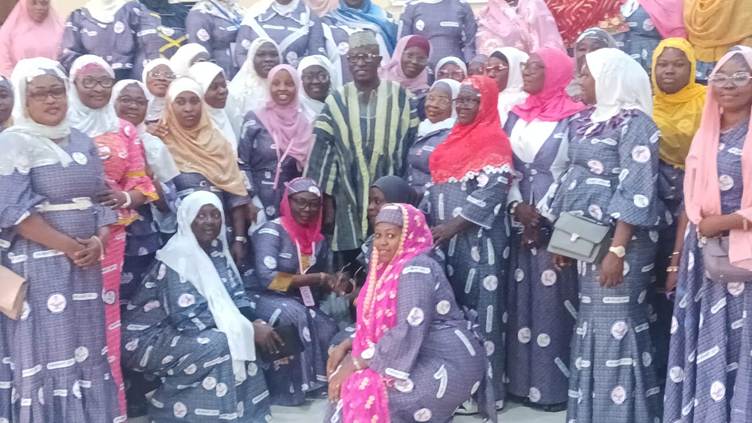
The Vice President made the commendation in remarks delivered on her behalf by the Presidential Coordinator for Zango and Inner-City Development, Alhaji Baban Lami Abu Sadat, who represented her at the Muslim Women in Teaching Conference at Ho in the Volta Region.
Prof. Opoku-Agyemang said teaching was one of the noblest callings in society because teachers do more than impart academic knowledge; they help shape minds, nurture confidence, build character, and open doors of opportunity for young people.
She paid particular tribute to Muslim women teachers, noting that their presence and leadership in the classroom carried an important message for the girls they teach.
“For Muslim women teachers, that example is even more powerful,” she said, stressing that they demonstrate every day that faith, education, professionalism, and leadership can exist together.
The Vice President said every girl who sees a woman confidently standing before a classroom is presented with a possibility for her own future.
She therefore urged Muslim women teachers not to underestimate the influence they have on their pupils, saying a kind word from a teacher could change a child’s life, while a teacher’s encouragement could awaken a dormant ambition.
She observed that a woman teacher who believes in a child could give that child the courage to believe in herself or himself, highlighting the profound responsibility teachers carry in preparing children to become confident, responsible and productive adults.
Prof. Opoku-Agyemang also reaffirmed the government’s recognition of the importance of teachers to the development of the country’s education system.
She said no education system could progress without committed, well-prepared and professionally supported teachers, pointing to teacher professional development, continuous training, professional standards and improved teaching and learning as important components of Ghana’s national education agenda.
The Vice President encouraged Muslim women teachers to continue serving as role models for young people and to use their positions to promote education, confidence, independence, and leadership among the next generation.
She also called on the participants to build networks of support, share their experiences, and strengthen one another, describing their collective voice and experience as valuable to the future of education in Ghana.
She commended the organisers for creating a platform to celebrate Muslim women in the teaching profession and expressed appreciation to all Muslim women who continue to serve the nation through education.
“May your commitment inspire generations. May your classrooms remain places of possibility. And may your service continue to contribute to a more educated, confident and prosperous Ghana,” she said.
The conference therefore provided an opportunity not only to celebrate the contribution of Muslim women teachers to education but also to reinforce the broader values of responsible leadership, tolerance and peaceful coexistence that are essential to preparing Ghana’s children to become responsible citizens and ensuring a stable future for the country.
