


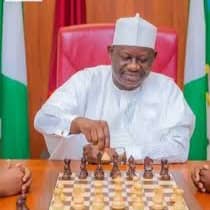
President of the Nigeria Chess Federation (NCF), Senator Ibrahim Hassan Dankwambo, has pledged to develop a more inclusive and professional chess ecosystem capable of nurturing talent from the grassroots through to the highest levels of the sport.
READ ALSO: Chess Federation President Ibrahim Dankwambo Declares: Improvement In Athletes’ Welfare Is Changing Nigeria’s Sports Narrative
Dankwambo said the federation’s development strategy will place strong emphasis on schools, grassroots communities and higher educational institutions, creating a structured pathway for young players to progress in the sport.
The NCF’s official development mandate already identifies grassroots development, education and outreach as key priorities, including programmes designed to promote chess in schools and communities.
According to Dankwambo, the federation wants to ensure that talented players are identified early and given the coaching, competition and support required to develop their abilities.
He stressed the importance of building a system that connects grassroots participation with opportunities at state, national and international levels.
«”Our goal is to build an inclusive, dynamic and highly professional chess ecosystem that nurtures talent from the grassroots through schools and higher institutions.”»
The federation’s renewed focus on education also aligns with a wider international push to integrate chess into learning. FIDE declared 2026 the Year of Chess in Education, highlighting the role of chess in developing cognitive and social skills among young people.
Nigeria has also strengthened its position on the international chess calendar after hosting the FIDE World Amateur Rapid and Blitz Chess Championships in Abuja in August 2026. The events brought amateur players together from different parts of the world and provided an important platform for Nigerian players and officials.
Dankwambo’s administration intends to use the increased attention around chess to expand participation beyond established players and major tournaments.
The NCF says its broader responsibilities include organising national and zonal competitions, training coaches and arbiters, rating players and representing Nigeria in international chess forums.
With grassroots development, school participation and stronger institutional pathways at the centre of the federation’s plans, the objective is to create a sustainable pipeline capable of producing more Nigerian players, coaches and officials for the future.
The initiative is expected to strengthen chess development at the grassroots while providing young Nigerians with clearer opportunities to progress from school-level participation to national and international competition.
