


There comes a moment in every democracy when citizens must confront an uncomfortable truth about themselves: whether their demand for accountability is genuine or merely a convenient political slogan. Ghana may be approaching such a moment. We cannot spend years lamenting corruption, alleged abuse of public resources, procurement irregularities and the dissipation of national assets, only to become uneasy when institutions begin asking hard questions about who did what, who benefited, and whether anything belonging to the Ghanaian people can actually be recovered.
President John Dramani Mahama returned to power on the back of several major political promises, one of the most popular being the commitment to recover public resources believed to have been unlawfully acquired or misapplied. Operation Recover All Loot, popularly known as ORAL, became a powerful symbol of that promise. In the December 2024 elections, Ghanaians gave Mahama and the National Democratic Congress a decisive mandate for change, and accountability was clearly part of the national mood that shaped that outcome.
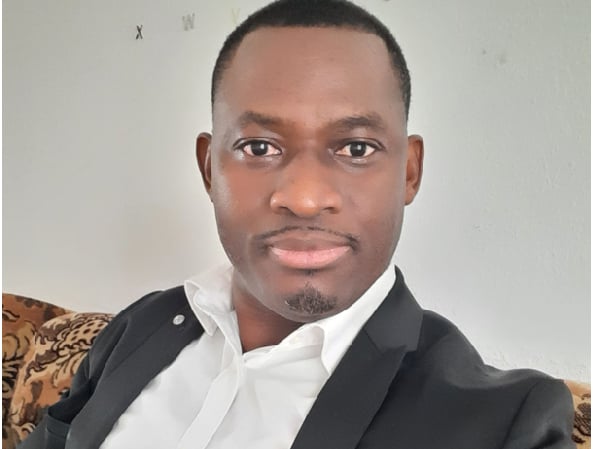
I personally participated in that democratic exercise and voted for change from the previous Akufo-Addo administration. I do not write as a detached observer who suddenly discovered an interest in governance after the elections. Like millions of citizens, I wanted a change in direction, stronger accountability, responsible economic management and a genuine resetting of institutions that many Ghanaians had increasingly lost confidence in.
But now that accountability processes are beginning to bite, a more difficult question must be asked: do Ghanaians truly want allegedly looted resources recovered, or are some of us only comfortable with accountability when it targets political opponents? This question goes beyond the NDC and NPP. It speaks directly to the credibility and maturity of our democracy.
Accountability Cannot Become Political Convenience
Since ORAL-related investigations and prosecutions began gaining momentum, a familiar political narrative has re-emerged from sections of the opposition. We are hearing increasing claims of political persecution, witch-hunting, selective justice and intimidation of political opponents. These concerns cannot be dismissed simply because they come from the opposition. Ghana must never replace one form of injustice with another, and no citizen should be prosecuted merely for belonging to a previous administration. Equally, no one should be presumed guilty because a politician or public official says so. Ultimately, it is the courts, not political actors, that must determine criminal responsibility based on admissible evidence.
However, the opposite principle must also hold firmly: political affiliation cannot become immunity from investigation or prosecution. If credible evidence suggests that public funds were misappropriated, public property was improperly transferred, procurement rules were abused, or state resources were unlawfully diverted for private benefit, then Ghana has a duty to investigate. Whether a suspect belongs to the NPP, NDC or any other political tradition should neither convict nor protect that person.
It is in this context that the recent debate over the continuation of criminal trials during the legal vacation deserves careful reflection. On 10 August 2026, the Ghana Bar Association raised concerns about lawyers being required to appear during the legal vacation and cautioned against departures from established judicial practice. While the GBA acknowledged the role of Vacation Courts in handling urgent matters, it expressed concern about continuing trials where counsel had indicated unavailability. I respect the Ghana Bar Association as a key institution in our democratic system, but I find the broader implications of its position troubling.
Legal tradition matters, and the rights of accused persons matter. Lawyers must be given reasonable opportunity to prepare and represent their clients effectively. At the same time, the justice system must confront a painful Ghanaian reality: some major cases take far too long to conclude. Justice delayed is not merely an inconvenience to the prosecution; it can become injustice to the accused, to victims, and ultimately to the Republic itself.
Speedy Justice Is Not the Same as Selective Justice
Chief Justice Paul Baffoe Bonnie now leads the Judiciary at a critical moment in Ghana’s democratic development. The Judicial Service itself has identified efficiency and improved case management as key institutional priorities. It should therefore not be controversial for the Judiciary to explore lawful and structured ways of ensuring that serious cases are concluded without unnecessary delay.
A clear distinction must be made between rushed justice and speedy justice. Rushed justice undermines fairness and risks wrongful outcomes, while speedy justice removes avoidable delays while still protecting the constitutional rights of all parties. Ghana must reject the former while demanding the latter.
This is why the arguments advanced by Deputy Attorney General Dr. Justice Srem Sai deserve serious consideration. Lawyers are central to the justice system, but the system cannot be organised solely around professional convenience at the expense of broader public interest. Courts exist to administer justice, and reasonable reforms aimed at improving efficiency should not automatically be interpreted through partisan lenses.
In fact, an innocent accused person should ordinarily have as much interest in a timely trial as the state. If the prosecution’s case is weak, a prompt trial exposes that weakness and leads to acquittal. If the evidence is strong, then justice must be allowed to take its course without unnecessary obstruction. What Ghana cannot afford is a system where serious accountability cases are endlessly delayed through adjournments, procedural manoeuvres, and competing political narratives of persecution.
We Cannot Reset Ghana Selectively
President Mahama has repeatedly spoken about resetting Ghana. The Chief Justice is also presiding over a Judiciary under strong public pressure to improve efficiency, accessibility and public confidence. These are separate constitutional roles, but they converge on one national challenge: restoring trust in the ability of the Ghanaian state to function effectively.
The reset agenda cannot succeed if it becomes merely rhetorical. For years, Ghanaians complained about corruption, economic hardship, questionable public expenditure, abandoned projects, losses in state institutions and weak accountability under previous administrations. These concerns contributed significantly to the demand for change in December 2024. We cannot now afford selective amnesia simply because the political environment has shifted.
At the same time, the ORAL initiative will only retain legitimacy if it remains firmly anchored in evidence, due process and the rule of law. The Attorney General must pursue cases that can withstand scrutiny in court, not cases designed for political theatre. State institutions must pursue recovery without humiliation, sensationalism or predetermined guilt.
Let the evidence speak. Let accused people defend themselves. Let lawyers vigorously represent their clients. Let judges interpret the law independently. And when courts finally reach a decision, let Ghana respect it. That is what genuine democratic accountability looks like.
Ghana Is Bigger Than NDC and NPP
One of the greatest obstacles to Ghana’s progress is our tendency to interpret nearly every national issue through partisan lenses. When our party is in opposition, corruption becomes intolerable. When our party is in power, accountability suddenly becomes complicated. When opponents are prosecuted, we celebrate the rule of law. When our own are investigated, we quickly discover political persecution.
A country cannot develop sustainably under such double standards. The NDC will not govern Ghana forever, just as the NPP has not governed forever. The accountability standards we accept today will inevitably be applied to others tomorrow. That is precisely why the system must be fair, independent, lawful and effective rather than politically convenient.
My support for the current resetting agenda does not mean the Mahama administration should be beyond criticism. On the contrary, those of us who want this government to succeed must demand higher standards from it. If officials of this administration abuse public resources, they too must face the same institutions we are strengthening today. That is how strong democracies are built.
So I return once again to the central question: do Ghanaians genuinely want allegedly looted public resources recovered, or are we only comfortable with recovery until accountability reaches our political doorstep? Every citizen must answer this honestly.
We have only one Ghana. Money lost through corruption is not NDC money or NPP money. It is national wealth that could have built hospitals, improved schools, strengthened infrastructure, supported farmers, created jobs, protected the environment and given hope to the next generation.
Let investigations proceed where there is credible evidence. Let trials proceed fairly and without unnecessary delay. Let the innocent be acquitted without stigma and let the guilty face the consequences prescribed by law. Above all, let us remember that Ghana is a shared inheritance entrusted to us not only for today, but for generations yet unborn.
If we truly want accountability, then we must also be willing to accept it when it becomes uncomfortable. Otherwise, we may have to admit that we never truly wanted the loot recovered in the first place.
