


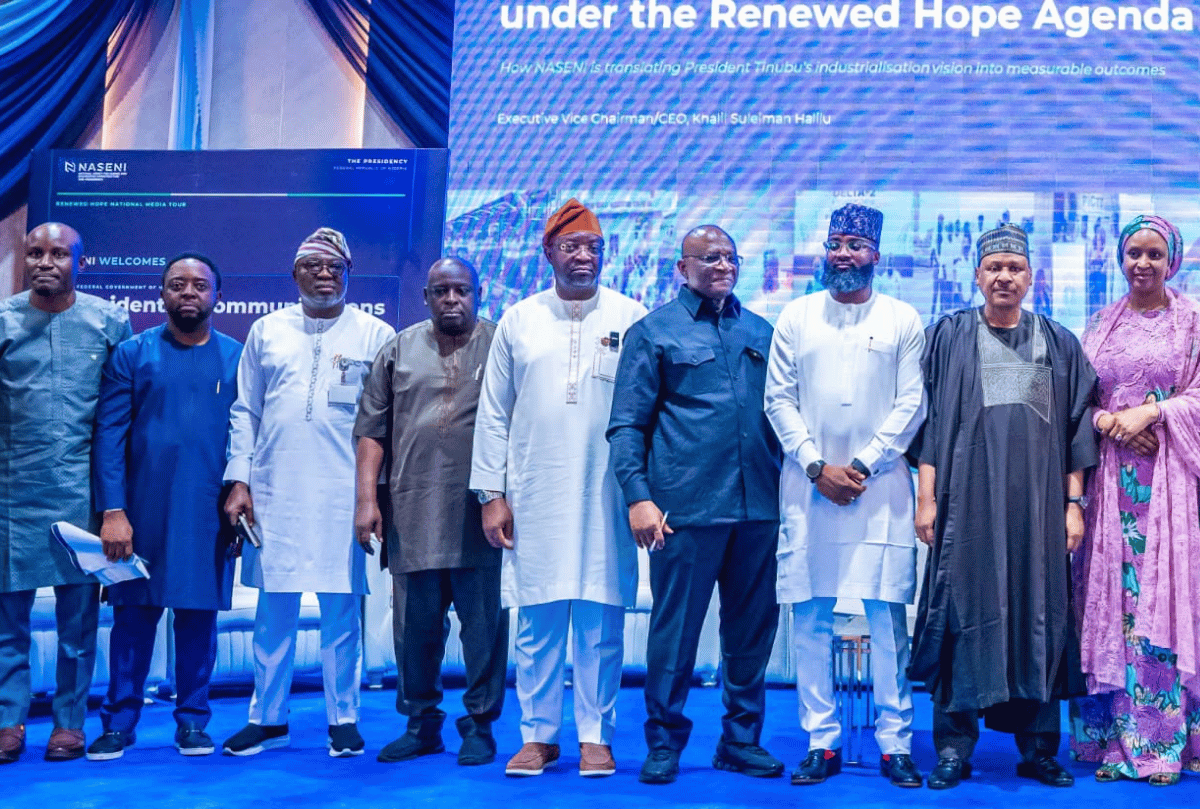
Nigeria and Ghana are taking bold steps to collaborate on groundbreaking digital innovation and technology initiatives, positioning both nations as leaders in Africa’s technological revolution. These efforts are part of broader economic strategies aimed at fostering industrialization, reducing dependency on imports, and creating sustainable job opportunities through science, technology, and engineering.
Nigeria’s Renewed Hope Agenda: Driving Industrialization Through Science and Technology
Nigeria’s Minister of Information and National Orientation, Mohammed Idris, recently highlighted how President Bola Ahmed Tinubu’s Renewed Hope Agenda is translating government policies into actionable projects that drive industrialization, innovation, and economic growth. During a Presidential Media Team Tour of the National Agency for Science and Engineering Infrastructure (NASENI) in Abuja, Idris emphasized that the initiative seeks to demystify government projects for Nigerians, ensuring transparency and accountability.
NASENI, a cornerstone of Nigeria’s industrial transformation, operates across multiple sectors, including:
– Local manufacturing – Boosting domestic production capabilities.
– Renewable energy – Developing sustainable power solutions.
– Agricultural mechanization – Enhancing productivity in farming.
– Digital technology – Accelerating innovation in tech-driven industries.
– Skills development – Equipping the workforce with future-ready competencies.
The Minister underscored that NASENI’s interventions align with Nigeria’s vision of becoming a self-sufficient, innovation-driven economy capable of producing, innovating, and exporting goods. By fostering local value addition and industrial competitiveness, the agency plays a pivotal role in shifting Nigeria from a consumer-driven economy to a producer and exporter nation.
“We want Nigerians to see for themselves how government policies translate into tangible projects, jobs, innovation, and opportunities. Transparency is strengthened when institutions engage the public, and accountability is enhanced when citizens can verify progress. Our goal is clear: to transform Nigeria into a nation of producers, innovators, and exporters.”
— Mohammed Idris, Honourable Minister of Information and National Orientation, Federal Ministry of Information and National Orientation, Nigeria
NASENI’s Industrialization Strategy: Factories, Technology Transfer, and Global Competitiveness
Under the leadership of Khalil Suleiman Halilu, Executive Vice Chairman and CEO of NASENI, the agency has implemented a practical industrialization strategy focused on:
– Local manufacturing – Designing products tailored to Nigeria’s market needs.
– Technology transfer – Bridging gaps between research and commercial applications.
– Healthcare innovation – Developing homegrown medical solutions.
– Research commercialization – Turning scientific breakthroughs into marketable products.
NASENI’s projects now span eight key industrial sectors across Nigeria’s six geopolitical zones and the Federal Capital Territory (FCT). A notable achievement is the establishment of over 20 factories in a short period, demonstrating the agency’s commitment to sustainable industrial growth.
“Our strategy is to build industries that design, assemble, and manufacture products locally—gradually increasing local content until these factories can compete globally. This approach has allowed us to establish more than 20 factories in record time.”
— Khalil Suleiman Halilu, Executive Vice Chairman and CEO, NASENI
Ghana’s Digital Transformation: A Parallel Push for Technological Sovereignty
While Nigeria’s NASENI drives industrialization, Ghana is also making significant strides in digital innovation and technology integration. The Ghanaian government, under President Kwame Nana Akufo-Addo, has prioritized digital transformation as a key pillar of economic growth, focusing on:
– Digital infrastructure development – Expanding high-speed internet and smart city initiatives.
– Fintech and blockchain adoption – Strengthening Ghana’s position as a regional fintech hub.
– AI and data-driven governance – Enhancing public service delivery through technology.
– Youth empowerment through tech skills – Bridging the digital skills gap.
Recent collaborations between Nigerian and Ghanaian tech leaders suggest joint ventures in digital innovation, including:
– Cross-border tech incubators to nurture startups.
– Shared research and development (R&D) hubs for African solutions.
– Cybersecurity frameworks to protect digital economies.
The Broader African Tech Collaboration: A Model for Continental Growth
Both Nigeria and Ghana recognize that regional cooperation in technology is essential for Africa’s economic future. By combining Nigeria’s industrialization expertise with Ghana’s digital innovation leadership, the two nations can:
– Reduce redundant investments in tech infrastructure.
– Create a unified African tech market for software, hardware, and digital services.
– Attract foreign direct investment (FDI) in pan-African tech ventures.
Key Takeaways: How Nigeria and Ghana Are Leading Africa’s Tech Revolution
- Nigeria’s NASENI is accelerating industrialization through local manufacturing, renewable energy, and tech-driven agriculture.
- Ghana’s digital push focuses on smart governance, fintech, and AI-driven economic growth.
- Joint initiatives in tech innovation could boost Africa’s global tech competitiveness.
- Transparency and public engagement are critical in ensuring that government tech investments deliver real economic benefits.
As both nations advance their technological agendas, their collaboration could serve as a blueprint for other African countries seeking to leverage science, technology, and innovation for sustainable development.
