


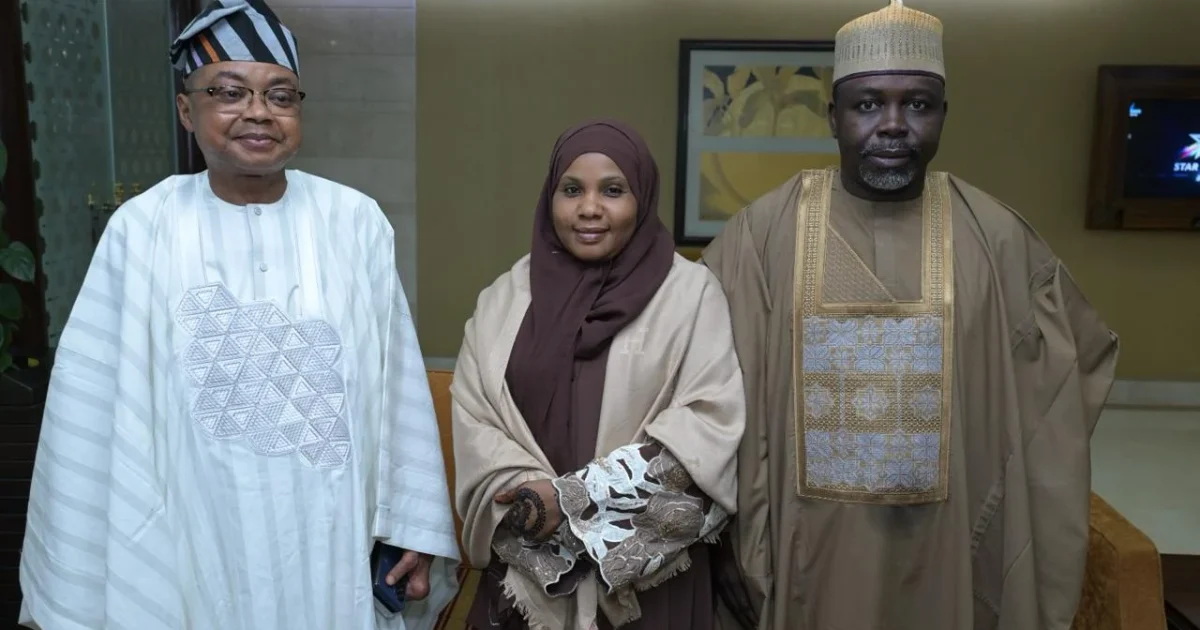
On Thursday, July 23, 2026, Ambassador Saidu Dahiru Muhammad officially assumed the role of Nigeria’s High Commissioner to India, marking a significant milestone in the country’s diplomatic engagements with one of its most strategically important partners. Accompanied by his wife, Rukayya SD Muhammad, the newly appointed envoy arrived in New Delhi days prior to his swearing-in ceremony, where he was warmly received by a delegation comprising Nigerian High Commission officials, representatives from India’s Ministry of External Affairs, members of the Nigerian diaspora community, and African diplomatic missions accredited to India.
A Decade-Long Connection: From Student to Diplomat
Muhammad’s return to India was not his first. The seasoned diplomat recounted his two-decade-long relationship with the country, beginning as a young officer preparing for promotion exams in 2004. His subsequent visits—including in 2009, 2010, 2012, and 2015—for regional engagements such as the IPPIS verification exercises and further professional assessments underscored his deep familiarity with India’s diplomatic landscape.
Speaking at the welcoming reception at Indira Gandhi International Airport, Muhammad expressed gratitude for the divine grace that allowed him to return as Nigeria’s substantive High Commissioner, a position he described as a fulfillment of destiny. His emotional address resonated with the audience, particularly as he recounted how his early years in India had shaped his understanding of the nation’s cultural richness, economic potential, and diplomatic significance.
A Pledge of Inclusivity and Collaboration
In his inaugural address to High Commission staff, Nigerian expatriates, and diplomatic colleagues, Muhammad emphasized a commitment to inclusivity, transparency, and collaborative governance. He assured all stakeholders that his tenure would be characterized by open dialogue, collective problem-solving, and a zero-tolerance policy for exclusion.
“The only thing I can say to you is that I can assure you that nobody is going to be left out in terms of working relationship.”
This pledge reflected his philosophy of service, rooted in the words of former Nigerian President Muhammadu Buhari, whom he described as a mentor and father figure. Muhammad articulated that his approach to leadership would be context-driven, ensuring that decisions prioritize national interest over personal considerations.
Strengthening Nigeria-India Bilateral Ties: Trade, Investment, and People-to-People Relations
Nigeria and India have long maintained cordial diplomatic relations, built on shared historical ties, cultural exchanges, and mutual economic interests. However, Muhammad acknowledged that bilateral trade remains imbalanced, with India being a net importer of Nigerian commodities such as crude oil, cocoa, and agricultural products, while exporting manufactured goods, pharmaceuticals, and technology.
To address this disparity, the new High Commissioner outlined key priorities for his tenure:
1. Expanding Trade and Investment Opportunities – Leveraging India’s growing middle class and industrial capacity to attract Nigerian exports while facilitating Indian direct investments (FDI) in Nigeria’s infrastructure, technology, and renewable energy sectors.
2. Enhancing Educational and Cultural Exchanges – Promoting scholarship programs, joint research initiatives, and cultural festivals to deepen people-to-people ties.
3. Strengthening Diplomatic and Security Cooperation – Collaborating on counter-terrorism efforts, cybersecurity, and regional stability in Africa and South Asia.
4. Supporting the Nigerian Diaspora in India – Ensuring legal protections, consular services, and economic empowerment for the over 100,000 Nigerians residing in India, many of whom are students, professionals, and entrepreneurs.
Empowering the Nigerian Community: A Call to Resilience and Self-Belief
In a motivational address to Nigerians in India, Muhammad urged the community to maintain a positive mindset and embrace self-reliance. Citing poetic verses on mindset, he emphasized that perception shapes reality, encouraging the diaspora to overcome challenges with resilience and determination.
“One’s outlook in life often determines the outcome of one’s efforts. If you believe in yourself, you can achieve the impossible.”
His words resonated deeply with Hilary Okeke, President of the All India Nigeria-India Students and Community Association (AINISCA), who welcomed the ambassador on behalf of the Nigerian expatriate community. Okeke praised Muhammad’s vision for strengthened ties and commended the Nigerian High Commission’s consistent support to students and professionals in India.
“The Nigerian community in India has long awaited this moment. We are confident that Ambassador Muhammad’s leadership will usher in a new era of collaboration, economic growth, and mutual prosperity.”
A Welcoming Reception: Symbolizing Unity and Goodwill
The formal welcoming ceremony at the Nigeria High Commission in New Delhi was attended by high-ranking Indian officials, African ambassadors, and Nigerian diplomatic personnel. Among the notable guests was Ambassador Aloyz Bizindavyi of Burundi, who represented other African nations accredited to India.
The event was marked by traditional Nigerian hospitality, including a cultural performance, flag-raising ceremony, and a symbolic exchange of gifts. The Minister Counsellor at the Nigerian High Commission, Abbas Abdullahi, and other senior staff members played pivotal roles in ensuring a smooth transition for the new envoy.
Looking Ahead: A Roadmap for Nigeria-India Relations
As Nigeria’s first substantive High Commissioner to India in recent years, Muhammad’s appointment signals Nigeria’s renewed commitment to deepening its engagement with India. His diplomatic toolkit includes:
– Economic Diplomacy – Negotiating preferential trade agreements and investment protection treaties.
– Youth and Education Diplomacy – Expanding scholarship programs and skill development initiatives for Nigerian students in India.
– Crisis Management – Strengthening consular services for Nigerians facing legal or economic challenges in India.
– Regional Cooperation – Facilitating African-India partnerships on climate change, digital transformation, and sustainable development.
Conclusion: A New Chapter in Nigeria-India Relations
With Saidu Dahiru Muhammad at the helm, Nigeria’s diplomatic presence in India is poised for significant growth. His proactive leadership, inclusive governance style, and long-standing familiarity with India’s political and economic landscape position him as a key architect of Nigeria’s bilateral agenda.
As the new High Commissioner settles into his role, the Nigerian community in India, diplomatic partners, and economic stakeholders can expect heightened collaboration, policy innovations, and a more balanced trade relationship—ultimately strengthening the foundations of Nigeria-India friendship for decades to come.
SEO Keywords:
Nigeria High Commissioner to India, Saidu Dahiru Muhammad, Nigeria-India bilateral relations, Nigerian diaspora in India, trade and investment between Nigeria and India, Nigerian High Commission New Delhi, African diplomacy in India, Nigerian expatriates in India, economic cooperation Nigeria India, Nigerian scholarships in India, Nigeria India cultural exchange, Nigerian trade balance with India, Nigerian diplomatic missions in India, Nigeria India economic partnership, Nigerian students in India, Nigeria India consular services, Nigeria India political relations, Nigeria India trade agreements, Nigeria India investment opportunities, Nigeria India diplomatic history, Nigeria India youth diplomacy, Nigeria India renewable energy collaboration, Nigeria India cybersecurity cooperation, Nigeria India counter-terrorism efforts, Nigeria India regional stability initiatives.
