


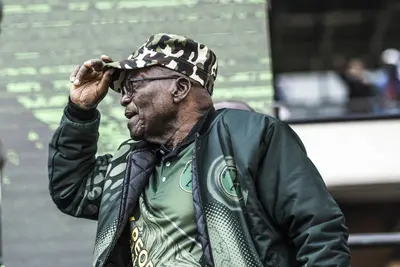
In a decisive move to restore financial accountability within the uMkhonto weSizwe (MK) Party, President Jacob Zuma has assumed full control over the party’s banking operations by revoking the signing authority of all existing officials, including the treasurer-general and secretary-general. The decision, communicated in a letter dated July 23, marks a significant shift in the party’s financial governance, following reports of alleged financial irregularities and mismanagement.
A Direct Intervention to Restore Financial Integrity
The letter, obtained by the Mail & Guardian, outlines Zuma’s authority as both the party president and accounting officer of the MK Party. In it, he explicitly states that the revocation of signing powers is a temporary measure aimed at ensuring “sound financial governance, accountability, and the orderly administration” of the party’s financial affairs.
Zuma’s directive mandates that no existing signatory—regardless of their official position—shall exercise any signing authority on behalf of the party in relation to its bank accounts. Financial institutions holding MK Party accounts are instructed to immediately recognize this suspension, meaning all transactions requiring authorized signatures will be halted until new mandates are communicated.
The letter further emphasizes that once the temporary suspension concludes, a formal announcement will be issued, detailing the reinstatement of signing authority and the new list of authorized signatories responsible for managing the party’s finances moving forward.
Background: Allegations of Financial Misconduct and Rent Defaults
Zuma’s intervention follows growing concerns within the party regarding financial mismanagement. Just two weeks prior, the Sunday World reported that the landlord of an office building rented by the MK Party in Polokwane had issued a strongly worded letter to the party’s administrator, Thabisile Khumalo, demanding immediate vacating of the premises due to unpaid rent.
The letter, reviewed by the Mail & Guardian, underscores a broader pattern of financial irregularities, including potential fund embezzlement by senior party officials. While the exact details of the allegations remain undisclosed, Zuma’s decision suggests a zero-tolerance approach to financial impropriety within the party’s ranks.
A Temporary but Critical Measure
The suspension of signing powers is framed as a precautionary step rather than a permanent one. Zuma’s letter calls for “full cooperation” from all party officials to ensure “continuity, transparency, and the integrity” of the MK Party’s financial management. The directive also signals a structured review process, where new signatories will be duly authorized following a thorough assessment of the party’s financial health.
This move comes at a time when political parties across South Africa are under increasing scrutiny over funding transparency and accountability. By taking direct control of the party’s finances, Zuma aims to prevent further financial losses and restore public trust in the MK Party’s leadership.
Implications for the Party’s Future
The revocation of signing authority is not merely an administrative decision—it is a statement of intent to root out corruption and enhance fiscal responsibility within the party. While the exact timeline for reinstating signatories remains unclear, Zuma’s letter suggests that the process will be rigorous and methodical, ensuring that only trustworthy individuals are granted access to the party’s financial resources.
For now, the MK Party’s banking operations are effectively under Zuma’s personal oversight, a move that could have long-term repercussions on the party’s internal dynamics. Whether this intervention will prevent future financial scandals or spark internal divisions remains to be seen. However, one thing is certain: the era of unchecked financial authority within the MK Party appears to be over.
As the party navigates this critical phase, the Mail & Guardian’s report serves as a cautionary tale about the consequences of financial mismanagement in political organizations—and the necessity of strict oversight to maintain public confidence.
