


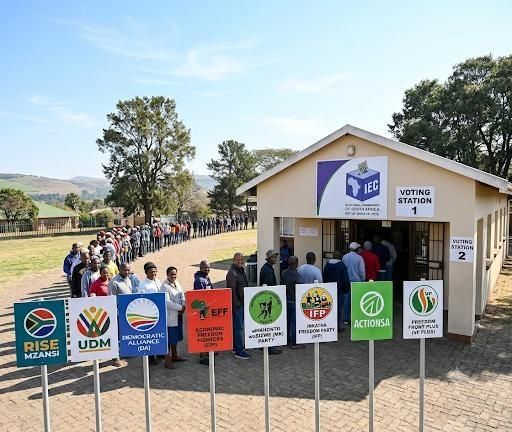
South Africa stands at a critical juncture as it prepares for the November 2024 local government elections, yet the country’s political landscape remains deeply fragmented and disconnected from the everyday struggles of its citizens. With over 500 registered political parties, many experts argue that opposition forces—supposedly the watchdogs of governance—are failing to address the most pressing concerns of ordinary South Africans. Instead, they are often mired in ideological echo chambers, personal ambition, and systemic inefficiency, leaving voters disillusioned and politically homeless.
The Irrelevance of Opposition Parties: A Crisis of Leadership and Representation
Governance expert Professor William Gumede, a political scientist at the University of the Witwatersrand (Wits), has long warned that South Africa’s opposition parties are not just weak—they are irrelevant. In a recent analysis, he described them as “mini-me versions of the ANC and DA,” lacking distinct policies, leadership, or grassroots engagement.
“We have a crisis of opposition parties,” Gumede stated. “They are not fighting for ordinary citizens; they are fighting for their own pockets. Politics has become a business, where parties are treated like family enterprises—passed down from generation to generation, subsidized by state funding through the Independent Electoral Commission (IEC).”
This commercialization of politics has led to a troubling reality: voter disillusionment. According to Afrobarometer data and Ipsos surveys, 47% of South Africans believe no political party truly represents their interests. Meanwhile, 50% of voters feel politically homeless, with many turning to ethnic-based or single-issue parties—such as the Patriotic Alliance (EFF-aligned), National Coloured Congress, Al-Jama-ah, or Freedom Front Plus—as a last resort.
“Why would anyone vote for a party that seems to exist primarily to serve the founder’s family?” Gumede questioned. “If a party’s leadership is more concerned with preserving power for themselves than solving real problems, what incentive do voters have to engage?”
The Wrong Battles: Why Opposition Parties Ignore Core Citizen Concerns
Despite widespread dissatisfaction with governance, opposition parties rarely prioritize the issues that matter most to ordinary South Africans. Gumede highlighted several critical gaps:
- Safety and Crime – South Africa remains one of the most violent countries in the world, yet gangsterism, public transport insecurity, and police ineffectiveness are not daily topics of debate in opposition platforms.
- Public Service Failures – Collapsed hospitals, water shortages, and dysfunctional municipal services plague communities, but opposition parties lack coherent solutions beyond vague promises.
- Economic Despair – With youth unemployment at 63% and economic stagnation, opposition parties fail to propose viable development models that go beyond ideological rhetoric.
“The opposition is making noise about the wrong things,” Gumede argued. “They should be operating at the grassroots, engaging with communities on gang violence, public transport safety, and healthcare—yet they remain stuck in policy echo chambers.”
The Problem of Policy and Leadership Homogeneity
One of the most glaring issues is the lack of differentiation between major parties. The African National Congress (ANC), Democratic Alliance (DA), and Economic Freedom Fighters (EFF) often mirror each other’s policies, with only minor variations in leadership style.
“They say the same things,” Gumede noted. “What does the voter get from this? Absolutely nothing. Even when leaders differ, the policies remain identical—Malema, Zuma, and other opposition figures are often cut from the same cloth.”
This homogeneity extends to leadership quality. Many opposition parties are founded on personal ambition rather than genuine ideological or developmental vision. The Economic Freedom Fighters (EFF), for instance, was created by Julius Malema after his expulsion from the ANC. The United Democratic Movement (UDM) emerged from General Bantu Holomisa’s political career, while the uMkhonto weSizwe (MK) Party was formed by Jacob Zuma—all personality-driven entities rather than ideologically driven movements.
Political analyst Professor Ntsikelelo Breakfast of Nelson Mandela University echoed this concern, stating that many parties suffer from “double standards”—where leaders are untouchable within their own organizations.
“Take Malema,” Breakfast said. “The EFF would never demand accountability from him, yet they demanded answers from Floyd Shivambu for visiting a fugitive. The same goes for Zuma—when he praised the Guptas, the MK Party didn’t hold him to account. This inconsistency erodes trust.”
The Rise of Ethnic and Single-Issue Politics
With mainstream parties failing to deliver, voters are increasingly turning to ethnic or identity-based politics. Parties like the Patriotic Alliance (EFF-aligned), National Coloured Congress, and Freedom Front Plus cater to specific demographic groups, reflecting a lack of broad-based representation.
“Citizens are asking: ‘If no party delivers for me, will a party from my own group at least try?’” Gumede explained. “This is a sign of desperation—a sign that the political system has failed to provide meaningful alternatives.”
Why Do Opposition Parties Keep Failing?
Two key factors contribute to this crisis:
- Opportunistic Leadership – Many political elites prioritize re-election over substantive policy, focusing on maintaining power rather than addressing systemic issues.
- Lack of Grassroots Engagement – Opposition parties rarely connect with voters at a local level, instead relying on top-down campaigning that fails to resonate with everyday struggles.
Professor Siphamandla Zondi, a political analyst at the University of Johannesburg, described this dynamic as “political hyenas”—figures who exploit public sentiment for short-term gains rather than building sustainable movements.
“Former President Thabo Mbeki called them ‘imigodoyi’—scoundrels who only think about the next meal,” Zondi said. “These politicians lack the patience to study constituencies, craft meaningful platforms, or harness public protests into real political change.”
The Way Forward: Building a Meaningful Opposition
Experts agree that real change requires three key shifts:
- Quality Leadership Over Personal Ambition – Parties must prioritize competent, accountable leaders who put public interest before personal gain.
- Grassroots Engagement – Opposition forces must operate at the local level, addressing safety, service delivery, and economic despair—not just ideological debates.
- Ideological Clarity – Instead of echoing ANC or DA policies, opposition parties must develop distinct visions for development, jobs, and governance.
“We need the best of society—entrepreneurs, activists, and professionals—to lead public life,” Zondi argued. “The quality of our politics depends on the quality of our leaders.”
The November 2024 Elections: A Test of Political Will
As South Africa heads to the polls, the local government elections present a critical opportunity—but also a warning. If opposition parties continue to ignore grassroots concerns, prioritize personal power, and fail to differentiate themselves, voters will keep abstaining or turning to ethnic-based alternatives.
“The question is whether political elites will finally listen,” Breakfast concluded. “Or will they continue to treat politics as a family business, leaving ordinary citizens to suffer the consequences?”
The answer will shape South Africa’s future—not just in November, but for decades to come.
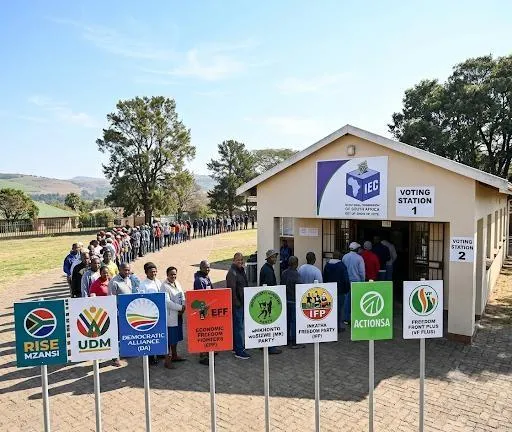
[A visual representation of South African political party leaders addressing a crowd, highlighting the disconnect between politicians and citizens.]
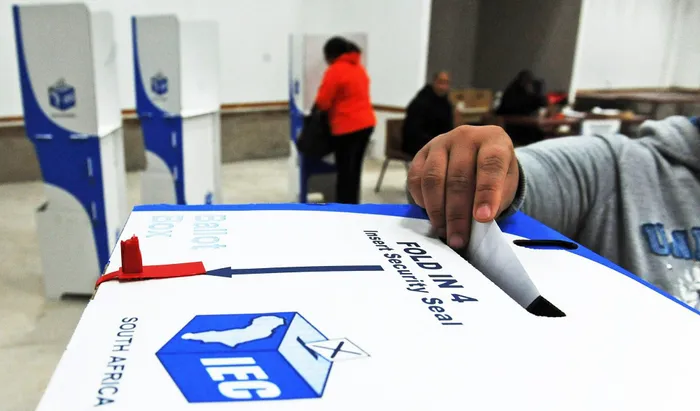
[A chart comparing voter disillusionment across political parties, showing declining trust in mainstream opposition forces.]
[A map of South Africa’s local government regions, emphasizing the upcoming November 2024 elections and their potential impact on governance.]
