


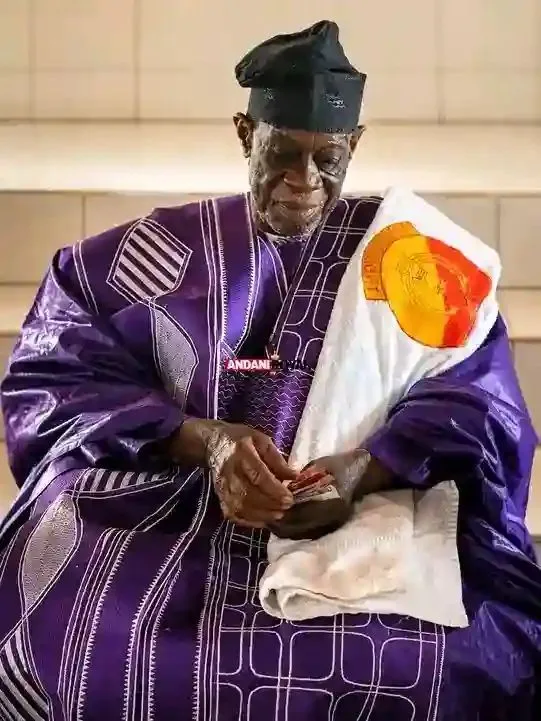
By Murtala Issah
There is something striking about the life of Major (Rtd.) Sulemana Abubakari.
He spent much of his adult life as a soldier, serving Ghana and rising through the ranks to command the Armoured Reconnaissance Regiment. Years later, he would occupy one of the most important traditional skins in Dagbon, the Tolon skin, historically associated with the defence of the kingdom.
In between those two lives was an 18 year exile.
Major Sulemana was born in 1943 at Tali in the Tolon area and came from a family associated with the Tolon skin. He joined the Ghana Armed Forces in the early 1960s and rose through the ranks. By 1980, he was commanding the Armoured Reconnaissance Regiment.
His military career unfolded during one of the most turbulent periods in Ghana’s history, when the armed forces were increasingly drawn into national politics. He was reportedly the commander of the Armoured Reconnaissance Regiment during the May 15, 1979 mutiny involving Flight Lieutenant Jerry John Rawlings and his colleagues.
But it was the political upheavals that followed that which would dramatically change his life. In 1982, during the PNDC era, Major Sulemana was forced into exile.
For almost two decades, Ghana was no longer home.
He eventually returned to the country in 2000, following the return to constitutional rule.
His return marked another extraordinary turn in his life. In 2001, President John Agyekum Kufuor appointed him to the National Security Advisory Corps, bringing the former soldier back into service to the nation in security cycles.
But there was another responsibility waiting for him.
Major Sulemana’s father, was Tolon Naa Alhassan Sulemana who died in 1998 while his son was still in exile. After returning home, Major Sulemana became Regent of Tolon in 2001, and held the title for 18 years.
In 2019, after the completion of his father’s funeral rites, he was enskinned as the substantive Tolon Naa by Yaa Naa Abukari Mahama II. The former military officer, became the traditional custodian of a skin whose history is deeply connected with warfare and the defence of Dagbon.
The soldier who went into exile, returned home to become a chief in a changing Dagbon. Major Sulemana became Tolon Naa at a significant moment in Dagbon’s history. His military background gave him an unusual perspective on leadership. He understood the discipline of the barracks, but he had to navigate the traditions, relationships and responsibilities of the palace.
His life gave him an experience few traditional leaders possessed: being forced to leave his country and later return to serve it. That experience made his story part of Ghana’s larger history. It seemingly mimics a history of military interventions, political upheaval, exile and eventually democratic restoration.
Major Sulemana’s journey from soldier to traditional ruler was not a straight one. It passed through the barracks, political turbulence, exile, homecoming, national security service, regency and finally the Tolon skin. He spent his early years defending Ghana as a soldier.
He spent his later years serving and defending Dagbon as a traditional leader. Perhaps that is the most fitting way to remember him. The man who once defended a nation in uniform eventually became a traditional defender of his ancestral kingdom, his kinsmen, Dagbon’s Pride as well as Ghana’s honour.
Major Sulemana died on August 23, 2026, only weeks after the death of the Yaa Naa, Abukari Mahama II, leaving Dagbon mourning two of its senior traditional figures within a short period.
But his story goes far beyond his death.
His death, coming only weeks after that of the Yaa Naa, marks the passing of an important generation of Dagbon leadership.
The life of Major (Rtd.) Sulemana Abubakar who became Tolon Naa leaves us all with a remarkable story. One that connects Ghana’s military history with the enduring traditions of Dagbon. From the barracks to the palace, Major Sulemana lived several chapters of Ghana’s history in one lifetime.
Read more here:
