


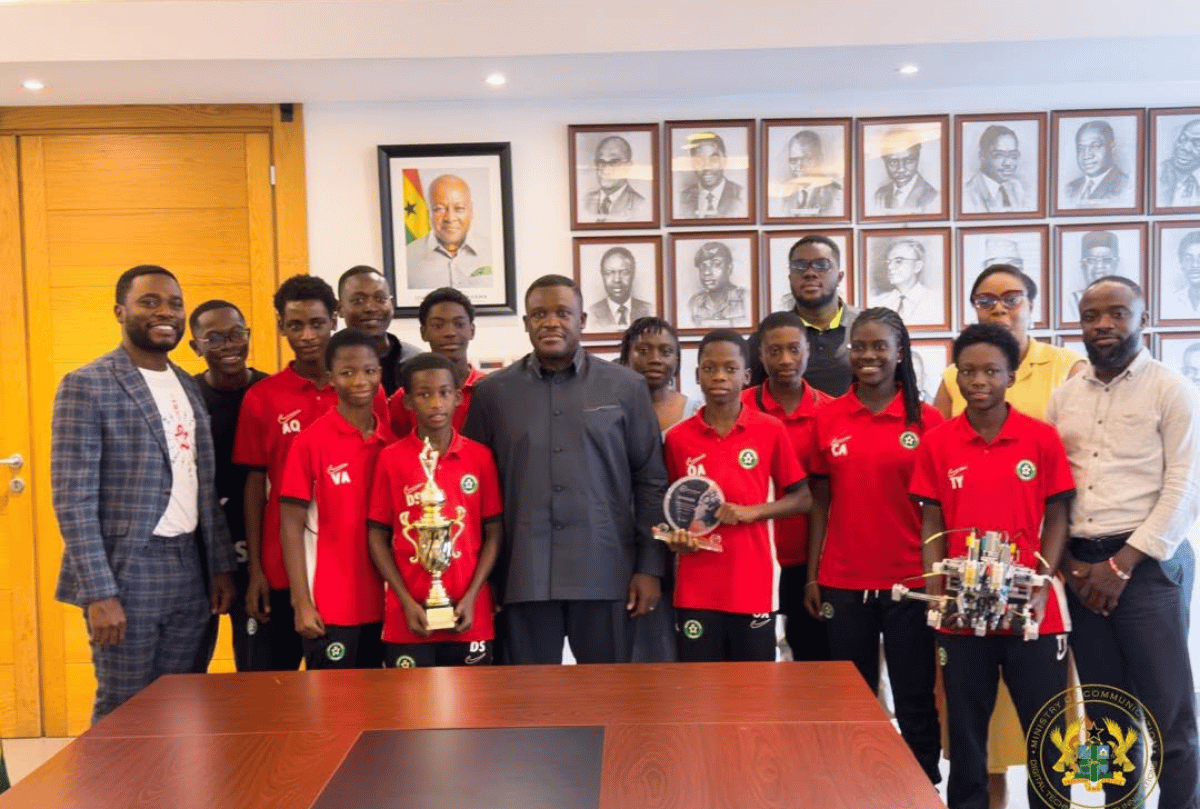
Ghana is making a bold stride toward fostering a new generation of athletes who are not only exceptional in their sporting disciplines but also proficient in technology and digital innovation. The Ministry of Communication, Digital Technology, and Innovations has taken a proactive role in encouraging young athletes to develop complementary skills in science, technology, engineering, and mathematics (STEM) to ensure long-term career opportunities beyond their athletic careers.
At the forefront of this initiative is the Right to Dream Academy, a globally recognized institution known for nurturing football talent. However, its students are also making waves in the tech world, proving that sports and innovation can coexist harmoniously. During a recent visit by the Ministry of Communication, Digital Technology, and Innovations, students and coaches from the academy demonstrated their prowess in robotics and artificial intelligence (AI), showcasing how technology is becoming an integral part of their educational journey.
A Dual Pathway to Excellence: Sports and Tech Synergy
The Right to Dream Academy’s students have achieved remarkable success in technology competitions, reinforcing the academy’s commitment to a holistic educational approach. Recently, a student team secured first place in Ghana’s national AI for Good competition, while another team claimed second place in the senior category at the Robofest 2026 World Championship. These accolades highlight the academy’s ability to cultivate both athletic and technological brilliance, positioning its graduates for diverse career opportunities in an increasingly digital world.
Minister for Communication, Digital Technology, and Innovations, Samuel Nartey George, praised the academy’s innovative model, stating that integrating digital literacy and technology skills with sports education opens doors to new professional pathways. He emphasized that while athletics provide physical and mental discipline, technology equips young people with marketable skills that can sustain them even after their sporting careers end.
Corporate Partnerships and Government Support
The ministry’s engagement with the Right to Dream Academy also underscored the importance of partnerships with corporate entities in fostering technological growth. The MTN Ghana Foundation and Telecel Ghana Foundation were recognized for their contributions in enabling students to participate in international tech competitions, including an upcoming event in Geneva. Such collaborations are crucial in providing students with global exposure and resources to compete at the highest levels.
To further strengthen the academy’s technological infrastructure, the Ministry of Communication, Digital Technology, and Innovations announced plans to donate 30 laptops to enhance its computer laboratory facilities. Additionally, students will be enrolled in the government’s One Million Coders Programme, a flagship initiative aimed at expanding digital skills and coding education across Ghana. This program aligns with the broader national agenda to build a skilled workforce capable of driving the country’s digital transformation.
A Blueprint for Youth Development in the Digital Age
This initiative reflects Ghana’s broader commitment to promoting digital literacy and encouraging young people to explore careers in science, technology, engineering, and innovation (STEI). By integrating sports with technology education, institutions like the Right to Dream Academy are preparing students to thrive in the digital economy, where hybrid skills are increasingly valued.
As Ghana continues to advance its digital transformation agenda, such multi-disciplinary approaches are expected to play a pivotal role in developing a resilient and innovative workforce. The success of young athletes in both sports and tech not only inspires future generations but also demonstrates how education can be a powerful catalyst for personal and national development.
This visionary approach ensures that Ghana’s youth are not just athletes but also tech-savvy professionals, ready to contribute meaningfully to the country’s economic and technological growth in the decades to come.
