


Doing Business in Africa | Weekly Intelligence Briefing for Investors, Executives, and Decision-Makers
Senegal’s government collapsed on Friday when President Faye fired Prime Minister Sonko and dissolved the cabinet, fracturing the alliance that brought both men to power in 2024. With a frozen IMF programme, a $13 billion debt load, and a fuel subsidy bill threatening to blow its budget, the timing is damaging. Across the week, the Kigali CEO Forum closed with nearly $2 billion in deals, Dangote moved to block the Nigerian state from interfering with his refinery ahead of his IPO, and Ghana escalated its gold resource nationalism push. The continent’s ownership agenda is advancing on multiple fronts simultaneously — and not always smoothly.
President Faye’s dismissal of Prime Minister Sonko on May 22 ended one of West Africa’s most celebrated political alliances. It also landed Senegal deeper in a fiscal crisis it was already struggling to manage.
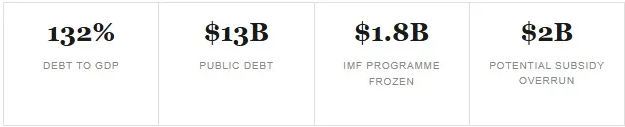
Senegalese President Bassirou Diomaye Faye dismissed Prime Minister Ousmane Sonko and dissolved the entire government on May 22, via a presidential decree read on state television. The outgoing cabinet was tasked with handling day-to-day affairs. No successor has been named. The split had been months in the making, driven by a fundamental disagreement over economic management: Faye was moving toward IMF-backed structural reform and debt restructuring; Sonko, who dominated parliament through the PASTEF party, refused. Hours before his dismissal, Finance Minister Cheikh Diba told parliament that Senegal expected to resume IMF talks by June 8 and hoped to agree on key structural reforms by June 30. He also warned that Senegal’s fuel subsidy bill could exceed its 2026 budget allocation by as much as $2 billion if oil prices reached $115 per barrel. Sonko had blocked the finance minister’s request to raise fuel prices.
The fiscal position is serious. The IMF froze a $1.8 billion lending programme after discovering that Senegal’s debt had been misreported by the previous government, pushing actual public debt to 132% of GDP. Sonko had opposed any restructuring of that $13 billion debt load. His PASTEF party still dominates the National Assembly, meaning a new government will need to negotiate with a parliament controlled by the man just fired. The parliament speaker resigned in solidarity with Sonko the same evening. Students marched in Dakar through the night.
WHY IT MATTERS
Senegal was tracking as one of West Africa’s more promising reform stories. The Faye-Sonko government had inherited genuine problems — a misreported debt load, a fragile fiscal position — but had the popular mandate to address them. The rupture now creates a vacuum at exactly the moment the IMF negotiation requires political coherence. For investors, the immediate risk is delayed or derailed IMF programme resumption, which affects Senegal’s Eurobond access and sovereign risk pricing. Longer-term, the instability complicates the investment case for Senegal’s emerging gas sector, where the Sangomar and GTA offshore fields are expected to generate significant revenue from 2026 onward. Watch whether Faye can form a functioning government before the June 8 IMF resumption date.
Standard Bank overtook Capitec and FirstRand this week to become Africa’s most valuable bank, reaching a market capitalisation of R517 billion. The milestone caps a period of aggressive expansion: Standard Bank is building out its pan-African deal advisory and transaction banking capabilities in parallel with Absa, which has been raiding Rothschild, Deutsche Bank, and Standard Bank’s own ranks to rebuild its investment banking bench. Nedbank completed its acquisition of a stake in NCBA Group earlier this month, extending its East African footprint. All three South African banking groups are converging on the same thesis — capturing the African deal-flow advisory and transaction banking business that has historically been split between Johannesburg, London, Paris, and Lagos boutiques. The structural prize is significant: as the Lobito Corridor, the Dangote IPO, and cross-border AfCFTA trade flows generate more large-ticket African transactions, the institution that controls the advisory and financing mandates controls the economics of the continent’s growth cycle. Standard Bank’s R517 billion valuation is the current scorecard, but the race is far from over.
The week produced two significant Dangote refinery developments. First, Dangote publicly rejected NNPC’s bid to increase its 7.25% stake in the $20 billion Lekki refinery, stating the equity would instead be spread broadly through the pan-African IPO. The rejection, disclosed in an interview with the CEO of Norway’s sovereign wealth fund Nicolai Tangen, locks in the cap table ahead of the offering and removes meaningful ambiguity about state shareholder presence post-IPO. Second, Dangote filed a new lawsuit at the Federal High Court in Lagos seeking to cancel petrol import licences issued to six marketers and NNPC on May 6, arguing the approvals violate an existing court order. The refinery was supplying more than 90% of Nigeria’s domestic petrol in February, running at 99.12% of its 650,000-barrel capacity. The lawsuit lands at a commercially critical moment: the IPO subscription window is targeted for June to July, and litigation against the Nigerian government is now a live prospectus risk item. The Nigerian Pension Commission separately waived its own rules this week to allow pension funds to participate in the Dangote IPO, a significant broadening of the domestic investor base for the offering.
Ghana has formally asked large-scale gold miners to sell 30% of annual output to the Bank of Ghana, up from 20%, as part of its GANRAP reserve-building programme targeting 157 metric tonnes of gold and 15 months of import cover by 2028. Gold reserves currently stand at 19.2 metric tonnes. The Ghana Chamber of Mines CEO Kenneth Ashigbey said negotiations remain unresolved: miners oppose the volume-based discount structure, object to zero valuation for silver by-products in dore alloys, and are requesting a phased increase rather than an immediate jump. When combined with the sliding-scale royalty reform reaching up to 12%, the GoldBod export gatekeeping requirement, the December 2026 local contractor deadline, and the Damang mine localisation, Ghana’s gold sector is now subject to the most comprehensive resource sovereignty renegotiation in its history. For Newmont, AngloGold Ashanti, Zijin, and other operators, the combined effect of these measures represents a material compression of operating margins that will require significant financial model recalibration.
Senegal was, until this week, one of West Africa’s most compelling medium-term investment stories. The country’s first offshore oil production began at the Sangomar field in mid-2024, operated by Woodside Energy, with peak output of 100,000 barrels per day. The Greater Tortue Ahmeyim LNG project, a joint development with Mauritania operated by BP and Kosmos Energy, began production in 2025 and is expected to generate several hundred million dollars annually in LNG export revenue. For an economy of 18 million people with a 2024 GDP of approximately $32 billion, this is transformational. Dakar has positioned itself as a regional financial and tech services hub, with the UEMOA monetary union providing currency stability through the CFA franc’s euro peg.
The political crisis of May 22 has temporarily overshadowed that investment case. The structural risk for foreign operators is not the dismissal itself, but the fiscal and governance vacuum it creates at the precise moment Senegal needs IMF programme resumption to stabilise its debt position. Debt at 132% of GDP, a frozen $1.8 billion IMF programme, and a parliament controlled by the opposition create the conditions for delayed decision-making, policy reversals, and investor uncertainty. The gas sector, where contracts and fiscal regimes were negotiated under the previous and current governments, is relatively insulated by its international legal frameworks. But any new investment decisions, particularly in downstream and services, will be deferred until a functioning government is in place and the IMF programme is back on track.
OPPORTUNITIES: Offshore oil and gas services linked to Sangomar and GTA LNG, financial services and fintech in Dakar, agri-processing including groundnuts and fisheries, tourism, and logistics serving landlocked Sahel markets. The UEMOA currency union and CFA franc peg provide unusual monetary stability for a frontier market. Strong French language business ties into European markets.
RISKS: Political instability following the Faye-Sonko rupture. Sovereign debt at 132% of GDP. Frozen IMF programme creating Eurobond access constraints. Parliament controlled by the opposition party complicates new legislation and fiscal reform. Security risk from Sahel spillover, particularly in the Casamance region. Government procurement opacity.
OPERATING TIPS: French is the language of business and government; Wolof is widely spoken. Dakar is the commercial and diplomatic hub; base operations here for regional Sahel access. The legal system follows French civil law and is relatively functional for commercial disputes. Relationship-building with senior government officials is essential for large projects. Allow for significantly extended timelines during periods of political transition. The CFA franc’s euro peg makes currency risk management simpler than in most African markets.
In Brief
South Africa · Infrastructure BlackRock’s Adebayo Ogunlesi told President Ramaphosa at the BlackRock South Africa Infrastructure Investment Summit in Cape Town that the firm’s $28 billion in South Africa assets is set to grow. Ogunlesi said private capital is ready to finance large-scale infrastructure but requires clearer regulatory frameworks and faster procurement processes. The summit signals that global private infrastructure capital views South Africa as a priority market at a time when the country’s investment conference pledges need private capital to execute. Source
South Africa · Mining Patrice Motsepe’s African Rainbow Energy announced new continental renewable energy investments this week, extending his positioning across mining, renewable energy, and digital banking through GoTyme simultaneously. Norway’s $1.9 trillion sovereign wealth fund also acquired a 5% stake in Motsepe’s ARM, the first Norwegian SWF direct equity position in a South African mining company. Source
Nigeria · Capital Markets Nigeria’s National Pension Commission waived its standard investment rules to allow pension funds to participate in the Dangote refinery IPO, significantly broadening the domestic investor base for what would be Africa’s largest-ever equity offering. The waiver signals the government’s institutional support for the offering even as Dangote pursues litigation against the regulatory authority. Source
Pan-African · Mining Egyptian tycoon Naguib Sawiris backed a new pan-African mining venture targeting gold and critical minerals this week, deploying capital at a moment when AngloGold Ashanti has doubled to a $50 billion valuation and Gold Fields has doubled to $39.8 billion. The gold cycle is reshaping African mining equity at a structural level. Source
Africa.com · Geopolitics A new IOA analysis published on Africa.com argues that Africa’s security environment is no longer a background condition for investors — it is being actively negotiated as part of trade and economic partnerships. African states are integrating security priorities into bilateral agreements with China, the Gulf, the US, and Russia, demanding practical military assistance rather than symbolic pacts. The DRC’s insistence that mineral trade will remain constrained until long-standing security threats are eliminated is the clearest example: foreign trade partners must now address security as a condition of market access. For investors pricing African country risk, the alignment choices governments are making now will shape operating environments for the next decade. Read on Africa.com
Investor Watch
Senegal IMF Resumption · Week of June 8 Finance Minister Diba confirmed June 8 as the target date to resume IMF talks before his government was dissolved. Whether Faye can form a functioning cabinet and present a credible reform team to the IMF before that date will determine whether Senegal’s debt trajectory stabilises or deteriorates through Q3. A failed resumption would pressure Senegal’s Eurobond spreads and risk rating action.
Dangote IPO Subscription Window · June to July The refinery IPO remains on track for a June to July subscription opening across six African exchanges. Watch for the SEC prospectus approval and whether the ongoing litigation against the Nigerian government becomes a material disclosure item in the final prospectus. The pension fund waiver confirms domestic institutional support. The outstanding question is international allocation appetite.
Ghana Gold Negotiations The Ghana Chamber of Mines and the Bank of Ghana remain in unresolved negotiations over the 30% offtake demand and pricing terms. A breakdown in talks could trigger a formal dispute mechanism and delay the GANRAP reserve-building timeline. A deal sets the commercial template for how Ghana’s gold sector operates through 2028, affecting all major operators including Newmont and AngloGold Ashanti.risk in the most watched African capital markets event of the decade.
This Week’s Sources: Reuters · Al Jazeera · France 24 · Financial Afrik · CNBC Africa · Billionaires Africa · Vanguard Nigeria · The Punch · Channels Television · NewsGhana · Capital Ethiopia ·
US News · GBC Ghana · Susinsight · AllAfrica · In On Africa (IOA)
Doing Business in Africa is published weekly by Africa.com. If you found this valuable, share it with your network.
