


Power-producing company, Karpowership Ghana, has organised a training programme for fishermen and fishmongers from Sekondi and Essikado to build their capacity on environmental safety awareness, fire prevention, hygienic fish handling and financial management.
The initiative forms part of Karpowership Ghana’s commitment to supporting communities through meaningful engagement and programmes that provide practical knowledge and skills to improve livelihoods.
The training, held last Tuesday, brought together key institutions, including the Ghana National Fire Service (GNFS), Fisheries Commission and Fidelity Bank, to provide practical education aimed at improving safety, protecting livelihoods and strengthening the resilience of the fishing communities.
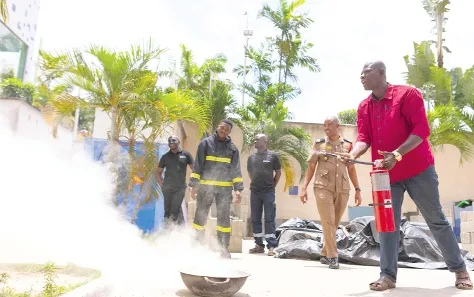
A key component of the programme was fire safety, with the GNFS educating participants on fire prevention, emergency response and the safe handling of fire incidents both at the fishing harbour and in their homes.
The session was particularly relevant following recent fire incidents at the fishing harbour in Sekondi. Participants were taken through practical fire prevention measures and the appropriate steps to take during an emergency.
There was also a practical demonstration and simulation, allowing participants to observe how to respond safely and effectively to a fire emergency.
The training provided an opportunity for the various stakeholders to address issues that directly affect the daily lives and livelihoods of the fishing community.
Empowering communities
Addressing the participants, the Communications Manager at Karpowership Ghana, Sandra Amarquaye, said the company’s commitment to the communities within which it operated went beyond its core business.
She said the training was intended to help build a safer, stronger and sustainable operating community for the fisherfolk.
Ms Amarquaye further stated that the company was committed to empowering communities with relevant knowledge and practical skills as it believed it was an important part of creating lasting impact and strengthening the communities it served.
“At Karpowership Ghana, we believe that powering communities goes beyond providing electricity. It also means empowering people with the knowledge and skills they need to build safer, stronger and more sustainable livelihoods.
“This training is part of our commitment to supporting our fisherfolk and the communities we are privileged to serve,” she said.
Hygiene, financial literacy
The Fisheries Commission also educated the fishermen and fishmongers on proper and hygienic fish-handling practices, emphasising the importance of maintaining cleanliness throughout the process, from landing and handling to storage and sale.
The session highlighted the role of proper hygiene in preserving fish quality, protecting consumers and ensuring that fisherfolk derive maximum value from their catch.
An official of the Commission, Justina Annan Obeng, who was the facilitator, emphasised the importance of proper fish handling in public health, stressing that the quality of fish and ensuring that fisherfolk got the best value from their catch.
She noted that continuous education and collaboration among stakeholders were important in promoting better standards within the fishing sector.
Taking the participants through financial literacy, a representative of Fidelity Bank provided practical guidance on saving, budgeting, managing income and making sound financial decisions.
The session was designed to help fishermen and fishmongers better manage the income generated from their businesses, plan for the future and build greater financial resilience for themselves and their families.
Relevant
A fisherman and participant, Nana Appiah Mensah, said the fire safety component was particularly useful given the recent incident at the harbour.
“The fire safety training has been very helpful to us, especially because we recently experienced a fire at the harbour.
We now have a better understanding of how to prevent fires and what to do when there is an emergency.
The practical demonstration made it much easier for us to understand how to respond.
“Fire can destroy our livelihoods within a very short time, so knowing how to prevent it and respond quickly is very important.
What we have learnt today is knowledge we can use both at the harbour and in our homes, and we are grateful for the opportunity,” Nana Mensah said on behalf of the participants.
