


The government is in discussions with American aircraft manufacturer Boeing on plans to establish a new national airline, with the Minister of Transport, Mr Joseph Bukari Nikpe, telling Parliament that the state will hold only a minority stake in the proposed carrier.
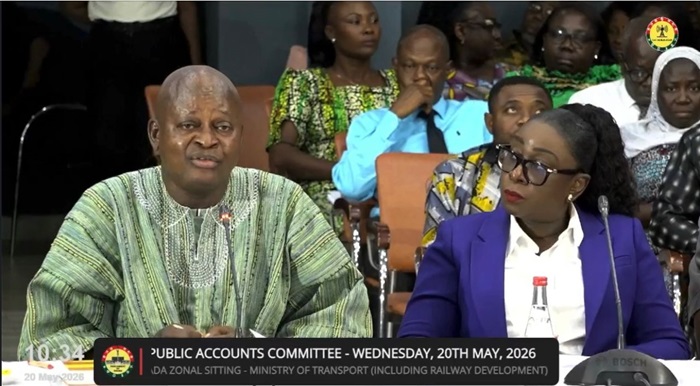
The Minister of Transport, Mr Joseph Bukari Nikpe, disclosed this when he appeared before the Public Accounts Committee (PAC) of Parliament on Wednesday, May 20, 2026.
He appeared together with senior officials from the Ministry of Transport and the Ghana Airports Company Limited to respond to findings from a special audit ordered by the Ministry of Finance.
Task force meeting
Mr Nikpe confirmed that the Chairman of the government’s national airline task force and Ghana’s ambassador to the United States had met executives of Boeing the previous day as part of efforts to re-establish a national carrier.
“I wouldn’t want to disclose much, but it is part of the activities of the task force in trying to get us to re-establish the national carrier,” he told the committee.
Mr Nikpe explained that the proposed airline would differ from Air Ghana, a privately owned cargo transport company.
“Air Ghana is a cargo transport system. It is an individual ownership,” he said.
“Government is happy working with them to improve cargo transport services. They are a private entity,” he added.
Private sector-led
Touching on the structure of the proposed airline, Mr Nikpe said the government did not intend to control its operations.
“We are not intending to have a shareholding that will be that dictatorial to the services of the airline,” he stated, adding that the airline would largely operate under private sector management.
His remarks followed concerns raised by the Chairman of the PAC over the operational difficulties that affected the defunct Ghana Airways.
“That is the only airline that if you are two hours late getting to the airport, when you go, the plane is still there,” the Chairman remarked, referring to persistent flight delays experienced by passengers in the past.
Mr Nikpe acknowledged the concerns and said lessons had been learnt from the collapse of the former national carrier.
Audit issues
The hearing also dealt with matters arising from a special audit into activities of the Ministry of Transport.
The committee examined rejected payments linked to the construction of the Takoradi to Manso railway line and consultancy services related to the project.
Officials explained that about GH¢27 million of the rejected amount related to payments made to the supervising consultant.
According to the officials, the consultant provided auditors with a lower outstanding liability figure as of December 31, 2024, because part of the payment had already been processed in January 2025.
Another GH¢1.6 million from the former Ministry of Railways was rejected because of incomplete documentation.
Officials said a procurement officer with an eye condition could not attend the audit process, while some supporting documents, including stores received advice notes, were missing from the records.
Poor records
A member of the committee criticised the poor record keeping practices.
“Most of the reasons why we have a huge rejection rate is because we failed to keep proper records,” she said.
“When we put in the reports that huge sums have been rejected, it doesn’t speak well of us as a nation. It tells the whole world that we are not able to manage our documentation properly,” she added.
Mr Nikpe admitted weaknesses in record management and said measures had been introduced to improve reporting systems and staff training.
“You can’t account when you don’t have records,” he said.
The committee also raised concerns about the continued use of COVID-19 health screening queues at Terminal 3 of the Kotoka International Airport.
Mr Nikpe said he would engage the Minister of Health on the matter because Port Health services fall under that ministry.
