


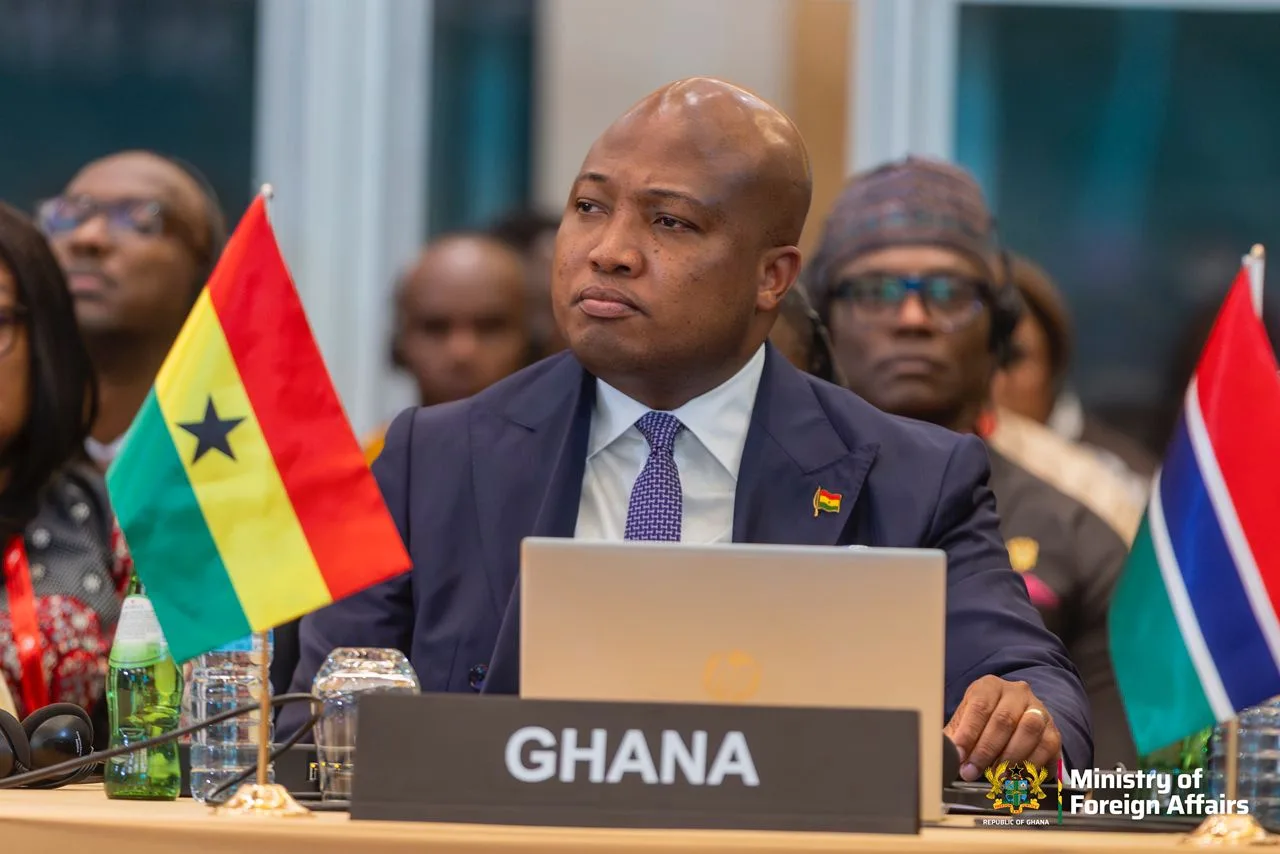
By Hannah Dadzie
The Minister for Foreign Affairs, Samuel Okudzeto Ablakwa, has called for a fundamental shift in Africa’s approach to peace, security and development, arguing that financial investments and institutional frameworks alone cannot resolve the continent’s recurring conflicts.
He said African leaders must undertake sincere introspection and adopt a new leadership paradigm that addresses the root causes of conflict, poverty, unemployment and the growing desperation among the continent’s youth.
Speaking at the 26th Extraordinary Session of the Executive Council of the African Union on the Strengthening of Mechanisms for Conflict Prevention and Resolution in Africa, in Luanda, Angola, on Saturday, August 29, 2026, Mr Ablakwa said Africa could no longer afford to normalise conflicts, terrorism, violent extremism and humanitarian crises.

“The time has come for us to carry out an earnest introspection. We cannot continue on this trajectory where we have normalised conflicts, normalised terrorism, violent extremism and humanitarian crises. We need to take a new path,” he said.
The Foreign Affairs Minister acknowledged efforts by the African Union to strengthen peace mechanisms and recapitalise the AU Peace Fund but stressed that a change in mindset and leadership was equally important.
“We can have one billion dollars, 10 billion dollars or 100 billion dollars in a peace fund, but if we do not change course and adopt a new leadership paradigm, we will not achieve the peace we seek,” he stated.
Mr Ablakwa said African leaders must demonstrate greater tolerance, compassion and vision in confronting the underlying causes of instability across the continent.
He expressed concern about the growing desperation among African youth, citing dangerous migration attempts and the continent’s persistent development challenges.
According to him, thousands of young Africans continue to risk their lives in search of better opportunities outside the continent, while millions remain without access to basic necessities, including access to electricity.
He noted that the situation required African governments to place greater emphasis on job creation, industrialisation, decentralisation and equitable distribution of the continent’s vast natural wealth.
“We need to recommit to job creation, industrialisation, real decentralisation and sharing the wealth of this continent, the diamonds, the gold, the bauxite, the oil and gas and all the blessings that we have,” he said.
Mr Ablakwa described Africa as the world’s richest continent in terms of natural resources but questioned why many of its young people continued to face poverty, unemployment and limited opportunities.
“How can we share these resources for the benefit of African young people? This is the new paradigm that we need for our continent,” he stressed.
The extraordinary session brought together African Union member states to deliberate on ways of strengthening continental mechanisms for preventing and resolving conflicts amid growing security and humanitarian challenges in parts of Africa.
More stories here
