


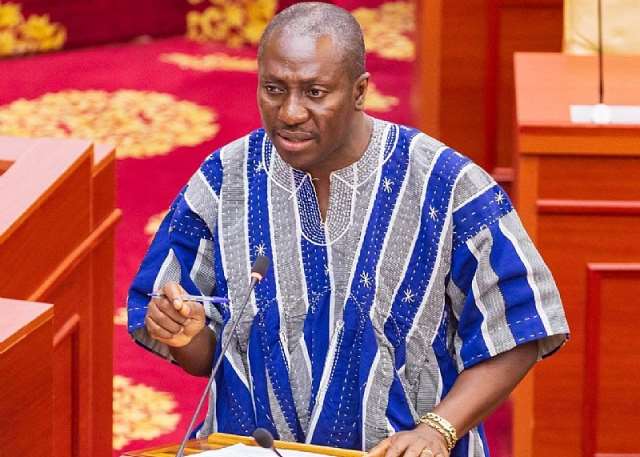
The Minority Leader in Parliament, Osahen Alexander Afenyo-Markin, has appealed to lawmakers to approach Ghana’s political history with balance and objectivity, urging recognition of the achievements of past administrations irrespective of party lines.
He made the remarks during deliberations on a statement by the Minister for Lands and Natural Resources concerning the overthrow of Ghana’s first President, Kwame Nkrumah.
Addressing the House, Afenyo-Markin underscored what he described as Nkrumah’s bold industrialisation agenda, noting that the former leader laid a solid foundation for state-driven industrial growth through the establishment of factories and strategic infrastructure designed to promote economic self-reliance.
While acknowledging the lingering debates surrounding the 1966 coup, the Minority Leader stressed the need to distinguish political disagreements from tangible development gains. He maintained that Ghana’s advancement has been cumulative, shaped by successive governments that have each left their imprint on the nation’s governance and economic transformation.
He referenced decentralisation efforts under the Second Republic and the steady expansion of private sector participation as part of the country’s evolving reform journey. He also credited the administration of former President John Agyekum Kufuor for initiatives such as the Golden Age of Business, the introduction of the National Health Insurance Scheme, and social intervention programmes that later influenced the Free Senior High School policy.
According to Afenyo-Markin, national discourse must rise above partisan narratives that either idolise or dismiss past leaders. Instead, he called for a mature national outlook that objectively examines both the successes and shortcomings of previous policies to guide future development.
“Our history must not be reduced to political point-scoring. We must recognise what worked, learn from it, and build upon it for the benefit of future generations,” he stated.
The renewed debate over Nkrumah’s overthrow has sparked wider reflections on governance, democracy and Ghana’s post-independence development path. While some Members of Parliament centred their arguments on the political consequences of the coup, Afenyo-Markin’s contribution shifted focus to policy legacies and long term nation building.
Observers note that his intervention signals a broader call for unity and institutional continuity, reinforcing the idea that Ghana’s progress is a shared national enterprise rather than the achievement of any single political tradition.
