


Many Kenyans and
fellow Africans are worried about the cost of living. Rather than dwell on
subsidies and price controls, governments are rolling out various measures to
boost their incomes.
Major economies such
as Kenya and South Africa are leading this shift. They have come up with
interventions designed to influence disposable income and expand
wealth-creation opportunities for low-income earners.
Across the continent,
public discontent has persisted despite official data pointing to easing
inflation and gradual macroeconomic improvement.
Many households say
the benefits of stabilisation have yet to translate into tangible relief,
fuelling what has become as much a political debate as an economic one.
In Kenya, Treasury CS
John Mbadi defended proposed tax reforms aimed at shielding low-income earners,
saying the government had taken note of concerns that rising prices were
steadily eroding earnings and weakening household purchasing power.
“We have been told a
number of times, kindly put money in people’s pockets. That the purchasing
power of people has dwindled,” Mbadi said in Nairobi.
He was speaking during
a bell-ringing ceremony to launch Safaricom’s Ziidi Trader, a service that
allows Kenyans to buy and sell shares of public listed firms directly through
the M-pesa mobile money platform.
“Now those who are
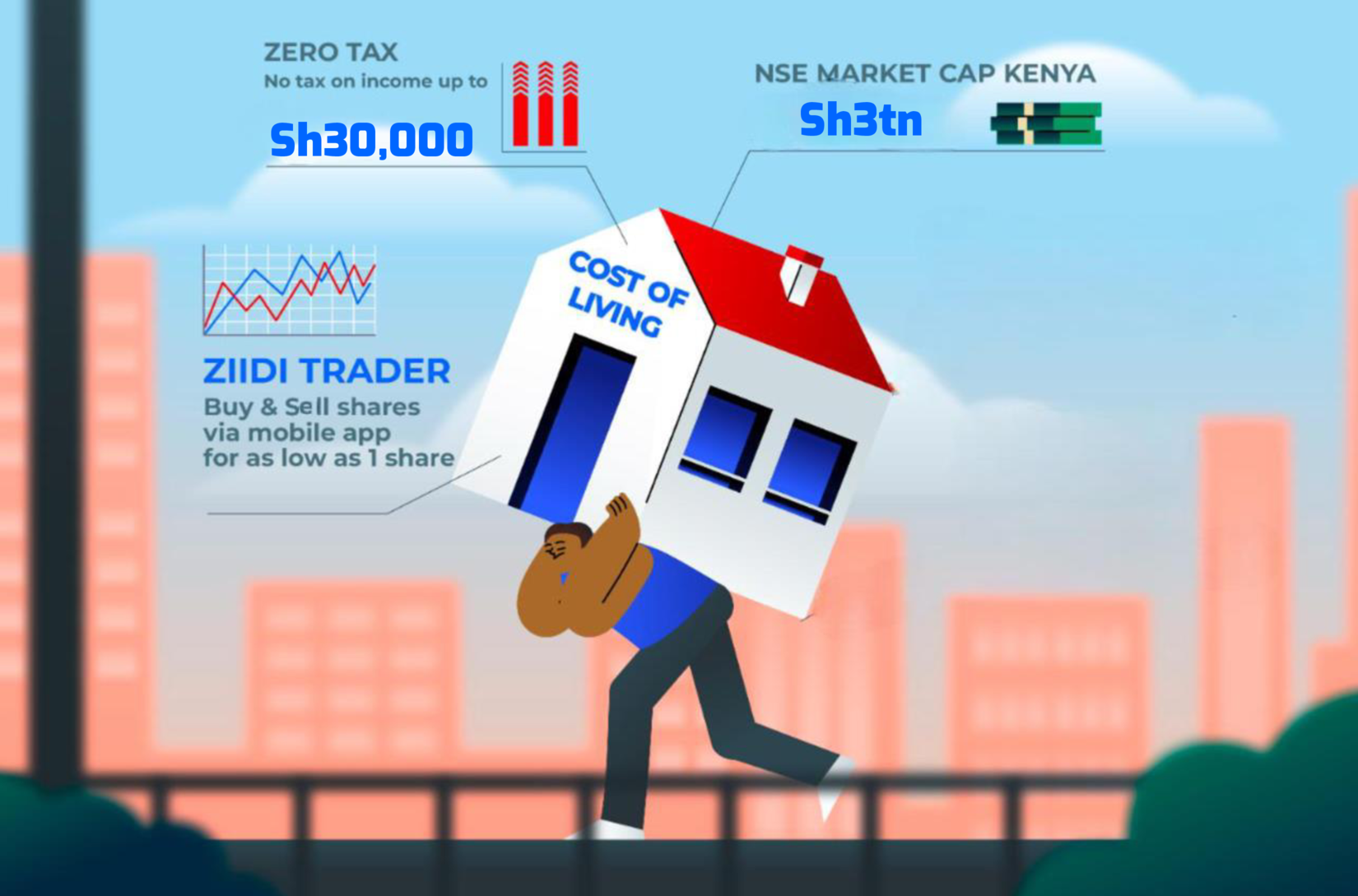
earning Sh30,000 and below, we are saying should pay zero tax. And by the way,
it is not just those who are earning Sh30,000 and below. Any money that you
earn which is Sh30,000 and below, even if you are earning a million, your Sh30,000
will also not be taxed,” he said.
The Kenyan government
has also proposed lowering the tax rate on the next income band above Sh30,000
from 30 per cent to 25 per cent, a move Mbadi framed as meaningful relief for
low-income households.
Kenya has also moved
to dismantle long-standing barriers to capital market participation,
positioning retail investment as part of its broader cost-of-living response.
The launch of the
Ziidi Trader platform is expected to widen access for millions of citizens,
especially low-income earners who were previously locked out of formal
investment channels.
Speaking at the launch,
President William Ruto hailed its impact.
“This platform
represents a decisive turning point in how citizens engage with the stock
exchange. It opens the doors of market participation wider than ever before,”
he said.
HOW IT WORKS
The platform allows
investors to buy as little as a single share through their mobile phones.
This comes after
regulatory reforms eliminated mandatory broker intermediation and scrapped the
previous minimum investment threshold of Sh50,000.
The changes
significantly lower entry barriers to the Nairobi Securities Exchange.
“For a very long time,
it looked [like] a very complicated process,” Ruto said. “Serious accounts,
brokers in between and everything along the journey.
“Today, there is a
pathway for the mama mbogas (vegetable vendors) and the boda boda guys, from
the comfort of sitting on their motorbike with their phone, they can buy shares
and trade at the Nairobi Stock Exchange.”
The President said the
reforms have already coincided with a sharp rise in market activity, with total
market capitalisation at the NSE expanding from about Sh1.2 trillion three
years ago to nearly Sh3 trillion last year.
He expressed
confidence that the number of Kenyans participating in the capital markets
could rise from the current 200,000 investors to millions in the near term.
EMPOWERMENT OR
POLITICS?
The reforms have,
however, drawn criticism from opponents, who view the measures as politically motivated.
They note that the measures
are coming as Ruto, who was elected on a bottom-up economic transformation
agenda, edges toward a second-term bid.
But Mbadi pushed back
against criticism that the government is playing politics, arguing that
restoring purchasing power is itself a legitimate policy goal.
“If it is a campaign
tool and it gives money back to the pockets of Kenyans, it is okay. It is a
good campaign strategy,” Mbadi said.
Kenya’s National
Treasury said it had reduced the risk of near-term debt distress, while
stabilising key macroeconomic indicators, including inflation and the currency.
Mbadi pointed to
Moody’s recent rating action as evidence of improved fiscal credibility, saying
the agency’s positive assessment signalled growing confidence in Kenya’s
economic trajectory.
“It is not a
coincidence that Moody’s have said now we have a stable economy,” he said.
“So if people are out
there saying that the economy is in shambles, the economy is on its knees, yet
we are rated as having moved from CAA1 with positive outlook to now B3 with a
stable outlook. So what evidence do you want?”
Kenya’s Inflation last
year recorded a high of 4.6 per cent, primarily driven by food, transport and
energy costs, while the shilling’s relative stability has been linked to easing
price pressures.
SUPPORTING LABOURERS
In South Africa, the
government announced a 5 per cent rise in the national minimum wage to R30.23 (Sh244)
an hour from next month. Domestic and farm workers have been listed as the
biggest beneficiaries.
The rise is considered
a significant increase as it outpaced the inflation rate and exceeded
expectations from businesses and analysts, largely seen offering some relief to
consumers.
“The increase will
inject badly needed stimulus into the economy, spurring growth, sustaining and
creating jobs,” South Africa Parliamentary coordinator for organised labour
Matthew Parks said in a statement.
However, AgriSA, South
Africa’s largest farmers’ lobby, said wage adjustments alone risk weakening
employment sustainability, accelerating unemployment rather than improving
worker welfare.
AgriSA CEO Johann
Kotze said the timing would put further strain on a sector still recovering
from drought, climate volatility and animal disease outbreaks.
He said the livestock
industry accounts for between 40 and 45 per cent of agriculture’s contribution
to the Gross Domestic Product.
“While parts of the
sector are showing recovery in 2025, this recovery remains fragile and uneven,”
Kotze said in a statement.
Data from Statistics
South Africa shows the inflation rate last year was at an average of 3.2 per
cent, the lowest in 21 years.
The annual rate for
food and non-alcoholic beverages was, however, closed at 4.4 per cent in
December.
