


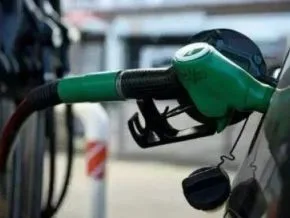
- Senegal plans to cut energy subsidies to less than 1% of GDP annually by 2029 while protecting vulnerable households.
- The government says the wealthiest 20% of households receive nearly 65% of the roughly CFA800 billion spent annually on fuel subsidies.
- Social protection spending is set to double to CFA140 billion in 2027 as subsidies become more targeted.
Senegal plans to reduce energy subsidies to less than 1% of GDP annually by 2029, as the government seeks to ease pressure on public finances and redirect more resources toward vulnerable households.
Prime Minister Ahmadou Al Aminou Lô announced the target in his general policy statement on September 8. The reform will gradually reduce subsidies at different rates depending on the energy product, introduce targeted protection before or alongside tariff adjustments, and tighten budget management to prevent new arrears.
Senegal currently spends about CFA800 billion ($1.4 billion) a year on fuel subsidies. According to the government, the wealthiest 20% of households receive nearly 65% of that support.
Lô said the current system therefore benefits households with greater consumption capacity more than the most vulnerable. He argued that it would be more appropriate to “make these wealthier households pay the true price and redirect part of the subsidy to the National Family Security Grant.”
The government does not plan to treat all energy products alike. It intends to maintain support for butane gas used in homes, particularly the smaller cylinders widely used by households.
Electricity subsidies, however, will gradually focus on households with the lowest consumption levels and on small businesses. A social tariff is expected to concentrate government support on these groups.
The planned changes come as prices for some energy-related goods and services have edged lower. In July 2026, the category covering housing, water, electricity, gas and other fuels recorded a 0.8% year-over-year decline, according to the National Agency for Statistics and Demography (ANSD). Transport prices fell 0.1% over the same period.
Public finances at the heart of the reform
The subsidy overhaul comes as Senegal seeks to strengthen public finances and improve debt sustainability. The government has also recently reached an agreement in principle with the International Monetary Fund, under which it intends to reduce fiscal and external vulnerabilities, increase social spending and promote more private-sector-led growth.
Lô stressed, however, that energy subsidy reform had already been under discussion for several months. Government communications between March and May 2026 had raised the need for tariff adjustments amid a sharp increase in petroleum product prices linked to the conflict between Iran and the United States.
Senegal plans to accompany the energy reform with stronger social safety nets. According to ANSD figures cited by the prime minister, 1,000,649 households are classified as vulnerable, while only 355,013 poor households currently receive coverage.
The government wants to extend social safety-net coverage to 1 million poor and vulnerable households, or about 7.8 million people, starting in 2027. To support that goal, the social protection budget, which was raised to CFA70 billion in September 2026, is expected to double to CFA140 billion in 2027.
Ultimately, the protection measures linked to the energy reform are expected to focus primarily on the most vulnerable households, with coverage targeted at 40% of the population.
Charlène N’dimon
