



‘Corruption must be assassinated’ – Citizen Kofi calls for tougher punishment to reset Ghana’s culture
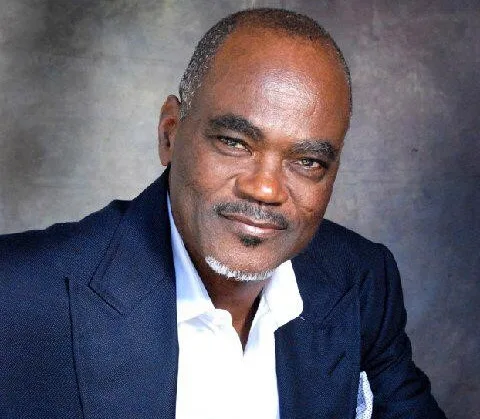
Ghanaian businessman Dr Kofi Amoah, popularly known as Citizen Kofi, has called for a national rethink of how corruption is investigated and punished.
He argued that Ghana’s current approach risks turning corruption into an attractive route to wealth and social status.
Dr Amoah says the issue has become particularly urgent as Ghana seeks to transform its economy, build competitive indigenous businesses and move from exporting raw materials to producing finished goods.
His intervention follows Finance Minister Cassiel Ato Forson’s call for Ghana to break what he described as the cycle of exporting raw materials while importing finished products.
“We export cocoa but import chocolate. We export bauxite but import aluminium products. This cycle must end!” the finance minister said.
Dr Amoah agrees that Ghana must build domestic productive capacity and develop strong, competitive enterprises, including through strategic state participation.
However, he believes that ambition will remain vulnerable unless the country first deals decisively with corruption.
For him, the question is no longer simply whether corruption is wrong, but whether Ghana’s system of punishment is sufficiently severe to make corruption unattractive.
State enterprises and the corruption risk
In an X post, Dr Amoah argues that properly conceived and professionally managed state-owned enterprises can play an important role in Ghana’s development.
“Any project properly analyzed, funded without taints of corruption, staffed with competent, patriotic and non-partisan technocrats and state-owned is music to my ears,” he said.
He points to the growing strategic involvement of the United States in artificial intelligence and industrial companies as evidence, in his view, that state participation in strategically important sectors should not automatically be regarded as incompatible with capitalism.
“The notion that State Enterprises must be anathema to progress is a propaganda from the West that they themselves have now jettisoned,” he said.
But Dr Amoah acknowledges that placing significant financial resources under state control also creates enormous opportunities for abuse.
“In going the State Enterprises route for progress, enormous financial power shall be trusted into the hands of some few people and if these few decide to go the corrupt way for their selfish interests, the whole country will be the loser and our dreams for success shall die again,” he said.
He therefore argues that any serious attempt to expand state-owned enterprises must be accompanied by an equally serious mechanism for preventing and punishing corruption.
When poor pay meets huge public resources
Dr Amoah, however, says corruption cannot be reduced to greed alone.
He acknowledges arguments that some of the forces contributing to corruption within state institutions include compensation structures that are inadequate to attract and retain highly qualified and competent professionals.
In his view, some public officials are responsible for functions that can determine the success or failure of major infrastructure and economic-development projects involving enormous sums of money.
This, he argues, creates a dangerous imbalance when officials with significant responsibility over public resources are poorly compensated.
The temptation, he says, arises when an official can contemplate taking a “big steal” from the public purse while believing there is only a minimal chance of detection and, even if caught, that the eventual punishment will be insignificant compared with the amount stolen.
Such a system, he argues, can inadvertently create an environment in which corruption becomes an acceptable pathway to wealth.
‘Corruption Pays, Integrity Sucks’
It is this dynamic that Dr Amoah believes Ghana must urgently reverse.
He argues that when the potential financial reward from corruption is enormous, the probability of detection is low and the punishment is relatively insignificant, the system effectively creates an incentive for people to take the risk.
Over time, he says, this can evolve beyond individual criminality into a culture.
The danger, according to Dr Amoah, is that corruption becomes normalised, particularly among younger people who may begin to see unexplained wealth and extravagant lifestyles not as evidence of wrongdoing but as symbols of success.
The result, in his words, is a depressing mindset in which corruption becomes “acculturated”.
He describes the resulting equation bluntly, “Corruption pays, integrity sucks.”
And when that becomes the dominant perception, he argues, the “poverty train gets refueled.”
Corruption can have life-and-death consequences
Dr Amoah also wants Ghanaians to reconsider the consequences of corruption beyond the money stolen from government.
He argues that corruption can deprive citizens of essential public services and, in some cases, contribute to the loss of life.
He cites the example of critical medical equipment, such as a dialysis machine at Korle Bu Teaching Hospital, becoming unavailable because funds required for repairs have been lost through corruption.
For him, the chain is straightforward, resources meant for public services are diverted; essential services suffer; citizens who depend on those services are placed at risk.
“Death by any cause is death,” he argues, insisting that the human consequences of corruption should be part of the debate over how seriously it should be punished.
This, he says, is why calls for exceptionally severe punishment for proven corruption should not automatically be dismissed as unjustifiable.
His argument is that stealing public money is not necessarily a victimless financial crime when that money was intended for hospitals, schools, roads, infrastructure or other services on which citizens depend.
‘We must deal with the corruption monster’
Dr Amoah believes Ghana needs an institution capable of investigating and prosecuting corruption without political interference, regardless of the political party to which the accused belongs.
He recalls the post-Jerry Rawlings era and its controversial “Justify-Your-Lifestyle” approach, under which suspected corrupt officials were required to explain the legitimate sources of their wealth and lifestyles.
He acknowledges that there were excesses and questionable rulings associated with that approach and says these are legitimate reasons why Ghana may be reluctant to revisit it.
But he questions whether the alternative is any better when, in his view, overwhelming evidence of unexplained wealth can sometimes fail to result in convictions.
He points to instances involving alleged multimillion-dollar cash discoveries in the homes of government appointees where questions surrounding the source of the funds did not ultimately result in convictions.
He argues that examples can be found involving appointees associated with both major political parties, reinforcing his concern that corruption has become bigger than partisan politics.
For Dr Amoah, the greater danger is that selective or ineffective prosecution sends a message that political connections, money and legal manoeuvring can ultimately defeat accountability.
A warning about social unrest
The businessman also warns that a society deeply saturated with corruption can eventually create conditions for instability.
He references the observations of notable statesmen, including Singapore’s Lee Kuan Yew, about societies where corruption becomes pervasive from the top to the bottom.
In such circumstances, he argues, citizens who feel deprived and unable to find legitimate avenues for improving their lives may eventually conclude that they have no alternative but to seek radical change.
His concern is that when corruption becomes deeply embedded in a society, the previously “unthinkable and unwanted” can eventually become “thinkable, wanted and ripe”.
For Ghana and other African countries including Nigeria, Kenya, Togo, Chad and Equatorial Guinea, he says the warning should not be ignored.
‘We cannot allow the culture of corruption to stand’
Dr Amoah believes the answer requires more than changing laws.
He wants Ghana to develop what he describes as an anti-corruption culture in which corruption is socially rejected and integrity is rewarded.
He argues that politicians often make strong promises on corruption during election campaigns, sometimes pledging to deal with perpetrators “mercilessly”, only to encounter the protections and procedural requirements of democratic justice once in office.
The result, he believes, can be a disconnect between political rhetoric and actual enforcement.
He also argues that wealthy individuals accused of corruption may have the financial resources to deploy expensive legal representation or, in the worst case, attempt to influence the system to secure their freedom.
If a person can steal millions, retain a significant portion of the proceeds and eventually escape meaningful punishment, Dr Amoah argues, the economic calculation becomes dangerously attractive.
That is why he believes Ghana needs to change the equation.
Not simply “catch and punish”, but create a system in which the anticipated consequences of corruption are so severe, certain and swift that corruption ceases to be an attractive route to wealth.
‘Corruption must be assassinated’
Dr Amoah’s overarching argument is that Ghana cannot successfully transform its economy while corruption remains embedded in its public institutions and social culture.
He says the country must address inadequate remuneration where that is a genuine contributing factor, recruit competent and patriotic professionals, strengthen institutions, ensure political neutrality in prosecutions and impose punishments that are sufficiently severe to deter corruption.
Ultimately, he believes Ghana must take a national position that corruption, regardless of who commits it or which political party the individual belongs to, cannot be tolerated.
“Corruption must be assassinated in all forms and by any means necessary!” he declares.
He has consequently appealed to President John Dramani Mahama to make the fight against corruption a central part of the government’s RESET agenda, particularly if state-owned enterprises are to become instruments of national development.
His central message is a warning and a call to action; Ghana cannot build globally competitive industries, transform its natural resources or create prosperity for its citizens if the resources intended for development continue to be siphoned away.
For Dr Amoah, the time has come for the country to confront an uncomfortable reality; to a large measure, Ghanaians have become hurdles to their own progress.
And unless the country is prepared to acknowledge that reality and deal with corruption with the seriousness it deserves, he fears that the cycle of poverty, underdevelopment and dependence will continue.
Ghanaian businessman, Dr Kofi Amoah
DISCLAIMER: The Views, Comments, Opinions, Contributions and Statements made by Readers and Contributors on this platform do not necessarily represent the views or policy of Multimedia Group Limited.
DISCLAIMER: The Views, Comments, Opinions, Contributions and Statements made by Readers and Contributors on this platform do not necessarily represent the views or policy of Multimedia Group Limited.
 WhatsApp
Comments (0)
No comments yet. Be the first to share your opinion!