


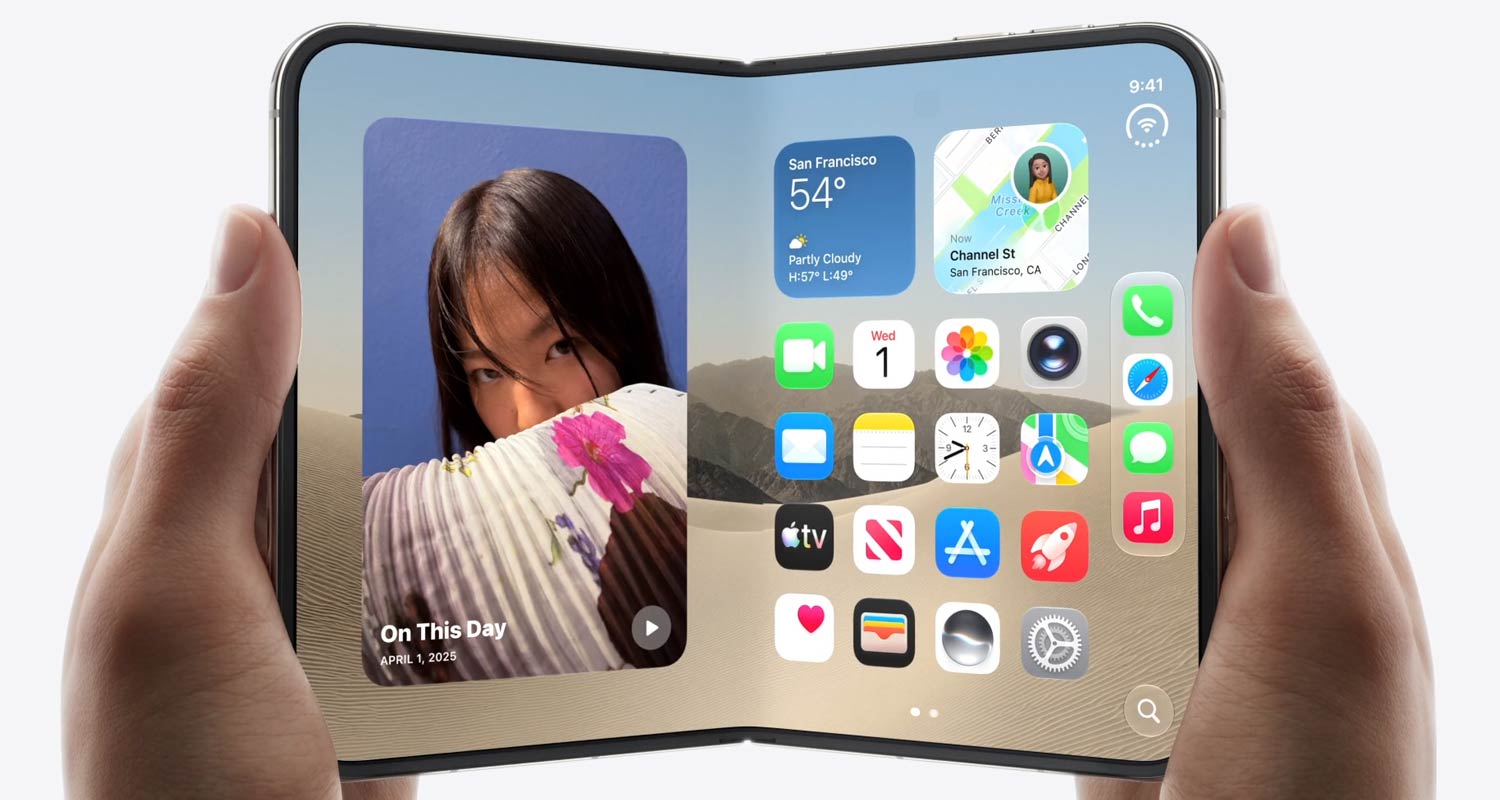
Apple on Wednesday unveiled a foldable called iPhone Duo, introducing the biggest change in years in the company’s flagship product.
The US$1 999 starting price for the iPhone Duo means it will could cost north of R50 000 when it is launched in South Africa.
TechCentral has calculated this estimate based on the non-discounted price of the 2TB iPhone 17 Pro Max, which until this week cost $1 999 in the US (the model is no longer for sale on Apple’s website). That specific model has until recently sold in South Africa for R50 999, according to iStore, though it is currently on sale as the Apple retailer clears stock ahead of the launch of the iPhone 18 Pro and Pro Max models.
And that anticipated R50 000-plus price is just for the base model, with a modest 256GB of storage. Pricing in the US goes all the way up to $3 199 for a 2TB model. If that model is introduced in South Africa, it could cost more than R80 000, or the same price as a top-spec MacBook Pro.
Much like Samsung’s recently announced Galaxy Z Fold8, the Duo is sized and shaped like a passport, with rounded edges. It opens into a horizontal, wide screen that also can be viewed vertically. There is a smaller single screen on the front, when the phone is folded. When open, it is Apple’s thinnest phone, the company said.
The folding phone event, the first with new CEO John Ternus at the helm, is the most noticeable overhaul of Apple’s flagship product since it removed the physical home button from the iPhone X in 2017. The iPhone brought in $209.6-billion, or just over half of Apple’s sales, in its most recent fiscal year.
Former CEO Tim Cook handed over the leadership baton to Ternus with a video about how to start the presentation that ended with a close-up of Cook, who said, “Not me. That’s your guy,” pointing back towards Ternus.
Personal AI hub
Ternus touted the iPhone as a personal AI hub that focused on privacy, saying that others wanted to collect and store personal data. “Honestly, trust only goes so far when your data is no longer yours to control,” he said. “That’s why Apple Intelligence runs on device whenever it can.”
Apple’s Lilian Rincon, who oversees AI products for the iPhone maker and was recruited from Google earlier this year, described an updated Siri assistant that will work with 300 000 apps at release.
Executives also showed off the iPhone 18 Pro and the 18 Pro Max handsets that are the latest versions of Apple’s well-known line, which do not fold. Pricing for the iPhone 18 Pro and Pro Max starts at $1 199 and $1 299, up $100 from the starting prices of the 17 Pro and Pro Max.
Read: The John Ternus era begins at Apple
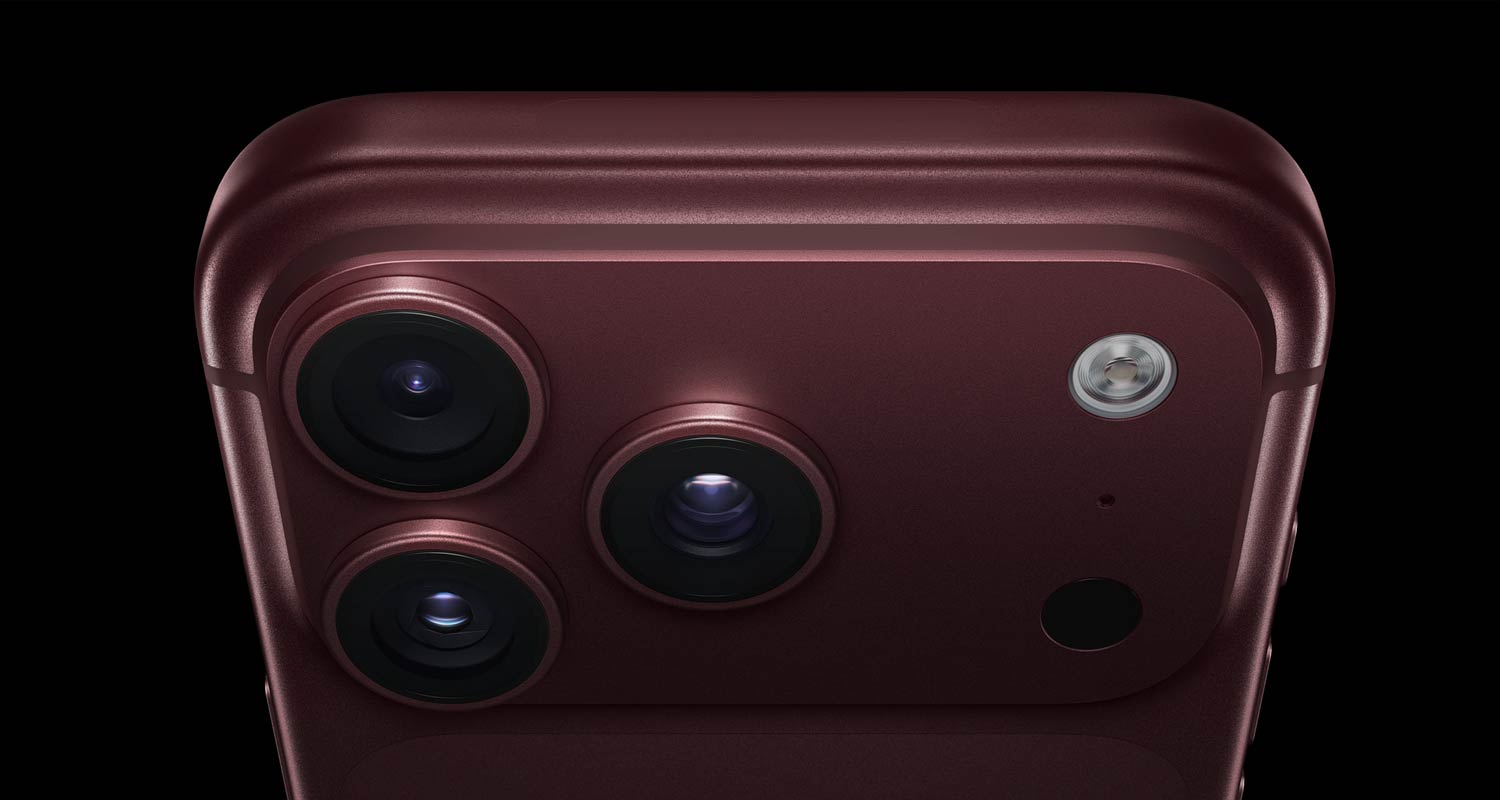
Apple also unveiled a feature aimed at addressing growing concerns over AI-generated and manipulated images. It introduced a new standard it calls “Apple Reference Image” to prove the authenticity of the images taken with the new iPhone 18 Pro cameras and said it will also support the emerging SynthID standard for identifying images that have been created or edited with AI. The Apple Reference Image feature will not be available in the EU or China.
The iPhone 18 Pro will also include the new A20 Pro chip, which brings improvements to help advanced AI models to run directly on iPhones.
“Apple Intelligence and Siri are front and centre. Apple is using its biggest strength, the sheer scale of its hardware base, to make AI an integral part of the everyday experience across devices,” PP Foresight analyst Paolo Pescatore said. Shares were down about 1% during the Apple presentation.
The company also said a new version of AirPods would start at $129 with noise cancellation, a first for its budget line of earbuds, and that a $149 version will be available with extra features such as wireless charging, and on-stem volume control that will allow users to adjust the volume by swiping up or down on the stem.
Apple also introduced the Apple Watch Series 12 and Apple Watch Ultra 4, positioning them as major health-focused upgrades. That includes a redesigned sensor system that collects heart rate more frequently than before and powers new features that gauge recovery and fitness. The company said the watches use new Apple silicon and improved sensors to deliver what it called the most accurate heart-rate tracking in a wearable.
Ternus previously served as Apple’s hardware chief but has kept a low public profile aside from a handful of product introductions and sustainability initiatives. It will fall to Ternus to persuade Apple’s customers that they need a foldable device that costs $2 000, a new high for a global brand that has defined mass luxury.
While Samsung Electronics and Huawei Technologies have sold folding phones since 2019, the devices have remained a niche among tech enthusiasts. But even with a steep price tag, analyst firms such as International Data Corporation expect Apple will sell every foldable iPhone it can produce and secure a 40% share of the lucrative niche by the end of next year. — (c) 2026 NewsCentral Media, with additional reporting by Stephen Nellis and Kenrick Cai, (c) 2026 Reuters
