


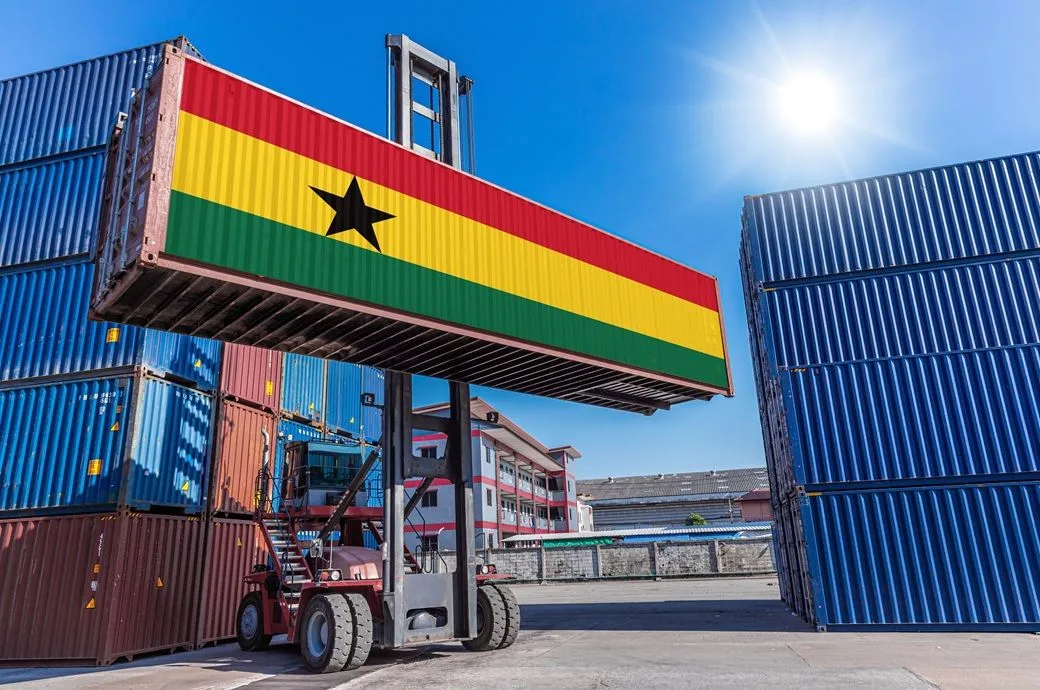
The intervention matters for importers, exporters and freight forwarders using Tema Port, after industry groups warned that space constraints and handling delays were adding costs and slowing cargo movement.
The Ghana Shippers’ Authority said its delegation was led by board chairman Mike Allen Hammah and chief executive officer Professor Ransford Gyampo. They met Ghana Ports and Harbours Authority (GPHA) director-general Major-General Paul Seidu Tanye-Kulono, Meridian Port Services Limited (MPS) chief executive officer Mohammed Samara and other port managers to identify short-term steps.
Ghana Shippers’ Authority leaders visited Tema Port to assess congestion and clearance delays as cargo volumes rise ahead of peak season.
Importers, exporters and freight forwarders face higher costs as empty containers take up space and inspections slow release.
Proposed fixes include customs risk review, tighter declaration penalties and coordinated state-agency inspections.
A local media outlet reported that the visit followed concerns from importers, exporters, freight forwarders and the public. In August, the Ghana Institute of Freight Forwarders warned that empty containers were occupying valuable space and increasing costs, while the Importers and Exporters Association of Ghana urged GPHA to expand container-handling capacity by turning selected spaces into modern facilities.
Samara described the congestion as manageable but warned that delays could become more disruptive without quick action. He also noted that the expansion of Terminal 3 had strengthened Ghana’s position as a shipping hub, but supporting infrastructure, particularly roads and inland depots, had not kept pace.
Samara was cited as saying cargo volumes had risen from 700,000 twenty-foot equivalent units (TEUs) in 2020 to 2.7 million TEUs in 2025, with current throughput at 2.5 million TEUs ahead of the peak season.
The fact-finding exercise also identified heavy reliance on physical checks as a clearance constraint. Samara added that 70 per cent of containers undergo intrusive inspection against a global standard of 10 per cent. Ineffective joint inspections and a risk classification system weighted towards Red Lane consignments were also identified as drivers of delays.
Proposed remedial measures include a GRA-Customs-led review of risk classification, stronger enforcement of penalties for wrong declarations and improved co-ordination of concurrent inspections by state agencies. A multi-stakeholder action plan is expected to speed up cargo release, protect government revenue and reduce congestion.
Hammah was reported as saying GSA’s wider mandate under Act 1122 (2024) requires it to engage early on constraints affecting commercial shipping. He linked Ghana’s port competitiveness with neighbouring ports to efficiency gains and improved infrastructure in and around the port.
Fibre2Fashion News Desk (CG)
