


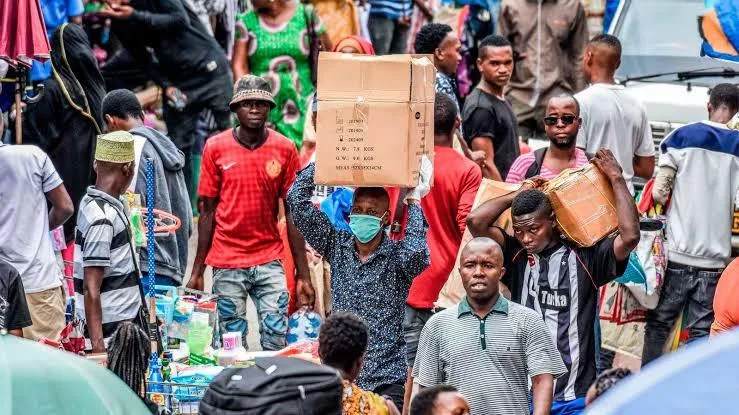
Nigerian owners of small businesses are facing uncertainty in Kenya following the threat of the Kenyan government to shut small businesses owned by foreigners in the East African country, as Nigerians make up a substantial part of this category of businesses.
This disturbing piece of news filtered in on Wednesday when Kenyan President William Ruto announced a massive crackdown beginning from Monday, September 7, 2026 on Nigerians and other foreigners operating small-scale businesses in Kenya, a move he claimed was to protect local traders from undue competition.
The government of Ghana had similarly shut Nigerian-owned businesses said to be primarily driven by the enforcement of the Ghana Investment Promotion Centre (GIPC) Act, which reserves retail trade and market stalls exclusively for Ghanaian citizens
Under the law, foreign nationals engaging in retail trade in Ghana are required to show a minimum foreign investment capital of $1 million (USD) and employ at least 20 local workers.
Ghanaian authorities and local unions such as the Ghana Union of Traders Association (GUTA) state that many foreign-owned shops, including those belonging to Nigerians, violate retail regulations, tax laws, and proper business registration protocols.
Although the Nigerian government intervened in the Ghanaian debacle, a lasting solution to this issue was perhaps never reached as there are reports of occasional attacks on Nigerians and their businesses in the former Gold Coast.
Nigerians have hardly recovered from the business disruptions and displacements caused by the xenophobic attacks in South Africa and now facing this reportedly infamous decision of the Kenyan government to strip them of their hard-earned investments, which will be almost unquantifiable when crackdown comes into full force.
Mr Ruto, at a meeting with small traders in the State House in Nairobi on Wednesday, said foreigners would not be allowed to compete in small businesses with local traders.
“From next week, all (foreign) traders doing those small businesses should close them,” Mr Ruto said. He said although his country is open for business, foreigners cannot be allowed to take over small businesses from local traders.
“It cannot be that a person comes from China or elsewhere to be a hawker or open a small shop,” Mr Ruto said.
He added, “We have made efforts to improve the economy, we have not improved investor confidence for hawkers to come to Kenya.”
Mr Ruto, is seeking re-election next year, and perhaps trying to act populist with a promise to speed up legislation barring foreigners from certain businesses in Kenya.
One Nigerian businessman, who does not want his name in print, told our correspondent on Friday that the policy is “distasteful and against the spirit of African brotherliness and negates the spirit of enterprise”.
But a reliable source from Kenya told our correspondent on Friday that “it is not Nigerians alone. The most hit are the Chinese. Nigerians are very few. And by law it is not allowed to run such business in Kenya. The crackdown will begin on Monday and it is justified.”
He noted that the new law was also part of the Local Content Bill 2025, which proposes that foreign firms ensure that at least 80% of their workforce consists of Kenyan citizens, including employees in senior management and C-suite positions such as chief executive officers.
The bill also proposes that foreign companies procure at least 60% of their goods and services from local Kenyan sources. For Agriculture –related manufacturing, the proposed legislation requires companies to source 100 % of their agricultural produce locally.
According to the law, 60% local content requirements would also apply to specific service industries, including financial, insurance, construction, transport, warehousing, logistics and security services.
This debilitating policy against Nigerians reflects extreme measures being taken not just by Kenya but even by some neighboring African countries, which Nigeria shared common regional protocol.
At the time of filing this report on Friday, the Nigerian Ministry of Foreign Affairs in Abuja was yet to respond to the developments in Kenya.
We’ve got the edge. Get real-time reports, breaking scoops, and exclusive angles delivered straight to your phone. Don’t settle for stale news. Join LEADERSHIP NEWS on WhatsApp for 24/7 updates →
