


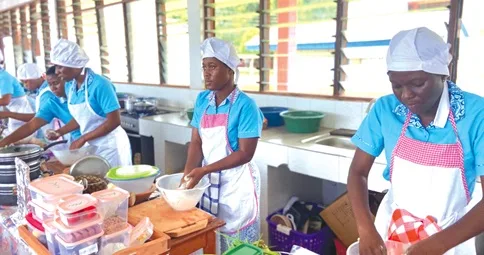
For years, Home Economics has been unfairly boxed into a narrow corner, often seen as a weaker programme focusing on cooking, sewing and housekeeping.
It is quite unfortunate that in most Ghanaian schools, this stereotype has become so powerful that many educators, parents and students view it as a last-resort option meant for those who cannot make it into Science, General Arts or Business.
This negative notion is both dangerous and misguided.
Many Ghanaians are unaware that Home Economics is a holistic field that combines science, arts and management.
Students are trained in different aspects, such as, food and nutrition, hospitality management, textiles, fashion design and human development.
These areas are far from inferior; they demand creativity, resilience and hard work.
Relevance
•Great career opportunities
Home Economics is a multifaceted discipline that leads to a wide range of professions.
Careers, such as, dietetics, catering and fashion design are not just limited to Ghana; they are in high demand, with international appeal, enabling graduates to work abroad and collaborate with others in this field.
It is, therefore, not surprising that interior decoration, hospitality services, and the fashion industry are fast-growing areas that consistently seek skilled professionals.
•Integration, science/creativity
In Food and Nutrition, learners apply biological principles to comprehend the nutritional needs of the human body.
Chemistry is also needed to understand the various reactions in food preparation and physics to understand heat transfer during cooking.
This unique blend of science and creativity prepares learners to become adaptable in the job market.
•Contribution, national development
The contribution made by graduates from Home Economics to the economic, social and health development cannot be underestimated.
For instance, nutritionists in Ghana design healthy and affordable diets to fight malnutrition and lifestyle-related diseases.
Furthermore, professionals from the hospitality industry help boost Ghana’s tourism industry.
Again, experts from the fashion industry can help promote the sale of locally made textiles and garments, boosting Ghana’s economy.
•Promotion, entrepreneurship
Home Economics limits the pressure on the job market by contributing to job creation and innovation because it produces self-reliant graduates.
The study of Home Economics gives learners practical skills to start their own business with relatively low capital.
For example, a Home Economics graduate can establish a small catering joint, an interior design studio, a fashion and dressmaking enterprise and many others.
• Development, life skills
Home Economics not only prepares students for careers, but also prepares them for life.
It equips learners with essential life skills, such as, time and family management, helping them to manage their homes and professional responsibilities effectively.
Home Economics is not just an ordinary programme.
It is an incredible field that students from all walks of life must be encouraged to explore since it has many excellent opportunities.
The writer is a tutor with the Ghana Education Service.
E-mail:
