


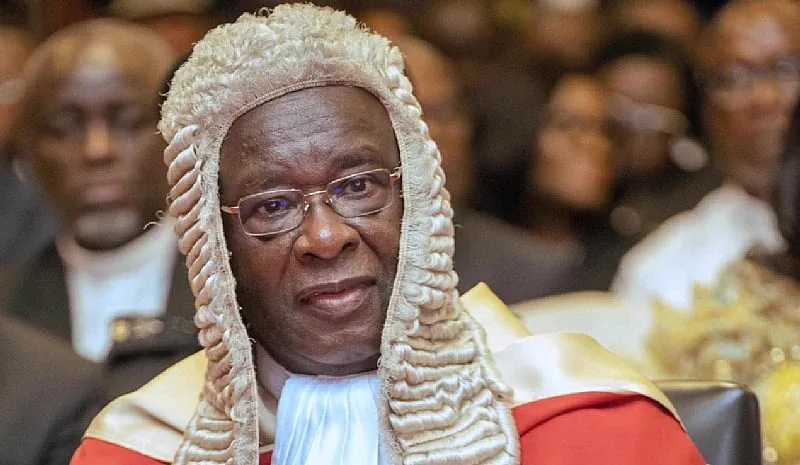
The Ghana Centre for Democratic Development (CDD-Ghana) has urged Chief Justice Paul Baffoe-Bonnie to exercise restraint and discretion in his public engagements to protect the perceived impartiality and credibility of the Judiciary.
The call follows comments made by the Chief Justice on Wednesday, September 2, 2026, during visits to the Social Security and National Insurance Trust (SSNIT) and the Minerals Income Investment Fund (MIIF), alongside members of the Council for Legal Education and Training.
At MIIF, the Chief Justice praised the institution’s current management but questioned what had been done during the “past eight years”.
He made similar comparisons at SSNIT, referring to previous attempts to sell some of the institution’s assets and lamenting what he described as the state of affairs under the previous management of the country.
In a statement issued on Friday, September 4, CDD-Ghana said the comments could be interpreted as an explicit comparison between the current and previous administrations and could create a perception of partisan political endorsement.
“Such commentary creates a perception of political bias, compromises the Judiciary’s non-partisan mandate, and risks breaching the Code of Conduct for Judges and Magistrates,” the Center said.
Concerns over public confidence
CDD-Ghana said the remarks were particularly concerning given what it described as declining public confidence in the Judiciary.
It cited findings from the 2024 Afrobarometer Round 10 survey, which showed that only 35 per cent of Ghanaians expressed trust in the courts, representing a 21-percentage-point decline from 2012.
The survey also found that 62 per cent of respondents believed judicial decisions were routinely influenced by powerful interests, while about half questioned whether an ordinary person could obtain a fair trial.
According to CDD-Ghana, such perceptions make it particularly important for senior judicial officers to avoid public statements or engagements that could create doubts about their political neutrality.
‘Justice must be seen to be done’
The organisation stressed that judges are not required to withdraw completely from public life but must exercise self-restraint in their public conduct.
“Justice must not only be done but be seen to be done,” the Center said, arguing that the principle requires the Judiciary to maintain an unequivocal appearance of neutrality.
CDD-Ghana therefore called on the Chief Justice to adhere strictly to the Code of Conduct for Judges and Magistrates and to limit public engagements, including visits to other state institutions, to matters directly connected to court administration or legal development.
Call for stronger judicial oversight
The Centre also called on the Judicial Council and the Association of Judges and Magistrates to strengthen internal oversight and ensure that judicial officers are held to account regardless of their rank.
It said the Judiciary remains a critical pillar of Ghana’s constitutional democracy and warned that any erosion of its integrity could undermine public confidence and democratic stability.
CDD-Ghana further urged the Chief Justice to reflect on the responsibilities attached to his office and align his public conduct with the ethical demands of the position.
It said restoring and maintaining public confidence in the Judiciary was essential to ensuring the effective administration of justice.
DISCLAIMER: The Views, Comments, Opinions, Contributions and Statements made by Readers and Contributors on this platform do not necessarily represent the views or policy of Multimedia Group Limited.
DISCLAIMER: The Views, Comments, Opinions, Contributions and Statements made by Readers and Contributors on this platform do not necessarily represent the views or policy of Multimedia Group Limited.
