


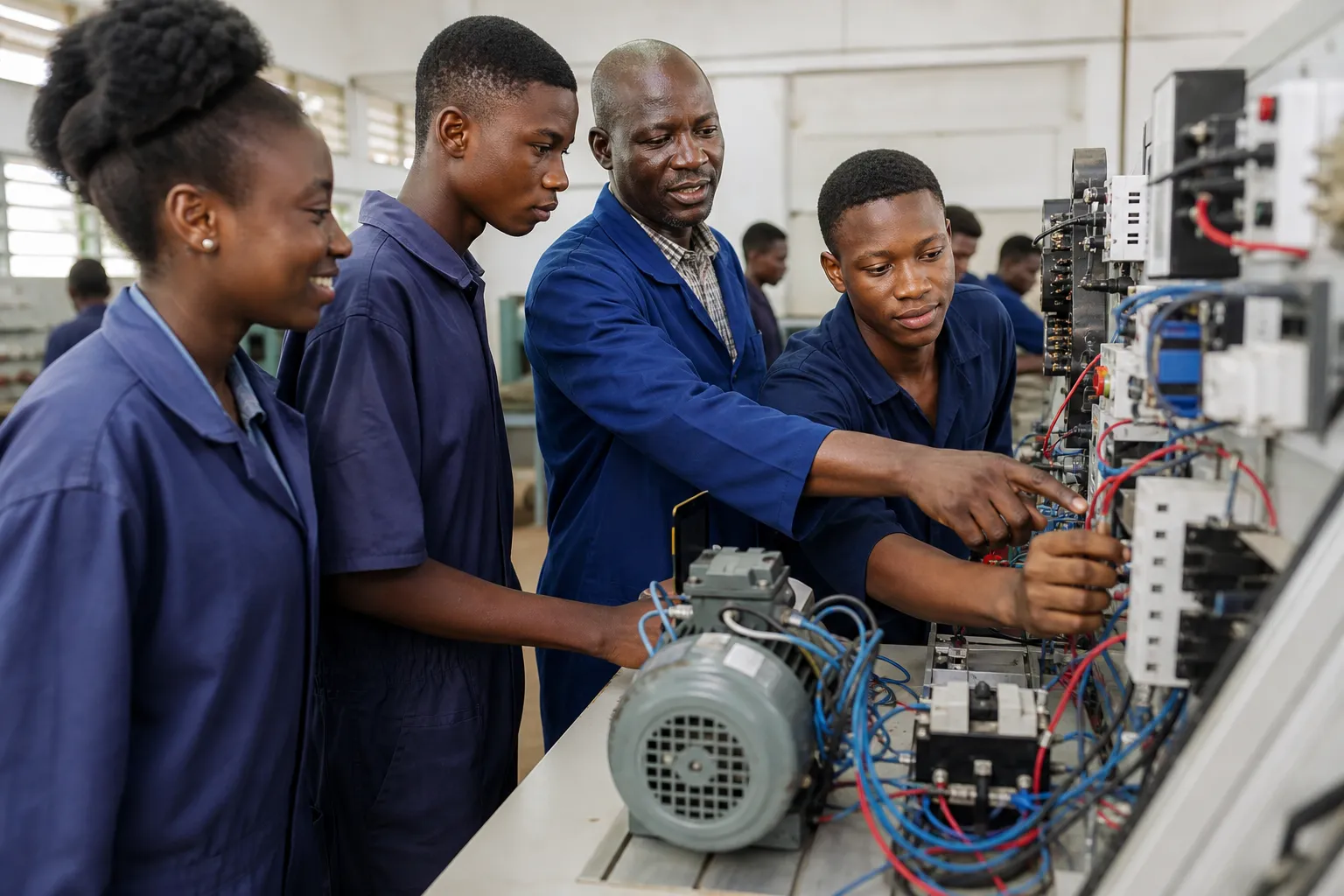
The Ghanaian government has secured $300 million in financing from the World Bank to transform the secondary, technical and vocational education system. The funds will be provided under the Secondary Education Transformation for Access, Relevant and Results for Jobs (STAR-J) project, MyJoyOnline reports.
Funding and infrastructure
Technical Adviser to Ghana’s Minister of Education Professor George K. T. Oduro said that the government will also provide $31 million in co-financing. Thus, total investment in the STAR-J programme will amount to $331 million.
The programme is intended to expand infrastructure for secondary education and technical and vocational training, improve the quality of education and its relevance to labour market needs. It is also designed to support government efforts to discontinue the double-track system by 2027.
Cooperation with industry
During a dialogue involving representatives of the authorities, industry and other stakeholders, participants discussed how to align technical and vocational education with the needs of the economy. Ghana TVET Service Director General Eric Kofi Adzroe said the country seeks to reduce the gap between the skills acquired by specialists in Ghana and the requirements of more developed economies.
More current news is available on the UA.News Telegram channel Telegram.
According to him, the government is establishing a TVET fund to address shortages of equipment and infrastructure, as well as strengthen links between educational institutions and industry. Ghana TVET Service is also paying greater attention to soft skills, attitudes toward work and work ethics in order to improve graduates’ employability.
Digital skills and youth employment
Chairman of Ghana’s National Development Planning Commission Nii Moi Thompson called for more active use of digital platforms to create jobs for young people. According to data he cited, only 28.5% of the country’s population use information and communication technologies for business and work.
Thompson also referred to an Afrobarometer survey according to which 72% of young Ghanaians want to emigrate, with more than half of them citing job seeking as one of the main reasons. He called for creating opportunities that would encourage young people to remain in the country and participate in its development.
Download our app



