


The World Bank has called for reforms in Ghana’s transport sector to support growth, create jobs and reduce the cost of doing business, warning that weak infrastructure and poor connectivity are limiting the country’s economic potential.
The call was made by Division Director at the World Bank, Robert Taliercio O’Brien, at the launch of the 10th Ghana economic Update in Accra on 26th August, 2026.
The report projected Ghana’s growth at 4.8 per cent in 2026 and around five per cent over the
medium term, but warned that the gains would not translate into broader prosperity without stronger revenue mobilisation, job creation and structural reforms.
Mr O’Brien said poor transport infrastructure was imposing a high economic cost on the country. Road safety incidents alone were estimate
Transport
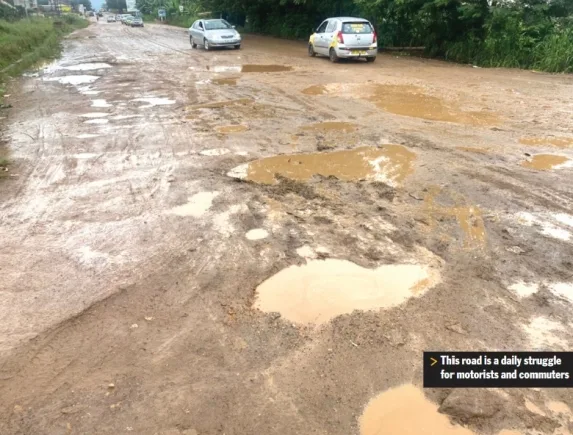
The World Bank report identified transport as a major constraint on Ghana’s competitiveness and agricultural productivity.
It said only 27 per cent of the country’s 94,200-kilometre road network was paved, while more than half was in fair-to-poor condition, with feeder roads facing particular challenges.
The report also noted a decline in rail infrastructure, saying the operational rail network fell from 947 kilometres in 1960 to 160 kilometres in 2020.
Population access to rail services had also declined from nearly 30 per cent to less than one per cent over the same period.
Mr O’Brien said poor transport infrastructure was imposing a high economic cost on the country. Road safety incidents alone were estimated to cost Ghana about 2.1 per cent of GDP annually, equivalent to roughly US$4.55 billion.
“Road safety is not only a transport issue; it is a fiscal and public health issue that requires urgent action,” he said.
The World Bank identified six priorities for transforming the transport sector. They included operationalising the Road Maintenance Trust Fund, developing a unified national transport strategy, revitalising freight-led rail services along the western and eastern corridors, improving road safety, adopting climate-resilient infrastructure standards and extending the digital single window to the Jakarati and inland terminals.
The division director said the World Bank was supporting the agenda through the Ghana Market Access and Connectivity Project, which had received parliamentary approval. The project involved US$500 million to rehabilitate about 1,050 kilometres of feeder roads through performance-based maintenance contracts, particularly in areas where poor connectivity was affecting agricultural productivity and rural livelihoods.
Jobs
The Coordinating Director (Technical) at the Ministry of Finance, Samuel Danquah Arkhurst, said the government recognised that infrastructure investment would not deliver its full benefits without proper maintenance.
“A road that is not maintained is a road on a countdown to despair, so sustainable road maintenance financing is a reform we are taking seriously,” he said.
Mr Arkhurst said the government’s Big Push infrastructure programme was intended to address some of the country’s transport gaps, while supporting economic activity. He cited progress on the Accra-Kumasi Expressway, as well as bridge projects over the Afram River and the Danbai Bridge along the eastern corridor.
He said the World Bank-funded connectivity programme was expected to reduce travel times on paved corridors by as much as 40 per cent, lower transport costs and reduce post-harvest losses.
The programme was also expected to create about 25,000 direct and indirect jobs, including at least 7,500 for women.
“Better roads mean that farmers can move produce to markets faster, reduce losses and retain more value from their work,” he said.
Mr Arkhurst said recent economic indicators showed that the government’s fiscal consolidation efforts were producing results. He said inflation, which had remained above 20 per cent for two consecutive years, had fallen to 4.6 per cent at the end of July 2026, while real GDP grew by 6.4 per cent in the first quarter.
