


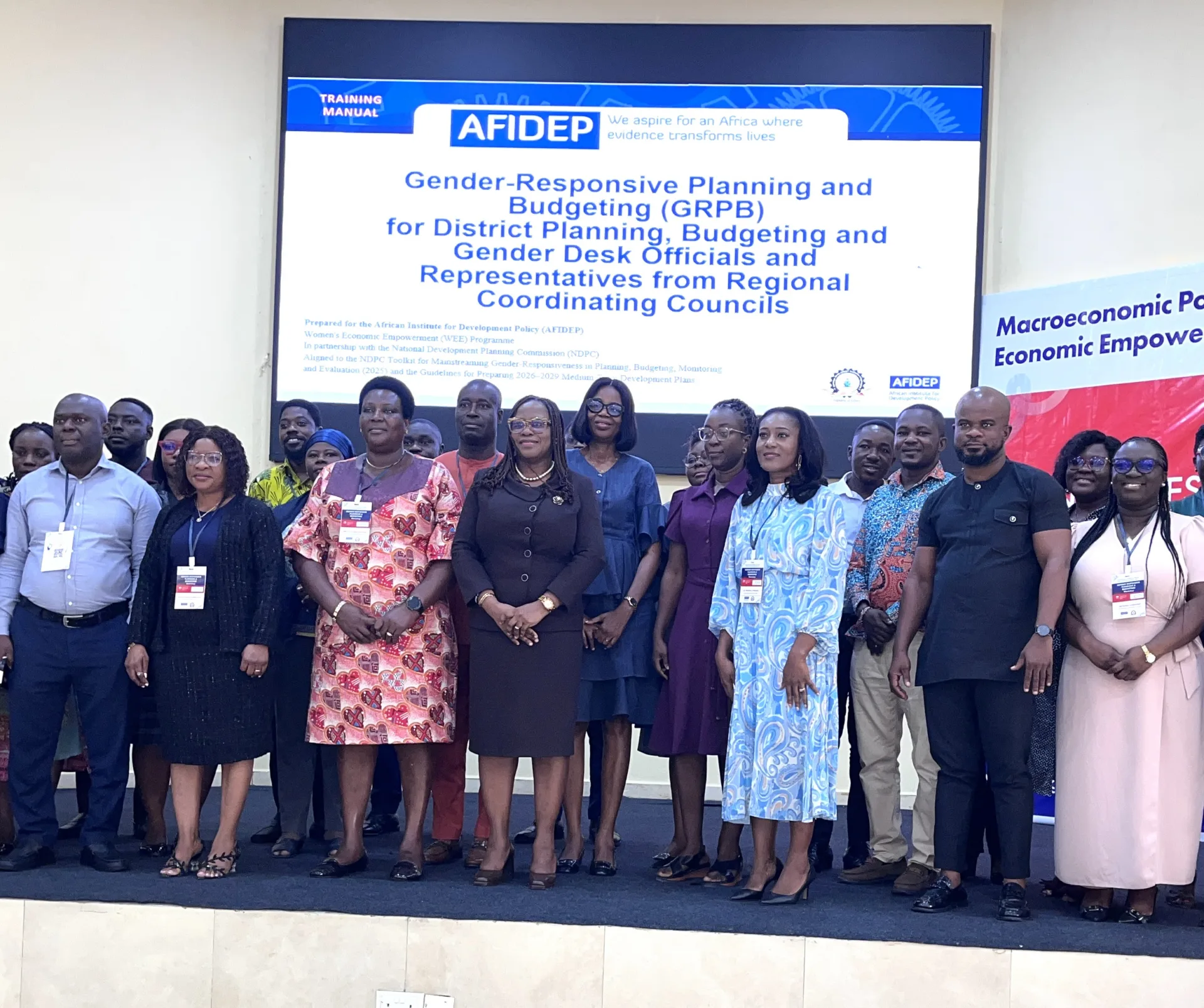
The National Development Planning Commission (NDPC) is pushing for gender considerations to become a more deliberate part of Ghana’s planning and public spending decisions.
Director-General of the NDPC, Dr Audrey Smock Amoah, says development plans and budgets must take into account how government interventions affect women and men differently and identify who ultimately benefits from public resources.
She made the call on Monday, August 31, 2026, at the opening of a three-day Gender-Responsive Planning and Budgeting Training and Capacity Strengthening Programme in Ghana.
The programme, organised by the NDPC in partnership with the African Institute for Development Policy (AFIDEP), brings together planning, gender and budget officers from national and subnational institutions.
Dr Amoah challenged public officials to look beyond the amount of money allocated to development programmes and examine whether those resources are reaching the people they are intended to serve.
“When we allocate public resources, do we know who benefits and who may still be left behind?” she asked.
She also questioned whether gender is being properly considered when development plans and budgets are prepared or whether it is introduced only after major decisions on priorities and resource allocation have already been taken.
“Are gender considerations being meaningfully reflected in our plans and budgets, or are they sometimes treated as afterthoughts?” she asked.
According to Dr Amoah, monitoring systems must also provide evidence of whether public spending is producing fairer development outcomes.
She urged participants to use the training to identify practical gaps in their institutions and apply the lessons to the planning and budgeting processes when they return to their respective offices.
“The success of this workshop will ultimately be measured by how effectively we translate what we learn into better plans, more responsive budgets and improved development outcomes,” she said.
Research and Policy Analyst at AFIDEP, Dr Maame B. Peterson, said decisions over public funds cannot be separated from questions of fairness.
“Every one of you sitting here today plays a part in how public money moves in this country,” she told participants.
She said officials working in district planning, budgeting and gender offices, as well as regional and national institutions, all influence how public resources are distributed.
Dr Peterson said gender-responsive budgeting requires institutions to examine who benefits from public spending and make deliberate changes where particular groups are being left behind.
The training is based on AFIDEP’s gender-responsive budgeting toolkit and uses actual planning and budgeting documents to give participants practical experience applying the approach to their work.
Dr Peterson encouraged participants to bring real challenges from their districts and assemblies into the programme rather than limiting discussions to theory.
“This is not a training where you will sit and listen for three days. We have built it to be practical and hands-on because that is the only way this kind of learning will take,” she said.
She said the broader objective was to equip public officials with practical tools while strengthening cooperation among institutions responsible for planning, budgeting and gender issues.
“Gender-responsive budgeting is not something one district alone has to do,” she said. “It becomes real when offices like you across the country are equipped to carry this forward together.”
Asaase 99.5 Accra, Asaase 98.5 Kumasi, Asaase 100.3 Cape Coast, AsaasePa 107.3 (Accra)
Affiliates: Bawku FM 101.5, Bead FM 99.9 (Bimbilla), Mining City Radio 89.5 (Tarkwa), Nandom FM 101.9, Nyatefe Radio 94.5 (Dzodze), Sissala Radio 96.3 (Tumu), Somuaa FM 89.9 (Gushegu), Stone City 90.7 (Ho) and Wale FM 106.9 (Walewale)
Listen online: asaaseradio.com, Sound Garden and TuneIn
Follow us:
X: @asaaseradio995, @Asaase985ksi, @asaase1003, asaasepa1073
Instagram: asaaseradio99.5, asaase985ksi, asaase100.3, asaasepa107.3
LinkedIn: company/asaaseradio995. TikTok: @asaaseradio99.5
Facebook: asaase99.5, asaase985ksi, Asaase100.3, AsaasePa107.3
YouTube: AsaaseRadioXtra
Join the conversation. Accra: call 020 000 9951/050 009 0121, WhatsApp 020 000 0995. Kumasi: call 059 415 7985 or call/WhatsApp 020 631 5260. Cape Coast: call/WhatsApp 059 388 2652.
#AsaaseRadio
#AsaasePa
#TheVoiceofOurLand
