


Wednesday 26th August, 2026 07:43 AM|

Kenya Airways’ chairman, Kiprono Kittony, has revealed that aviation fuel now accounts for 53 per cent of the airline’s total expenditure, as the carrier grapples with a sharp rise in fuel prices driven by the geopolitical environment.
While appearing during an interview with a local media station on Tuesday, August 25, 2026, the chairman said the airline was purchasing aviation fuel at about $73 (Ksh9,426) per unit in 2025, but the price has since risen to more than $140 (Ksh18,076), translating to an average increase of about 66 per cent over the year.

“Today, fuel cost is actually 53% of our total expenditure, which has not been the case in the past,” the chairman said.
He explained that Kenya Airways has been unable to fully pass the increased fuel costs on to passengers because of restrictions governing how much of the additional cost can be reflected in ticket prices.
According to the chairman, the airline is regulated by the International Air Transport Association (IATA), which limits the extent to which increased costs can be transferred to passengers through ticket prices.
He said the increase in fuel prices has therefore placed additional pressure on the airline’s finances, with the cost of fuel now taking up more than half of its total expenditure.
Six aircraft remain grounded
The chairman’s remarks came amid questions over Kenya Airways’ fleet capacity, with six aircraft currently grounded.
He acknowledged that the grounded aircraft has affected the airline’s capacity but maintained that restructuring the carrier’s balance sheet could provide an opportunity to raise significant capital.
He said there was strong interest from global investors seeking to inject money into Kenya Airways, which could help the airline address its fleet and financial challenges.
KQ’s national carrier status
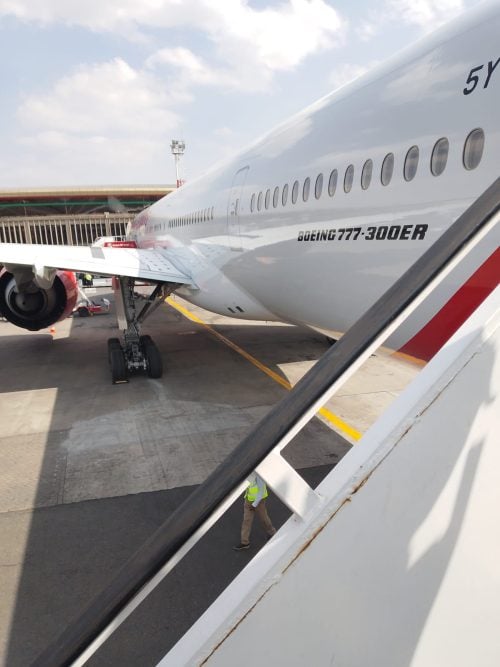
The chairman also stressed the importance of maintaining significant Kenyan equity control of Kenya Airways, arguing that this was necessary to preserve the airline’s status as the country’s national carrier.
He further defended the decision to keep Kenya Airways listed, saying remaining a publicly traded company would ensure stronger corporate governance and higher standards of public disclosure.
He said the airline’s decision to open its books to the public was intended to give Kenyans and investors a clearer understanding of the challenges facing the carrier.
The chairman attributed the sharp increase in aviation fuel prices partly to the geopolitical environment, noting that the cost had risen from about $73 to more than $140.
With fuel now accounting for 53 per cent of total expenditure, the increase represents a major financial challenge for Kenya Airways as it seeks to restore its fleet capacity, restructure its balance sheet and attract fresh investment.
