


Saturday 15th August, 2026 08:51 PM|
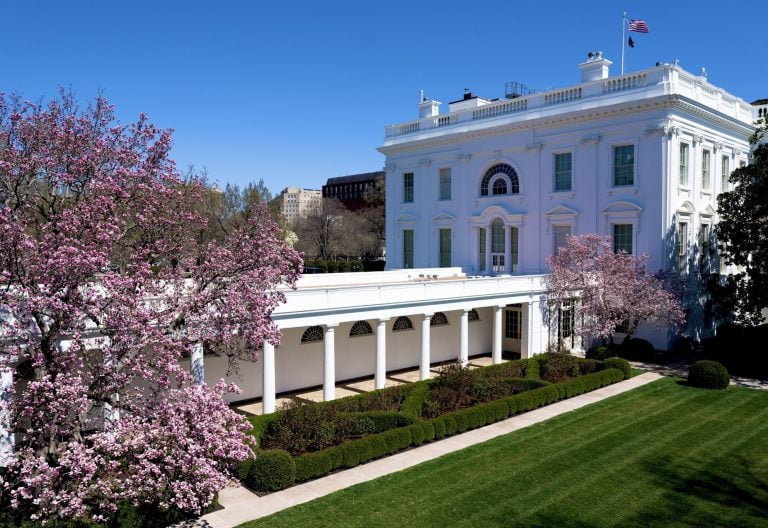
Kenya has emerged as one of the African countries attracting increased attention from the United States after a new White House trade report identified it as a potential transshipment risk in global supply chains linked to Chinese exports.
The report, released by the White House Office of Trade and Manufacturing Policy in August 2026, places Kenya in a category of countries considered vulnerable to being used as transit points for goods originating from higher-tariff countries before they enter the U.S. market.
The document does not accuse Kenya of illegal transshipment. Instead, it says Kenya has characteristics that could make it attractive to exporters seeking to avoid higher US tariffs on Chinese goods.
That distinction is important because Kenya remains one of the major African beneficiaries of the African Growth and Opportunity Act (AGOA), which gives many Kenyan products duty-free access to the United States.
The report warns that countries found to be involved in tariff evasion could face “immediate interdiction, penalty tariffs, sanctions, and potential loss of market access.”
For Kenya, where exports to the United States support thousands of jobs in manufacturing, textiles, agriculture and logistics, the report raises questions about future scrutiny of supply chains.
The report focuses on what it describes as illegal transshipment – the practice of routing goods through a third country to obtain lower tariffs or other trade benefits.
According to the report, illegal transshipment may involve relabelling, repackaging, re-invoicing, minor processing or false country-of-origin claims.
“Illegal transshipment may involve relabeling, repackaging, re-invoicing, minor processing, false country-of-origin claims, or other actions intended to secure tariff treatment that would not apply if the goods’ true economic origin were declared,” the report says.
The report argues that Chinese exporters increasingly used third countries after the United States imposed tariffs on China beginning in 2018.
It says goods that once moved directly from China to the United States were increasingly routed through other jurisdictions, where limited assembly, packaging or documentation changes could create the appearance of a different country of origin.
Why Kenya appears on the list
Kenya is placed in Tier 3, which the report describes as “Small, Opportunistic Chinese Targets.”
These are smaller economies that may offer advantages such as low-cost labour, free zones, strategic port access, bonded warehousing, niche assembly capacity or preferential access to the U.S. market.
The report identifies Kenya and Morocco as Africa’s “Peripheral Hubs”, describing them as emerging port and free-zone locations that could serve selected China-linked trade flows.

It specifically mentions Kenya’s Mombasa Port, bonded warehouses, free-zone infrastructure and preferential access to the US market under AGOA as factors that could make the country attractive for trade rerouting.
“China-linked exporters gravitate to them because each offers a specialized comparative advantage,” the report states.
Again, the report presents these as risk factors, not evidence that Kenya has participated in illegal transshipment.
The biggest issue is not Kenya’s inclusion in the report itself, but what increased U.S. scrutiny could mean for exporters.
AGOA gives many Kenyan products duty-free access to the American market. Kenya exports apparel, textiles, tea, coffee, fresh produce, leather products and manufactured goods to the United States under the programme.
The White House report suggests that countries identified as potential transshipment hubs may face closer customs checks, stricter origin verification and greater examination of supply chains.
For exporters, that could mean additional documentation requirements, production audits and verification that goods exported from Kenya were genuinely manufactured or substantially transformed in Kenya.
The report repeatedly stresses the need to distinguish legitimate manufacturing from pass-through trade and origin shifting.
The role of Mombasa Port and free zones
Kenya has spent years expanding Mombasa Port, export processing zones and special economic zones to position itself as a regional manufacturing and logistics hub.
Those investments are intended to attract factories, create jobs and increase exports.
The White House report suggests that the same infrastructure could also make Kenya more important in global supply-chain monitoring.
Ports, bonded warehouses and free zones can support legitimate trade, but they can also be used for warehousing, consolidation, repackaging and re-export activities if customs controls are weak.
That is why the report places particular emphasis on logistics platforms and free-zone operators within what it calls the “Shadow Transshipment Network.”
One of the most significant parts of the report is the proposed AI-enabled “Detective Border.”
The White House says the system will help U.S. Customs and Border Protection analyse shipment data, routing histories, ownership structures, production capacity and trade patterns to identify suspicious transactions.
The objective is to test whether exporters have the capacity to produce the goods they claim to originate from a particular country.
In practical terms, exporters from countries identified as potential risk hubs could face more sophisticated scrutiny than before.

Kenya’s growing trade ties with China
The timing of the report is notable because Kenya has also been expanding trade with China.
In May 2026, China granted duty-free access to exports from 53 African countries, including Kenya, opening a larger market for products such as tea, coffee, avocados and macadamia nuts.
The White House report does not cite China’s zero-tariff policy as a reason for Kenya’s inclusion.
However, Kenya’s growing integration into global trade networks could make its export flows more closely watched by U.S. authorities seeking to prevent tariff evasion through third countries.
The White House report makes an important qualification that is often overlooked.
It says the shift in trade flows after the 2018 US tariffs does not establish that all displaced Chinese trade was illegally transshipped. Some of the changes, it says, reflect legitimate production, investment and sourcing decisions.
That means Kenya’s inclusion should be understood as a warning about potential vulnerability, not as a finding that Kenya has engaged in customs fraud.
For Kenya’s manufacturers, exporters and logistics operators, the message is that rules of origin, documentation and supply-chain transparency will become increasingly important.
As the report puts it, illegal transshipment can become “smuggling disguised as trade” and “fraud cloaked in paperwork.”
Kenneth Mwenda
Kenneth Mwenda is a business, sports, and politics digital writer with over seven years of experience in journalism, covering breaking news, feature stories, and in-depth analysis across a range of beats.
For inquiries, he can be reached at [email protected]
View all posts by Kenneth Mwenda
