


NAIROBI, Kenya, August 10, 2026 – Football is, without question, Kenya’s biggest sport.
Walk through almost any estate, school, neighbourhood or social gathering and football is part of the conversation.
Children grow up dreaming of becoming professional footballers.
The English Premier League dominates television screens, the Kenyan Premier League has a loyal following, and whenever Harambee Stars play, the country’s attention shifts towards the national team.
Yet there is a strange contradiction at the heart of Kenyan sport.
For all its popularity, football does not necessarily provide the financial security that its players deserve.
In fact, a growing comparison with basketball is raising an uncomfortable question: why can professional basketball players in Kenya appear to earn considerably more than footballers in the country’s biggest sport?
The numbers, although difficult to verify comprehensively because Kenyan football does not have a publicly available league-wide salary database, tell a troubling story.
Figures circulating within the local game have placed the typical monthly earnings of many Kenyan Premier League footballers at around the equivalent of $600, with significant variation between clubs and players.
Some earn considerably more, while others earn dramatically less.
Former AFC Leopards striker Raymond Omondi has previously spoken about players earning salaries as low as KSh10,000 a month.

The contrast becomes even more striking when Nairobi City Thunder enters the conversation.
The basketball club has developed one of the most ambitious professional models in Kenyan sport, with reports in 2024 putting the maximum monthly wage available to its players at around KSh4.5 million collectively, depending on the stage of competition and performance.
The club has also increasingly operated with a full-time professional model, something still relatively uncommon in Kenyan sport.
The question, therefore, is not simply whether basketball players are earning more.
It is why?
The City Thunder example
Nairobi City Thunder offers perhaps the clearest case study of what happens when a Kenyan sports club is deliberately built around professionalism.
Over the past few seasons, Thunder have transformed themselves from a domestic basketball side into an organisation with continental ambitions.
They became the first Kenyan club to qualify for the Basketball Africa League (BAL) in 2024 and repeated the feat in 2025.
Domestically, they won back-to-back Kenya Basketball Federation (KBF) Premier League titles in 2023/24 and 2024/25 without losing a game.

That success has attracted corporate interest.
In June this year, I&M Bank committed KSh10 million to Thunder for the remainder of the season, with the money intended to strengthen areas including training, travel, player welfare and general operations.
That investment matters because it demonstrates something Kenyan football has struggled to consistently achieve: turning sporting success into a compelling commercial proposition.
The Thunder story also suggests that investors are willing to put serious money into Kenyan basketball when they see a club that looks professionally run, ambitious and capable of competing beyond the domestic market, but this is where the comparison becomes complicated;
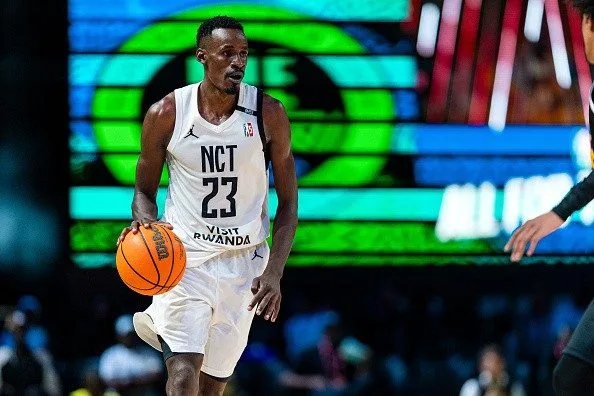
Basketball has fewer players on the court and generally requires a smaller playing roster than football. A football club may carry more than 20 players, alongside coaches, assistants, medical teams, analysts, equipment staff and administrators.
A basketball organisation can therefore potentially concentrate a greater proportion of its available resources on a smaller group of athletes, but squad size alone cannot explain everything. After all, football attracts significantly larger audiences in Kenya.
So where is the money?
Popularity is not the same as profitability
This may be the biggest misconception surrounding Kenyan football.
Being the most popular sport does not automatically mean being the most commercially successful.
Football has the audience but the question is whether the sport has built the infrastructure necessary to monetize that audience.
Kenya’s top flight now has a broadcast partnership with Azam TV, following a seven-year agreement announced in 2023.
Football Kenya Federation (FKF) also maintains official broadcast partners for its competitions.
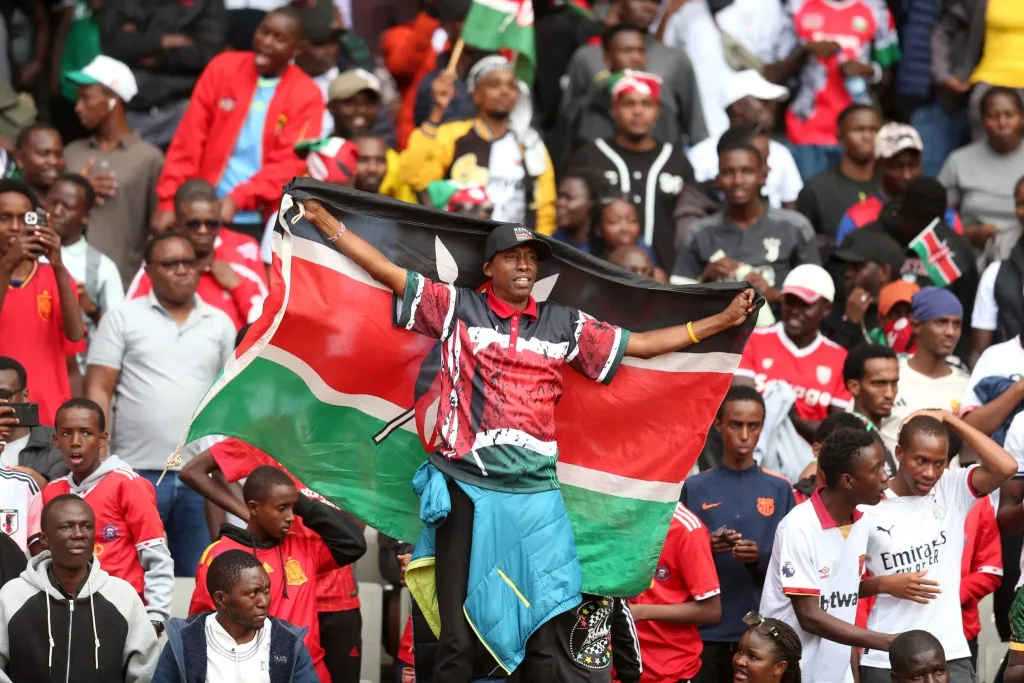
The league has also attracted major sponsorship.
For the 2025/26 season, FKF and SportPesa announced a KSh20 million prize-money pool, with KSh15 million going to the champions, KSh3 million to the runners-up and KSh2 million to the third-placed team.
More significantly, reports around the new sponsorship structure indicated that KSh1.2 billion of a wider KSh2 billion funding package was intended to go directly to clubs, while KSh800 million would support league operations and development.
On paper, this sounds like progress, but it also raises an obvious question: If significant amounts of money are entering Kenyan football, how much of that money ultimately reaches the footballers?
That is where the conversation needs to move beyond simply blaming clubs.
Is football too expensive to operate?
There is a legitimate economic argument here.
A professional football club is expensive.
There are more players, staff, training requirements, larger travel parties, larger pitches and stadium requirements.
Medical departments, equipment, security, matchday logistics and administrative costs all add up.
Basketball can potentially operate with a leaner structure, but that explanation only goes so far.
The real difference may be the business structure surrounding the athlete.
A number of Kenyan basketball players operate within institutions where sport is connected to employment, corporate sponsorship or established organizational structures.
Some players are not simply treated as athletes who receive match-related payments; they can become part of a broader professional organization.
That distinction is crucial.
A footballer who receives a monthly club salary is dependent on that club’s ability and willingness to pay.
A player who is incorporated into a wider employment structure can potentially have a more stable relationship with the organization, and that stability is one of the biggest missing pieces in Kenyan football.
The real problem may be professionalism
Tony Ochieng, head coach of Strathmore Blades, recently made a similar argument about Kenyan basketball.
He called for greater corporate sponsorship, saying increased investment would allow clubs to recruit better players, improve competition and pay athletes properly.
That is revealing.
The lesson from basketball may not necessarily be that basketball is inherently more profitable than football.
It may be that basketball is beginning to understand the value of professionalizing the product.
Thunder’s rise is a perfect example.
Corporate investment has helped the club build a competitive roster.
Success has created continental exposure, which increases the club’s commercial appeal.
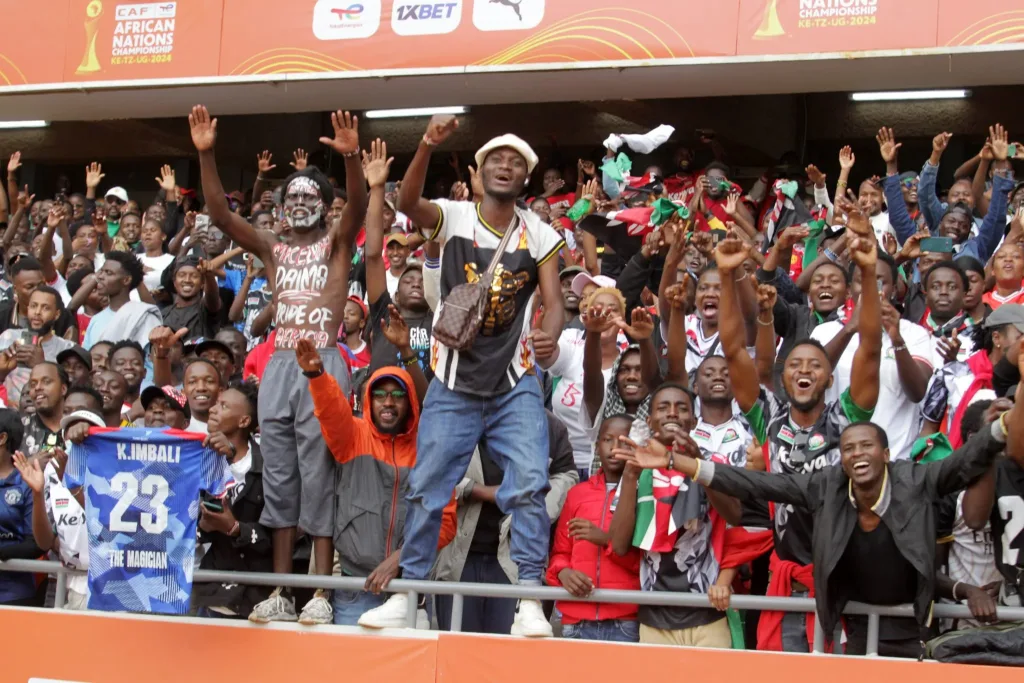
That commercial appeal attracts more sponsors. It is a cycle.
Kenyan football needs to find a similar cycle.
Instead, the football ecosystem often appears stuck in a situation where clubs struggle financially, players struggle to receive adequate wages, investment remains limited and the quality of the league suffers.
Then the cycle repeats itself.
The player is left carrying the burden
This is where the conversation becomes more serious than football versus basketball.
Imagine dedicating your entire youth to football.
You train from childhood, sacrifice education opportunities, travel for trials, spend money on boots, transport, food, fitness and recovery.
Eventually, you make it into the professional game.
Then you discover that being a professional footballer does not necessarily mean being financially secure. That is a devastating reality.
A player cannot build a sustainable future around a profession that barely covers his immediate expenses, and there are already examples of how difficult that reality can become.
In Kenyan women’s football, former Harambee Starlets striker Neddy Atieno has spoken about earning only KSh6,000 per month in 2014 and KSh12,000 two years later, amounts she said were insufficient once costs such as supplements, transport and equipment were considered.
She eventually moved towards the corporate world.
That story exposes a larger problem.
What happens to the footballer whose talent is good enough to play professionally but not good enough to earn the kind of money that can change his life?
Does he leave the game?
Does he find another job?
Does he continue playing while struggling financially?
Or does Kenya simply lose another potentially talented player because the football economy could not sustain him?
The uncomfortable question of leadership
It would be irresponsible to jump from low salaries to allegations of embezzlement without evidence.
There needs to be a distinction between mismanagement, poor commercial strategy and outright theft, but asking where the money goes is not unreasonable;
Kenyan football has repeatedly been promised growth, professionalism, better broadcasting, improved player welfare and stronger commercial partnerships.
The players should therefore be entitled to ask a simple question:
Where is the financial benefit of all this growth?
If football is receiving sponsorship money, broadcast revenue, gate receipts and other commercial income, supporters deserve greater transparency over how those resources are distributed.
How much goes to clubs?
How much goes towards administration?
How much is spent on development?
How much reaches players?
How many clubs pay salaries on time?
How many players have proper contracts?
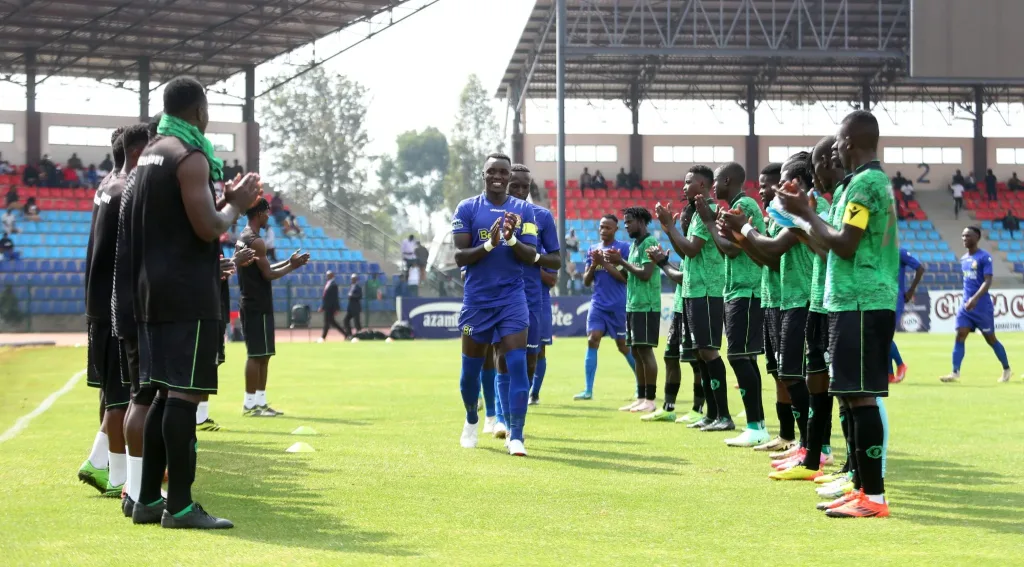
And how many footballers can realistically call football their full-time profession without needing a second source of income?
These are not accusations.
They are questions that a professional sporting industry should be able to answer.
Kenya’s biggest sport deserves a better football economy
Perhaps the most ironic part of this entire debate is that basketball itself is still struggling.
Even those within the sport recognize that corporate investment is necessary to professionalize the league.
Ochieng’s call for more sponsors demonstrates that basketball is not some financially perfect alternative to football, but basketball has shown what can happen when the right pieces begin falling into place.
Nairobi City Thunder has demonstrated that Kenyan clubs can build a professional identity, attract corporate partners, dominate domestically and compete internationally.
Their recent KSh10 million I&M Bank partnership is another indication that corporate Kenya is willing to invest when it sees a compelling sporting proposition.
Football has a much larger audience, deeper cultural roots, more aspiring young players and greater international visibility.
Yet, for too many footballers, prosperity remains painfully distant.
That should concern everyone involved in the sport because the ultimate measure of a professional sporting industry is not simply how many people watch it.
It is whether the people producing the entertainment can actually build a life from it.
Kenya does not have a shortage of football talent.
It may have a shortage of football economics that reward that talent properly, and until football can answer why a player in Kenya’s biggest sport can struggle financially while a smaller sport is beginning to create better professional structures, there will continue to be more questions than answers.
Perhaps that is the real discovery.
The problem may not be that Kenyans do not love football enough.
Perhaps Kenyan football has simply never learned how to turn that love into a sustainable business.
