


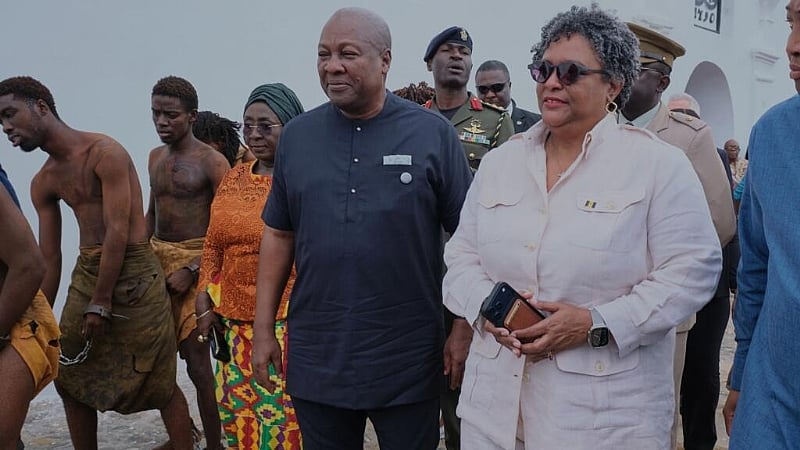
A landmark three-day summit held at Osu Castle in Accra, Ghana, concluded on Friday with a groundbreaking 19-point reparations plan that unites African nations, Caribbean descendants of enslaved people, and international allies in a coordinated demand for justice. The “Accra Next Steps Commitments” marks a pivotal shift from fragmented advocacy to a unified global movement, ensuring that reparations for the transatlantic slave trade are addressed with systemic urgency and accountability.
A United Front Against Historical Injustice
For decades, reparations discussions have been fragmented—African nations and Caribbean communities often operating in silos. However, this summit bridged those divides, culminating in a joint reparations framework endorsed by the African Union (AU) and the Caribbean Community (CARICOM) Commission on Reparatory Justice. The plan will now be formally presented at the next United Nations General Assembly, amplifying its diplomatic weight.
Ghana’s Foreign Minister, Samuel Okudzeto Ablakwa, emphasized the summit’s significance, stating:
“We are putting an end to fragmentation. From now on, we are presenting a united front.”
This declaration underscores a collective determination to demand accountability from nations that profited from the slave trade, while also advocating for economic, cultural, and social restitution for descendants of enslaved Africans.
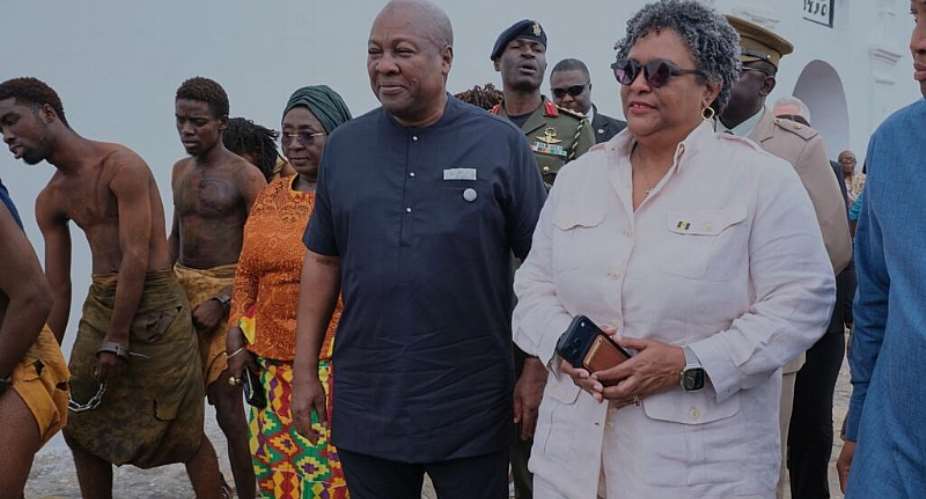
Delegates at the Osu Castle summit in Accra, Ghana, discuss reparations strategies during the historic three-day conference.
The 19-Point Plan: Key Demands for Justice
The “Accra Next Steps Commitments” outlines bold, multi-faceted demands, ensuring that reparations extend beyond financial compensation to structural, cultural, and systemic reforms. Below are the critical pillars of the plan:
1. Formal Apologies and Acknowledgment of Historical Crimes
The summit demands “full, formal, and unconditional apologies” from nations that directly benefited from the transatlantic slave trade, including European powers and their successor states. This goes beyond symbolic gestures, calling for public acknowledgment of the slave trade as the “gravest crime against humanity”—a classification already recognized by the United Nations in March 2024.
2. Establishment of a Global Reparations Fund
A dedicated financial mechanism will be created to directly fund reparations, ensuring that resources flow to African and Caribbean nations most affected by slavery. The fund will prioritize:
– Debt relief for historically indebted nations
– Economic development initiatives in former slave-trading regions
– Climate justice financing, given the disproportionate environmental impacts on African nations
3. Restitution of Looted Cultural Property and Ancestral Remains
One of the most contentious yet critical demands is the return of stolen artifacts, sacred objects, and ancestral remains held in museums and private collections worldwide. The plan calls for:
– Repatriation of cultural heritage looted during colonialism
– Scientific and ethical repatriation of human remains (e.g., those held in European institutions)
– Preservation of coastal forts and slave trade sites as UNESCO World Heritage sites, ensuring their protection and educational value
4. Reforms to International Financial Institutions
The summit highlights the structural inequalities embedded in global financial systems, such as the International Monetary Fund (IMF) and World Bank. Key reforms include:
– Increased representation for African and Caribbean nations in decision-making bodies
– Debt restructuring policies that account for historical exploitation
– Fairer lending terms to prevent cycles of debt dependency
5. Climate Justice and Environmental Reparations
Given the disproportionate climate impacts on Africa—despite contributing the least to global emissions—the plan demands:
– Financial compensation for climate-related damages
– Support for renewable energy projects in historically marginalized regions
– Loss and damage funding for nations most vulnerable to climate disasters
6. Gender-Specific Reparations for African Women and Girls
The summit explicitly addresses the intersection of slavery and gender violence, calling for:
– Compensation for descendants of enslaved women who endured sexual exploitation, forced labor, and systemic oppression
– Investment in women-led economic and social programs
– Legal and policy reforms to combat modern-day gender-based violence rooted in historical injustices
7. Right of Return and Citizenship Pathways for the Diaspora
A contentious yet progressive demand, the plan urges African nations to:
– Facilitate citizenship pathways for descendants of enslaved people in the diaspora
– Support the “right of return” for those seeking ancestral reconnection
– Simplify visa and residency policies for African diaspora communities
8. Education and Public Awareness Campaigns
To ensure long-term accountability, the summit advocates for:
– Mandatory inclusion of slavery history in global school curricula
– Public education campaigns in former slave-trading nations
– Collaborative research initiatives between African, Caribbean, and international scholars
Global Leaders Weigh In: From Apologies to Action
The summit’s conclusions were met with international recognition, with several world leaders endorsing the reparations framework:
Ghanaian President John Mahama, who championed the UN’s March 2024 resolution classifying the slave trade as a “crime against humanity,” reiterated:
“History does not ask us to inherit guilt, but it asks us to inherit responsibility.”
His remarks underscored the moral and ethical duty of nations to confront their colonial pasts.French President Emmanuel Macron, addressing the conference via video, reaffirmed France’s commitment to restitution, stating:
“Making reparations can never just be a cheque written to bring the story to a close.”
He pledged support for returning looted African artifacts and expanding educational initiatives on colonial history.India’s Foreign Ministry, represented at the summit, welcomed the emergence of a “global reparations movement,” suggesting that the Accra framework could influence future international dialogues on historical justice.
The Path Forward: From Recognition to Action
While the 19-point plan is groundbreaking, its success hinges on political will, financial commitment, and sustained global pressure. Key next steps include:
1. Diplomatic lobbying to secure formal apologies from key nations (e.g., UK, France, Portugal, Spain).
2. Legal and financial mechanisms to enforce debt relief and reparations payments.
3. Cultural diplomacy to repatriate artifacts and remains in a respectful, ethical manner.
4. Public advocacy campaigns to mobilize global support for reparations.
The Osu Castle summit has set a historic precedent, proving that collective action—rather than isolated efforts—is the most effective path to true reparatory justice. As the plan moves to the UN General Assembly, the world watches to see whether words will translate into meaningful, lasting change.
The fight for reparations is no longer a debate—it is a global movement, and Ghana’s summit has charted the course forward.****
