


For nearly eight years, President Nana Akufo-Addo and Vice President Mahamudu Bawumia endured one of the harshest waves of political abuse ever witnessed in Ghana’s Fourth Republic.
The attacks did not merely target policy. They targeted personality, family, ethnicity, religion, intelligence, dignity, and humanity itself.
Senior figures of the National Democratic Congress stood on platforms, on television screens, on radio stations, and on social media and hurled some of the most vicious rhetoric in modern Ghanaian politics. Rhetoric that was defended at the time as democracy and free speech.
Former President John Dramani Mahama popularised narratives describing the Akufo-Addo administration as wicked, heartless, corrupt, and insensitive. He, together with others, branded them “Akyem Sakawa Boys,” reducing an entire government to criminal caricature.
There were comments suggesting that by the natural order of life, Akufo-Addo would die before young Ghanaians finished paying debts accumulated under his government.
No arrests followed.
No dawn raids occurred.
No national panic emerged about dangerous speech.
And perhaps the greatest irony of all is this, the political tradition led by Nana Akufo-Addo had historically positioned itself as one of the strongest defenders of free expression in Ghana’s democratic journey.
Long before he became President, Akufo-Addo, as Attorney General under President John Agyekum Kufuor, led the repeal of Ghana’s Criminal Libel and Seditious Laws in 2001, laws that had for decades been used by governments to intimidate journalists, silence critics and criminalize dissent.
That repeal was not merely a legal reform. It was a democratic statement.
It reflected a deep philosophical belief that free societies do not jail citizens merely for offending political authority. It was an acknowledgment that democracy must possess the strength to tolerate criticism, discomfort, ridicule and even unfair attacks without resorting to state repression.
Ironically, the very freedoms expanded by that repeal became the same freedoms used aggressively against Akufo-Addo and Bawumia years later.
Then came the apostles of abusive language. Johnson Asiedu Nketiah compared Dr. Bawumia to a pig wallowing in mud. The now-famous “Bawuliar” label became an organized propaganda weapon repeated endlessly across radio and social media.
Sammy Gyamfi declared that lying was embedded in Bawumia’s DNA and consistently painted the Vice President as a monumental failure and a fraud.
Others went even lower. Religion was mocked. Ethnicity became ammunition. Family members were dragged into partisan warfare.
Sam George declared that Akufo-Addo did not merely steal from the public purse, “he stole the purse itself.” Isaac Adongo mocked Dr. Bawumia in ways many considered offensive and deeply personal.
Kevin Taylor’s broadcasts became synonymous with relentless vituperation against leading figures of the government and even non partisan figures.
Yet throughout those years, the loudest defence from the NDC and its sympathizers was always the same:
“Free speech.”
Ghanaians were told that democracy requires tolerance. Citizens were told that public office holders must develop thick skin. We were reminded repeatedly that criticism, even harsh criticism was part of democratic accountability.
Fair enough.
But politics becomes dangerous when people abandon the principles they once preached the moment power changes hands.
Today, many Ghanaians are watching with disbelief as some of the same political voices who normalized insults, glorified aggressive rhetoric and defended unrestrained attacks against the previous administration now appear deeply offended by criticism directed at them.
Suddenly, language that was once defended as political expression is being treated as criminal misconduct.
Suddenly, commentators must face arrests, intimidation, security invitations and public threats over speech that is arguably milder than what dominated Ghana’s political atmosphere between 2017 and 2024.
That is the hypocrisy provoking national concern.
Because democracy cannot operate on selective tolerance.
You cannot spend years celebrating brutal political attacks as constitutional freedom only to weaponize state institutions against opponents when political power changes hands.
You cannot normalize insults when you are in opposition and criminalize criticism when you enter government.
A principle that survives only when convenient is not a principle at all.
And yes I don’t support or glorify abusive politics.
But Ghana’s political discourse has become dangerously toxic by one particular party, the NDC. They have contributed to the coarsening of public debate.
The culture of insults, propaganda, misinformation, character assassination and online abuse and these has damaged national cohesion and weakened political maturity.
But if Ghana is truly committed to democracy, then democratic standards must remain consistent regardless of who occupies Jubilee House.
Freedom of expression cannot become a seasonal doctrine.
If insulting Akufo-Addo and Bawumia was defended as free speech yesterday, then governments today must resist the temptation to punish critics merely because they are uncomfortable, offensive, or politically hostile.
The repeal of the Criminal Libel Law was meant to move Ghana away from fear-driven governance, toward a republic confident enough to confront speech with speech, not with intimidation.
That democratic spirit must not die simply because political power has changed hands.
For the true measure of democratic leadership is not how loudly one demands tolerance in opposition, but how faithfully one protects it after attaining power.
God bless our homeland Ghana and make our nation’s democracy great and strong with protected free speech.
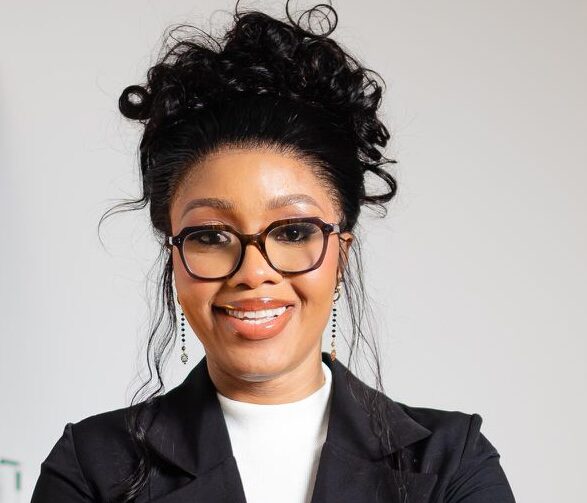
Raynelle Boadu
Political Analyst/ Social Commentator/ Gender Advocate
Asaase 99.5 Accra, Asaase 98.5 Kumasi, Asaase 100.3 Cape Coast, AsaasePa 107.3 (Accra)
Affiliates: Bawku FM 101.5, Bead FM 99.9 (Bimbilla), Mining City Radio 89.5 (Tarkwa), Nandom FM 101.9, Nyatefe Radio 94.5 (Dzodze), Sissala Radio 96.3 (Tumu), Somuaa FM 89.9 (Gushegu), Stone City 90.7 (Ho) and Wale FM 106.9 (Walewale)
Listen online: asaaseradio.com, Sound Garden and TuneIn
Follow us:
X: @asaaseradio995, @Asaase985ksi, @asaase1003, asaasepa1073
Instagram: asaaseradio99.5, asaase985ksi, asaase100.3, asaasepa107.3
LinkedIn: company/asaaseradio995. TikTok: @asaaseradio99.5
Facebook: asaase99.5, asaase985ksi, Asaase100.3, AsaasePa107.3
YouTube: AsaaseRadioXtra
Join the conversation. Accra: call 020 000 9951/050 009 0121, WhatsApp 020 000 0995. Kumasi: call 059 415 7985 or call/WhatsApp 020 631 5260. Cape Coast: call/WhatsApp 059 388 2652.
#AsaaseRadio
#AsaasePa
#TheVoiceofOurLand
