


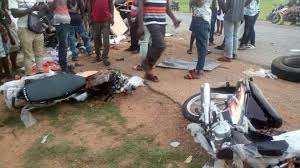
On any given day within the Central Business District of Tamale, the scene unfolds with unsettling familiarity. A young man on a 250cc motorcycle slices through traffic at breathtaking speed. Pedestrians freeze. Traders pause. Drivers instinctively slow, calculating survival. Within moments, another group, three young men on a motorbike, follow suit, swerving recklessly from side to side. Then, almost unthinkably, a child, no older than ten, rides past, barely able to command the machine beneath him. No sirens. No intervention. Only silence, disbelief, and a recurring question whispered across the metropolis. Where are the police? This is not an isolated spectacle. It is a symptom of a growing crisis, one that raises urgent questions about law enforcement, civic responsibility, and the future of Tamale.
The Rise of Recklessness: Motorcycles and Urban Expansion
Tamale, the capital of the Northern Region, is among Ghana’s fastest-growing cities. According to data from the Ghana Statistical Service, the Tamale Metropolitan Area has experienced rapid urbanization over the past two decades, with population growth placing immense pressure on infrastructure and governance systems. Motorcycles have become the dominant mode of transportation. Their affordability, maneuverability, and efficiency in congested areas make them indispensable. However, this convenience has come at a steep cost. Estimates from road safety observers suggest that motorcycles account for over 60% of vehicular movement in Tamale. Yet, compliance with basic safety regulations remains alarmingly low. The National Road Safety Authority (NRSA) has consistently highlighted that helmet usage among motorcyclists in northern Ghana falls below 20%, far beneath national targets. The result? A city where speed often trumps safety, and risk becomes normalized.
The Human Cost: Accidents Waiting to Happen
Road traffic accidents involving motorcycles are not just probable, they are inevitable under current conditions. Nationwide, the NRSA reports that motorcycles and tricycles contribute to nearly 40% of road fatalities in Ghana. In regions like the Northern Region, the proportion is even higher. Medical personnel at Tamale Teaching Hospital frequently report cases of severe trauma linked to motorcycle accidents. Head injuries, fractures, and, in many instances, fatalities that could have been prevented with basic protective gear. The image of a child riding a motorcycle is not merely symbolic of parental indulgence, it is a stark indictment of systemic failure. Road usage demands not only technical skill but also cognitive maturity, situational awareness, and adherence to regulations. Allowing minors to operate such vehicles exposes them and others to catastrophic risk.
The Tricycle Factor: Convenience Meets Chaos
If motorcycles represent one dimension of the problem, tricycles, locally known as “motor-king” for carting goods, or “yellow-yellow” for carrying passengers add another layer of complexity. Originally introduced as an affordable transport solution, tricycles have proliferated rapidly. While they provide livelihoods for many and mobility for underserved communities, their operators often lack formal training. Many are young, unlicensed, and unfamiliar with traffic regulations. Reckless overtaking, disregard for right-of-way rules, and erratic stopping patterns have become commonplace. The absence of structured training programs and enforcement mechanisms has effectively turned sections of Tamale’s roads into zones of improvisation rather than regulation.
Where Are the Police? Understanding Their Mandate
The Ghana Police Service is constitutionally mandated to maintain law and order, enforce laws, and ensure public safety. This includes traffic regulation, accident prevention, and the enforcement of road safety laws. In theory, the presence of traffic police in urban centers like Tamale should act as both a deterrent and a corrective mechanism. Routine checks, enforcement of helmet laws, and penalties for reckless driving are essential tools at their disposal. Yet, on the streets of Tamale, enforcement appears sporadic at best and absent at worst. Interviews with residents suggest a perception of selective enforcement. Some argue that police presence is concentrated in specific areas or during particular operations, leaving large portions of the city effectively unmonitored. Others point to resource constraints — limited personnel, inadequate logistics, and insufficient funding — as factors undermining effectiveness.
Structural Constraints: Beyond Blame
While public frustration often targets the police, a deeper investigation reveals a more complex picture.
- Logistical Limitations: Effective policing requires vehicles, communication systems, and personnel. In many cases, these resources are stretched thin.
- Urban Sprawl: Tamale’s rapid expansion has outpaced the growth of law enforcement infrastructure. New neighborhoods emerge faster than policing units can be deployed.
- Cultural Dynamics: In some communities, enforcement is complicated by social relationships and local norms. Officers may face resistance or pressure when attempting to enforce regulations.
- Political Interference: Allegations persist that enforcement efforts are sometimes tempered by political considerations. The fear of alienating voters can lead to a reluctance to implement strict measures, particularly against groups that form significant voting blocs.
The Role of Politicians: Governance or Appeasement?
Perhaps the most contentious issue is the role of political leadership. Critics argue that a culture of appeasement has taken root, where maintaining popularity outweighs enforcing discipline. In election cycles, promises of jobs and economic empowerment often include tacit acceptance of informal transport systems, including unregulated tricycle operations. Attempts to impose stricter controls can be framed as anti-youth or anti-poor, creating a political disincentive for reform. This dynamic raises a critical question. Can sustainable urban governance coexist with short-term political calculations?
Public Complicity: A Shared Responsibility
While institutions bear significant responsibility, the role of citizens cannot be overlooked. The normalization of unsafe practices — riding without helmets, allowing minors to operate vehicles, ignoring traffic rules, reflects a broader societal challenge. Parents who provide motorcycles to underage children, riders who prioritize speed over safety, and passengers who tolerate reckless behavior all contribute to the cycle. Road safety is not solely a matter of enforcement; it is a culture that must be cultivated.
Looking Ahead: What Will Tamale Become?
If current trends persist, the implications for Tamale’s future are sobering. Increased accident rates, strain on healthcare systems, and a deterioration of public safety could undermine the city’s economic and social development. Urban planners warn that without intervention, the combination of rapid population growth and weak regulatory enforcement could lead to systemic dysfunction. Roads designed for moderate traffic volumes are already under pressure; adding unregulated, high-risk behavior compounds the challenge. In ten years, will Tamale be a model of northern Ghana’s progress, or a cautionary tale of neglected governance?
Pathways to Reform: From Concern to Action
Addressing the crisis requires a multi-pronged approach:
- Strengthening Enforcement: Consistent police presence, routine checks, and strict penalties for violations can restore deterrence. Technology, such as speed cameras, could complement human enforcement.
- Public Education Campaigns: Awareness programs targeting schools, communities, and transport operators can shift attitudes toward safety.
- Licensing and Training: Mandatory training programs for motorcycle and tricycle operators would ensure a baseline understanding of traffic regulations.
- Political Will: Leaders must prioritize long-term safety over short-term popularity. Transparent policies and consistent enforcement are key.
- Community Engagement: Assemblymen, opinion leaders, traditional leaders, religious institutions, and civil society organizations can play a role in promoting responsible behavior.
My Thoughts: Breaking the Silence
The silence that follows each reckless ride through Tamale’s streets is not merely awe, it is unease. It is the recognition that something is fundamentally wrong, and that the cost of inaction may be measured in lives lost. The question — Where are the police? — is valid. But it is only part of a larger inquiry. Where are the systems, the leadership, and the collective resolve needed to ensure safety? Tamale stands at a crossroads. The choices made today will shape the city’s trajectory for years to come. Whether it becomes a beacon of orderly growth or a symbol of unchecked chaos depends on the willingness of all stakeholders — government, law enforcement, and citizens alike, to act. Until then, the engines will continue to roar, the streets will remain unpredictable, and the silence will grow heavier with each passing day.
True moral development begins at home, where parents must not only teach values but live them, for children learn more from example than from words. Likewise, constant religious preaching, whether on air or in our mosques, must go beyond repetition to inspire real reflection and behavioral change in our daily lives. If, despite these influences, our society still struggles with moral shortcomings, then the responsibility lies with us to engage in honest self-assessment and align our actions with our beliefs. The beauty of Tamale’s mosques should not only be seen in their structures but reflected in the character of its people. Ultimately, a truly faithful community is one where discipline, integrity, and respect are evident in both worship and everyday conduct.
FUSEINI ABDULAI BRAIMAH
+233208282575 / +233550558008
[email protected]
