


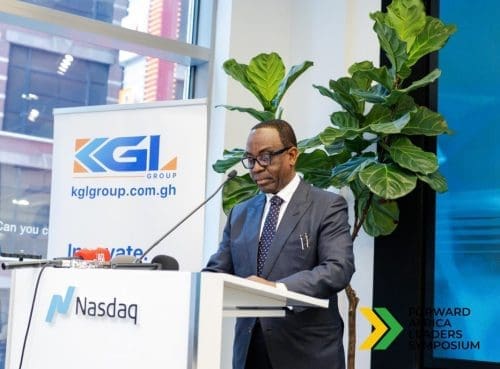
KGL Group Executive Chairman Alex Apau Dadey has urged African business leaders to move beyond personality-driven enterprises and build structured institutions capable of surviving their founders, warning that Ghana’s long-term economic competitiveness depends on the resilience of its businesses, not just their number.
Speaking at the 2026 Kwahu Business Forum, Mr Dadey said the transition from charisma-led companies to governance-driven institutions is one of the most critical and underdiscussed challenges facing African entrepreneurship.
“If Africa is serious about building business champions, we must move from personality to process, charisma to governance,” he said, describing the shift as essential to building businesses that can endure beyond their founders, adapt over time, and continue to serve society.
He argued that businesses built on strong systems, professional management structures, and clear governance frameworks are significantly better positioned to access long-term financing, integrate into global value chains, and withstand economic shocks. Without this foundation, he said, even successful enterprises remain fragile and unable to scale meaningfully.
On the economic importance of trust, Mr Dadey made a case that it remains one of the most undervalued assets in emerging markets. He said trust shapes capital flows, investment decisions, consumer behaviour, and regulatory compliance, and that businesses which invest in ethical conduct and accountability build a compounding advantage that purely transactional firms cannot replicate.
He also warned that poorly structured public-private partnerships (PPPs) that fail to deliver tangible results carry costs beyond individual contracts. Genuine collaboration between the public and private sectors, he said, must deliver measurable outcomes, improved service delivery, and sustained value for both the state and citizens. Anything short of this, he cautioned, risks undermining public trust and weakening the very systems such partnerships are intended to strengthen.
Addressing policymakers, Mr Dadey stressed the importance of creating an enabling environment that supports credible local businesses through fairness, policy consistency, and transparency, noting that sustainable national development is best achieved when indigenous enterprises are empowered to grow, compete, and reinvest with confidence.
To fellow business leaders, he delivered a direct call for discipline and accountability. He urged the private sector to align ambition with responsibility by investing in governance, respecting regulatory frameworks, and contributing meaningfully to the communities where they operate, describing these not as optional commitments but as prerequisites for attracting both local and foreign investment.
Mr Dadey closed by challenging stakeholders to move beyond forum discussions and take concrete action toward building institutions that will outlast individual leaders and drive Ghana’s long-term economic transformation.
