


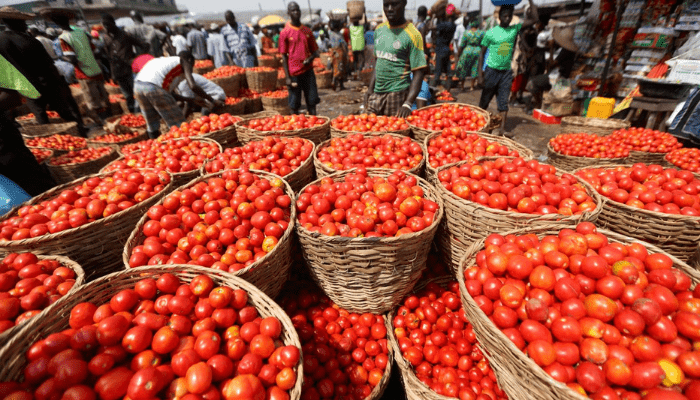
The government has commenced the construction of 250 boreholes across Ghana’s five northern regions in a strategic push to scale up irrigation for vegetable farming, particularly tomatoes.
The intervention is expected to ease supply constraints and strengthen domestic production capacity at a time when the country is seeking to reduce its reliance on imports.
The move comes against the backdrop of persistently low tomato yields, which currently average about 8 metric tonnes per hectare, well below potential levels. Industry observers say improving access to reliable irrigation could significantly enhance productivity and stabilise market supply.
Minister for Food and Agriculture, Eric Opoku, who spoke at a press briefing in Accra on Wednesday, March 25, 2026, said the initiative forms part of an urgent policy response to recent developments in the sub-region, particularly the decision by Burkina Faso to halt tomato exports to Ghana.
The neighbouring country has historically been a key supplier to Ghanaian markets.
“In the five northern regions, we are drilling 250 boreholes to provide irrigation for the production of vegetables, especially tomatoes,” he stated, underscoring government’s commitment to addressing the supply gap.
He further revealed that authorities have engaged operators of the Tono Irrigation Scheme to accelerate tomato cultivation.
“We spoke to management of the Tono irrigation system, and it has been fully refurbished. As we speak, it is making available 2,400 hectares of land,” the minister said.
According to him, a shift in farmer preferences had previously limited tomato output under the scheme. “Because the farmers were not getting buyers for their tomatoes, they moved into rice production. But following discussions this morning, they have agreed to make available 500 hectares for the cultivation of tomatoes immediately,” he added.
