


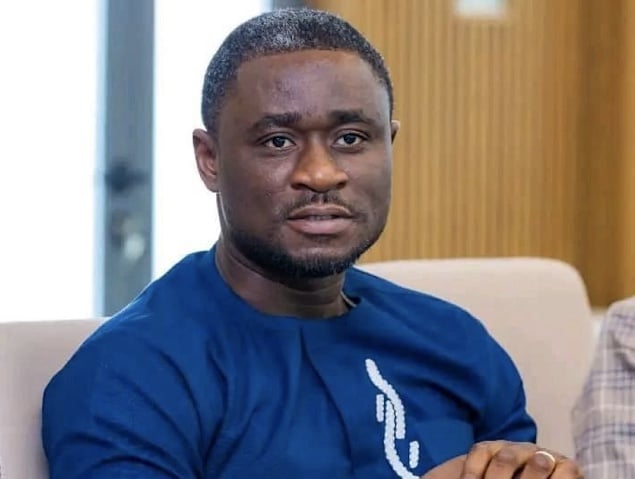
Yaw Opoku Mensah of the New Patriotic Party has mounted a sharp attack on the government over claims that Ghana’s economic difficulties could be worsened by escalating tensions involving the United States and Israel against Iran, describing such arguments as misleading and alarmist.
He rejected outright the suggestion that events in the Middle East have any meaningful impact on Ghana’s economic performance, insisting that the narrative is being used to deflect attention from domestic shortcomings. According to him, linking Ghana’s internal economic pressures to overseas hostilities amounts to an attempt to shift responsibility away from governance failures.
“The war has no bearing on us as a nation. Ghana is not at war, and no global crisis has ever economically derailed us,” he said.
He further cautioned against what he sees as a deliberate attempt to condition the public to accept worsening conditions.
“We do not expect President John Dramani Mahama and his government to use a distant conflict as an excuse for domestic incompetence or to justify higher fuel prices and economic difficulties.”
Mensah accused pro government communicators of amplifying fears of a looming crisis in order to psychologically prepare citizens for hardship. He argued that past global disruptions with far more direct consequences for Ghana did not receive similar justification for economic setbacks.
“If the devastation of COVID-19, with total lockdowns and closed borders worldwide, was not accepted as the reason for our economic woes, why should a distant conflict thousands of miles away suddenly justify fear at home?” he challenged.
He cited the Russia–Ukraine war, which affected Ghanaian nationals and reportedly led to the loss of more than 50 Ghanaian lives, yet was not widely accepted as a legitimate explanation for severe economic strain at home. In his view, the present Middle East tensions are even more remote from Ghana’s immediate economic realities.
While acknowledging the global significance of the Strait of Hormuz as a key oil transit route, Mensah dismissed projections that oil prices could surge to between $100 and $200 per barrel as speculative and insufficient grounds for public alarm. He maintained that hypothetical scenarios should not be weaponised to justify domestic price hikes.
Drawing a comparison with the tenure of former President Nana Akufo Addo, he argued that previous global oil price spikes did not automatically translate into crippling economic shocks in Ghana.
“These are purely speculative numbers that may only marginally affect grocery bills, transport fares and utilities,” Mensah said. “The conflict is far away. For Ghanaians, petrol stations are not being hit by distant missiles.”
He ended by urging the government to focus on internal reforms and practical solutions rather than attributing economic challenges to foreign conflicts.
“Stop using Middle East wars as justification for anything else. The war does not affect us,” he stressed.
