
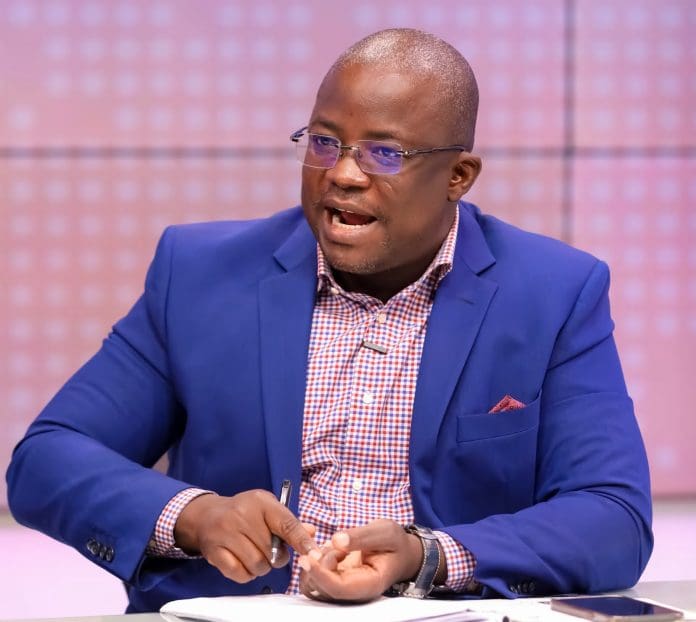

Senior Lecturer and political analyst at the University of Ghana, Dr. Joshua Zaato, has questioned whether Ghana’s celebrated economic turnaround is being built on a foundation that trades long-term productive capacity for short-term stability, asking pointedly: “Why are we selling our future to eat today?”
Speaking on KeyPoints with Alfred Ocansey on Saturday, February 28, 2026, Zaato, who is affiliated with the New Patriotic Party (NPP), acknowledged that headline indicators from the Ghana Statistical Service (GSS) point to genuine improvement. Inflation has declined sharply to 3.8 percent in January 2026 from 23.8 percent in early 2025. Fuel prices have eased. The cedi has stabilised and the 91-day treasury bill rate has collapsed from 27.7 percent to 6.4 percent. He did not deny any of these figures.
But Zaato argued that improvement in indicators does not automatically mean structural transformation, and that the manner in which stability is being achieved deserves deeper scrutiny. His concern centres on what Ghana is giving up to generate the resources funding its recovery.
The remark about selling the future touches directly on a live controversy. NPP flagbearer Dr. Mahamudu Bawumia raised alarms at the NPP presidential primaries on January 31, 2026, claiming that Ghana’s gold reserves had been depleted from 32 tonnes to 18 tonnes without public knowledge, alleging that gold reserves accumulated by the Akufo-Addo government had been sold without transparency. The Bank of Ghana subsequently clarified that the shift reflected a deliberate strategic rebalancing of reserve composition at a time when gold was trading above record levels, not an indiscriminate liquidation. With gold prices at record levels above $5,200 per ounce as of late January 2026, the timing of the sales continues to generate debate about whether Ghana maximised value from its strategic reserves.
Beyond reserves, Zaato pointed to the broader economic model. Ghana’s export sector faces a gloomy first quarter of 2026 outlook, as cocoa futures plunged to their lowest level since late 2023 in February, threatening export revenues and prompting an emergency cabinet meeting. Meanwhile, public debt has declined from 61.8 percent of GDP to 45.3 percent, and gross international reserves have risen to $13.8 billion, equivalent to 5.7 months of import cover, up from 4.0 months in 2024.
Zaato expressed concern about what lies beneath those reserve figures, suggesting that governments can temporarily inflate buffers by monetising strategic assets rather than building productive capacity, a distinction that matters enormously for sustainability.
He did not exempt his own party from responsibility, noting that Ghana’s economic volatility is a long-running bipartisan failure. He earlier gave the Mahama administration a 60 percent score for economic performance in its first year, cautioning that every finance minister since 2000 has recorded strong first-year performance, making the real test one of medium-term consistency.
His warning concluded on a structural note: meaningful economic transformation requires sustained growth of 4 to 6 percent over decades, not a single strong year, and it requires building productive capacity rather than consuming it.

