
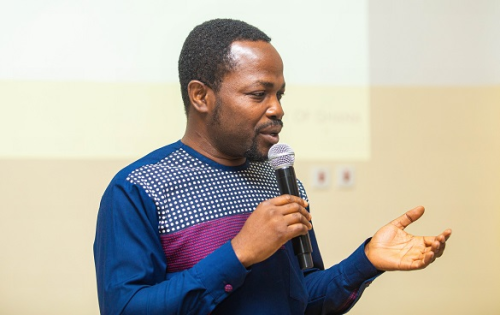

Ghana’s recent economic gains, while encouraging, risk masking deep structural vulnerabilities that could undo progress within years if the government fails to sustain disciplined, long-term policy execution, a leading development economist has cautioned.
Associate Professor Fred Dzanku of the Institute of Statistical, Social and Economic Research (ISSER) at the University of Ghana delivered the warning on Newsfile on JoyNews on Saturday, February 28, 2026, urging policymakers not to mistake short-term stability for structural transformation.
“The real test is not whether stability has been achieved in one year, but whether the policy trajectory is credible and consistent over the medium term,” Dzanku said. “Until these structural issues are fixed, we may be happy for one year, but if things don’t continue on this trajectory, we’ll be discussing the same challenges years from now.”
He pointed to two structural indicators that he said reveal the fragility beneath the surface of Ghana’s current recovery. Ghana has historically allocated an average of 36 percent of government revenue to interest payments over the past decade, far above the Sub-Saharan African average of 8 percent. That chronic debt servicing burden has crowded out productive government spending and left the Treasury with little room to fund capital projects. At the same time, public investment in infrastructure has declined sharply, falling from approximately 27 percent of gross domestic product (GDP) in 2015 to roughly 10 percent in recent years, a contraction that has compounded long-standing deficits in roads, energy, and industrial capacity.
The remarks align with findings in ISSER’s most recent State of the Ghanaian Economy report, which separately documented a decline in capital investment from 6.9 percent of GDP in 2010, warning that Ghana’s debt accumulation has not been matched by productive deployment of borrowed funds into growth-generating projects.
Dzanku stressed that the path out of structural fragility requires nothing less than sustained GDP growth of 4 to 6 percent maintained over decades, not a single strong quarter. Only that kind of consistent expansion, he argued, can drive structural transformation, strengthen economic resilience, and expand opportunities broadly across the population.
Ghana’s economy grew at 6.3 percent in the second quarter of 2025, driven largely by gold exports and digital services, while the International Monetary Fund (IMF) projects full-year 2026 growth at around 4.5 percent. Dzanku acknowledged those gains but cautioned that Ghana’s GDP per capita growth has historically been volatile, making medium-term averages a more reliable indicator than any single year’s performance.
He concluded that fiscal discipline, strategic investment allocation, and consistent policy implementation must be maintained simultaneously if the gains of stabilisation are to translate into lasting, inclusive development rather than another cycle of boom and vulnerability.

