

The Chief Executive Officer of the Commonwealth Enterprise and Investment Council (CWEIC), Ms. Samantha Cohen CVO OBE, has held strategic discussions with the Chief Executive Officer of the Millennium Development Authority (MiDA), Mr. Alexander Kofi Mensah Mould, to explore investment opportunities in Ghana’s agriculture sector.
The courtesy call, which took place on Tuesday, February 10, 2026, in Accra, formed part of broader efforts to deepen cooperation between the two institutions and leverage the Commonwealth’s economic network to support Ghana’s agricultural transformation agenda under the Grow24 initiative and the 24 Hour Economy policy.
Ms. Cohen’s visit to Ghana follows her participation at the Africa Prosperity Dialogues held in Accra on Wednesday, February 4, 2026, where she highlighted the enormous economic opportunities available within the Commonwealth’s combined economy of 14.2 trillion dollars, projected to grow to 20 trillion dollars by 2029.
During the discussions with MiDA, both leaders examined how the Commonwealth’s business network and MiDA’s proven project delivery capacity could be aligned to attract strategic investment into Ghana’s agricultural value chains, particularly in irrigation infrastructure, agro processing, and rural economic development.
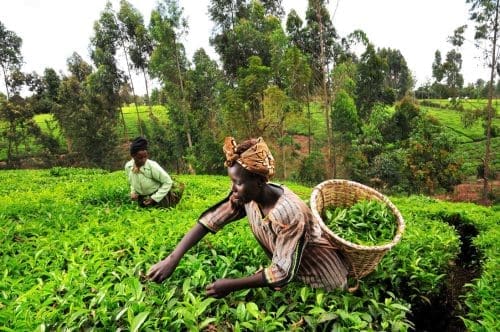
Mr. Alexander Kofi Mensah Mould briefed the CWEIC delegation on MiDA’s expanded mandate to serve as the national delivery agency for the Grow24 agricultural policy recently launched by President John Dramani Mahama. The initiative focuses on transforming over two million hectares of land in the Volta Economic Corridor into commercially viable, high productivity farmland.
The discussions explored potential collaboration areas including mobilizing Commonwealth investors for agricultural infrastructure projects, facilitating technology transfer for modern farming practices, connecting Ghanaian agribusinesses with Commonwealth markets, and supporting skills development programs for youth and women in agriculture.
MiDA has successfully implemented two Millennium Challenge Corporation (MCC) Compacts totaling over one billion dollars since its establishment. The first compact, worth 547 million dollars, ran from February 2007 to February 2012 and focused on agriculture, transportation, and rural development. The second compact, valued at 498.2 million dollars, ran from September 2016 to June 2022 and concentrated on power sector transformation.
Under the first MCC Compact, MiDA implemented the 189 million dollar Agriculture Project, which pioneered innovations such as the Land Tenure Facilitation Activity, improving land security and spurring agricultural investment across intervention zones. The authority is currently applying proven methodologies from these compacts to the Grow24 initiative.
Ms. Samantha Cohen serves as the Chief Executive of CWEIC, a position she has held since July 2025. She brings over 30 years of experience advising senior leaders across public and private sectors, including serving as Chief of Staff to the global CEO of Rio Tinto and holding senior roles within the Royal Household for more than 17 years, including as a private secretary to the late Queen Elizabeth II.
CWEIC is a commercial, non profit membership organization with an official mandate from Commonwealth heads of government to facilitate trade and investment throughout the 54 Commonwealth member nations. The organization uses the convening power and trusted network of the Commonwealth to drive trade and investment opportunities for member states.
The Commonwealth represents one of the world’s most significant economic and demographic networks, comprising 56 countries with approximately 2.7 billion people. Nearly 60 percent of the Commonwealth’s population is under the age of 30, making it one of the most youthful economic blocs globally with over one billion middle class consumers.
During her address at the Africa Prosperity Dialogues, Ms. Cohen noted that 19 African Continental Free Trade Area (AfCFTA) member states are also Commonwealth countries, highlighting the growing alignment between the two economic frameworks. She emphasized that this convergence creates substantial opportunities for small and medium sized enterprises, women owned businesses, and youth led enterprises across Africa.
MiDA is currently implementing the Economic Enclaves Project under the Ghana CARES Obaatan Pa Programme, which aims to de risk agriculture and create substantial value within the national economy. The project has established enclaves in Kasunya, Oti, Kumawu, and Banda, focusing on rice, soya, maize, and other strategic crops.
The authority has secured six million dollars in working capital support and is exploring opportunities for an additional seven million dollars in climate funds through a partnership with the World Food Programme. The Ghana CARES project has created jobs for over 1,000 youths in communities around the enclaves, with over 300 undergoing training programs.
Ghana is seeking to expand domestic value addition in its agricultural sector as part of a broader strategy to boost food security, reduce food imports, increase export earnings, and strengthen rural economic development. The government estimates that transforming the agricultural sector could create hundreds of thousands of jobs while positioning Ghana as a major food exporter within West Africa.
The meeting between CWEIC and MiDA signals growing international interest in Ghana’s agricultural transformation agenda and could open pathways for significant Commonwealth investment in the sector. Both institutions have committed to continued dialogue and collaboration to identify concrete investment opportunities that can deliver measurable impact for Ghanaian farmers and rural communities.

