
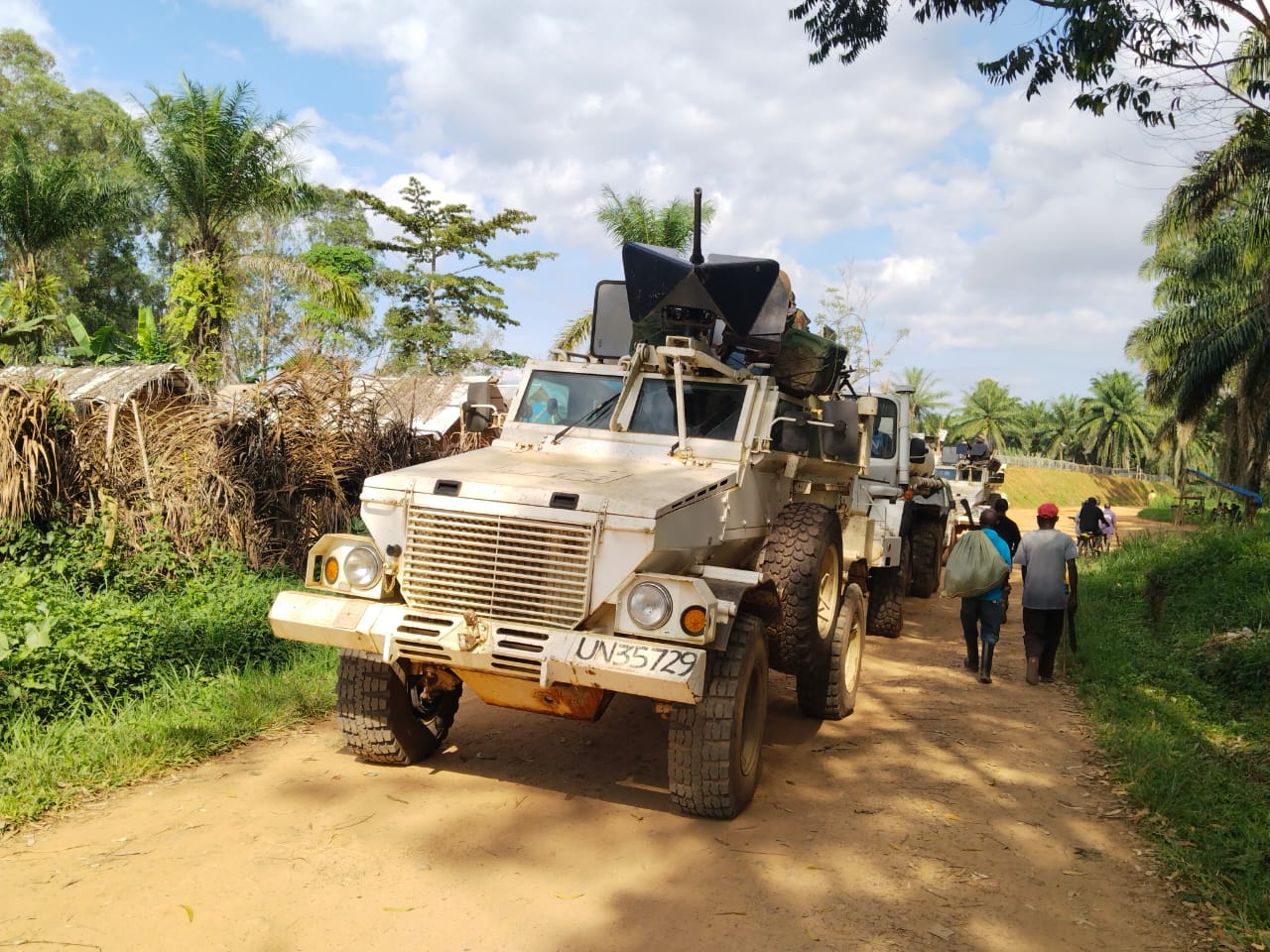
President Cyril Ramaphosa has informed the United Nations Secretary General, Antonio Guterres, of the South African government’s decision to withdraw its contribution of soldiers to the United Nations Organisation Stabilisation Mission in the Democratic Republic of Congo (MONUSCO).
In a statement on Saturday, the Presidency said South Africa ranks amongst the top ten troop contributing countries to MONUSCO, with a force presence of over 700 soldiers deployed in the Democratic Republic of Congo (DRC) in support of the Mission’s peacekeeping mandate.
In a telephone conversation held on 12 January 2026, Ramaphosa indicated that South Africa’s unilateral withdrawal decision from MONUSCO is influenced by the need to consolidate and realign the resources of the South African National Defence Force, following 27 years of South Africa’s support to UN peacekeeping efforts in the DRC.
MONUSCO was established by the UN Security Council in 1999, initially to support the 1999 Lusaka Ceasefire Agreement. With persistent conflict in the DRC, the mission has evolved with a mandate to protect civilians, humanitarian personnel, and human rights defenders under imminent threat of physical violence, and to support the DRC government in stabilisation and peace consolidation efforts.
South Africa will work jointly with the United Nations (UN) to finalise the timelines and other modalities of the withdrawal, which will be completed before the end of 2026.
Ramaphosa has welcomed the appreciation expressed by the UN Secretary General regarding South Africa’s decision.
“The South African government will continue to maintain close bilateral relations with the government of the DRC, as well as provide ongoing support to other multilateral efforts by the Southern African Development Community (SADC), the African Union (AU), and the United Nations aimed at bringing lasting peace to the Democratic Republic of Congo,” the Presidency said.
Defence expert Dean Wingrin said the fact that South Africa can no longer support 700 troops in the DRC shows just how dire a situation the SANDF finds itself in. “Decades of neglect and defunding has led to this. The slope is slippery and the speed of decent increases. We’re fast reaching the point of no return.”
“While I am surprised at the government’s sudden decision, it is a recognition that SANDF simply does not have the logistical capacity to sustain foreign deployments anymore,” defence analyst Ricardo Teixeira said.
“The decision, according to the Presidency, is part of a need to consolidate and realign the resources of SANDF. A good move, but just the beginning. There is a lot of work to do. Now my next question is, what’s happening with the budget?”
Chris Hattingh, Democratic Alliance (DA) Spokesperson on Defence and Military Veterans, said the withdrawal of the SANDF from MONUSCO was not a moment too soon. “The bitter reality is that our defence force currently suffers from a dangerous combination of strategic overreach and systemic decay. To continue on this path would have been reckless,” he stated.
Last year South Africa withdrew its troops and equipment serving with the Southern African Development Community Mission in the DRC (SAMIDRC) following the mid-March termination of SAMIDRC’s mandate. This came after Rwanda-backed M23 rebels captured Sake and Goma in the Eastern DRC in January 2025, killing 14 South African soldiers in the process.
“The previous SAMIDRC deployment to eastern DRC exposed serious failures in combat readiness. Our troops operated without adequate force protection, air support, logistics and medical evacuation capability. The widely reported white-flag incident became a humiliating symbol of political miscalculation and systemic neglect. South African soldiers were placed in harm’s way without the backing they deserved. The DRC must never be allowed to become a monument to South Africa’s failed commitments, written in the lives of its soldiers and the erosion of its own security,” Hattingh said.
“Deploying our brave men and women while being under-equipped, under-resourced in a high-threat environment, is not merely poor strategy, it is an abdication of the fundamental duty of care a nation owes to those who serve in its name. This is the ultimate hypocrisy, demanding the ultimate sacrifice while refusing to provide the fundamental means of survival,” Hattingh continued.
Years of shrinking budgets, ageing equipment and collapsing maintenance have hollowed out combat capability. The SANDF cannot project strength abroad while struggling to sustain basic readiness at home, he said.
“This withdrawal must be a turning point. The focus now must be clear: rebuild capacity and restore critical capabilities. That translate into protected mobility, reliable airlift and surveillance, functioning logistics, and properly equipped personnel. Without urgent recovery, South Africa risks becoming irrelevant in regional security and unable to defend its own interests. Our troops deserve more than our thanks; they deserve the tools to survive and achieve mission success,” Hattingh said.

