
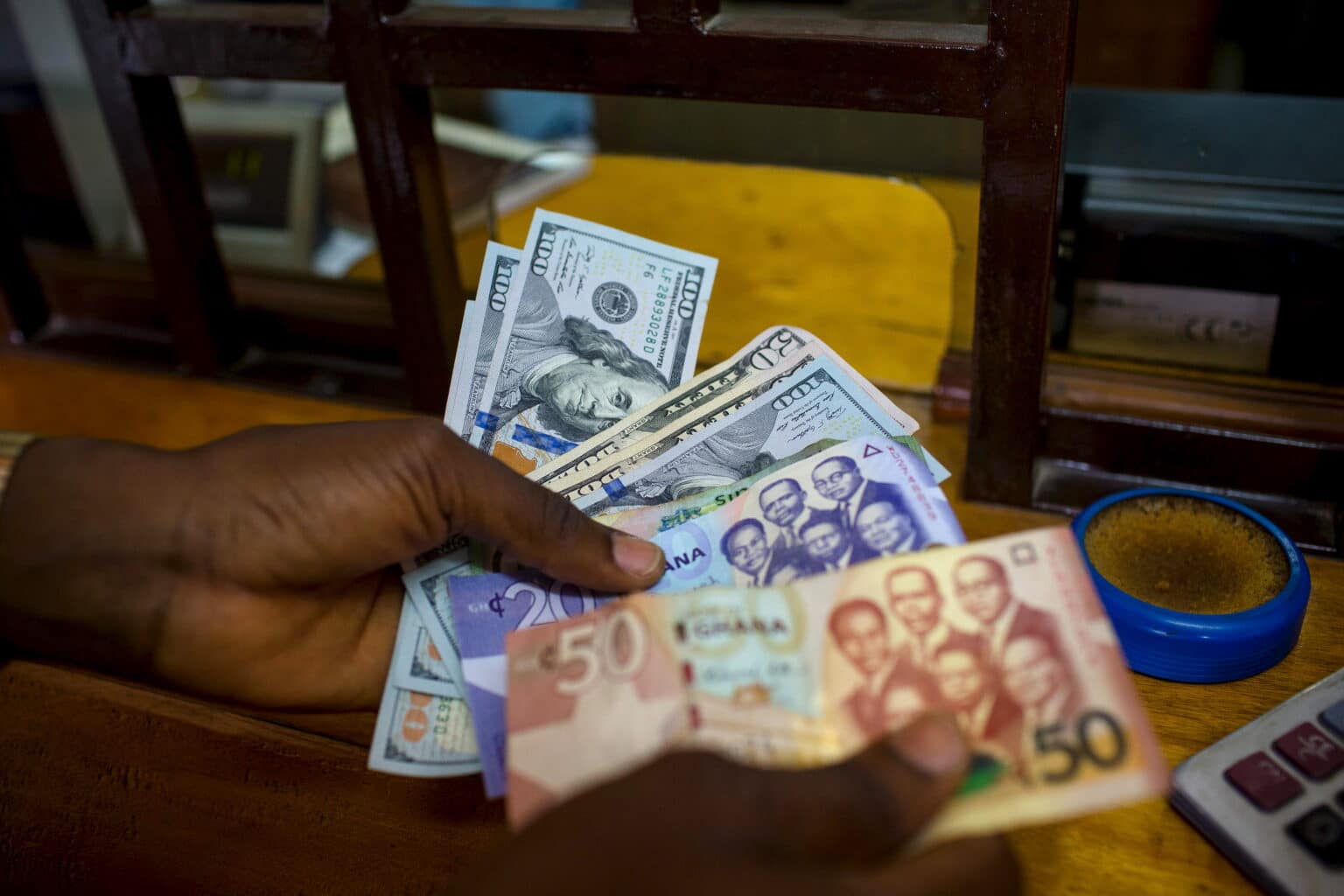
Ghana’s Securities and Exchange Commission has ordered local fund managers to reduce offshore investments in a move designed to protect the cedi and reinforce macroeconomic stability as the country continues recovering from one of the toughest economic periods in its recent history.
Under the new directive, local fund managers are now restricted to investing a maximum of 20 percent of funds under management in foreign securities. Previously, some funds were allowed to place the majority or even all of their capital offshore. Those funds are now capped at 70 percent exposure to foreign assets.
The regulator also introduced an additional layer of oversight. Any foreign investment must now be placed only in countries that share financial information with Ghana’s Securities and Exchange Commission. The measure is aimed at improving transparency, monitoring capital flows and limiting exposure to external financial shocks.
The policy shift comes as Ghana works through a three year International Monetary Fund support programme which is expected to conclude in August. The country, one of the world’s leading producers of gold and cocoa, has been rebuilding confidence in its financial system following currency pressure, inflation challenges and debt restructuring.
For policymakers, the logic is straightforward. Limiting capital flight keeps more liquidity inside the domestic economy. It supports the currency and helps stabilize inflation expectations. It also signals to global investors that Ghana is prioritizing financial discipline and regulatory control during a sensitive recovery phase.
For fund managers, the adjustment means recalibrating portfolio strategies that previously relied heavily on foreign assets for returns and currency hedging. In the short term, some investment houses may see reduced diversification flexibility. In the long term, however, the policy could deepen Ghana’s local capital markets by forcing more capital to circulate domestically.
Across Africa, similar conversations are happening quietly inside central banks and finance ministries. The balance between global capital access and domestic currency protection is becoming one of the defining policy debates of this decade. Countries want foreign investment but also want control over capital flows that can destabilize local economies during global shocks.
Ghana’s move signals a phase where African regulators are becoming more assertive, not to isolate their economies but to manage globalization on their own terms. The question is not whether Africa participates in global markets. The question is how Africa participates and who controls the pace and structure of that participation.
The deeper story is about economic sovereignty. Nations emerging from crisis often shift toward tighter capital management before reopening more aggressively once stability is secured. Ghana appears to be following that playbook.
The reality is that economic rebuilding is rarely linear. Currency protection policies can slow capital movement in the short term but can also create stronger financial foundations over time. For a country rebuilding investor trust, currency stability often comes first.
What matters now is execution. If domestic markets deepen, local investment opportunities grow and macro stability holds, these restrictions could be remembered as a transition phase rather than a permanent wall against global finance.
And regardless of current pressures, the bigger trajectory remains clear. Many African economies are still early in their institutional and financial lifecycle compared to nations with centuries of accumulated capital infrastructure. The momentum being built today is laying foundations for decades ahead, and the continent’s long term story is still being written with energy, resilience and forward momentum.

