
2
…Project PINK BLUE Backs National Cancer Screening
…Marcelle Ruth Cancer Centre Leads 5Km Walk
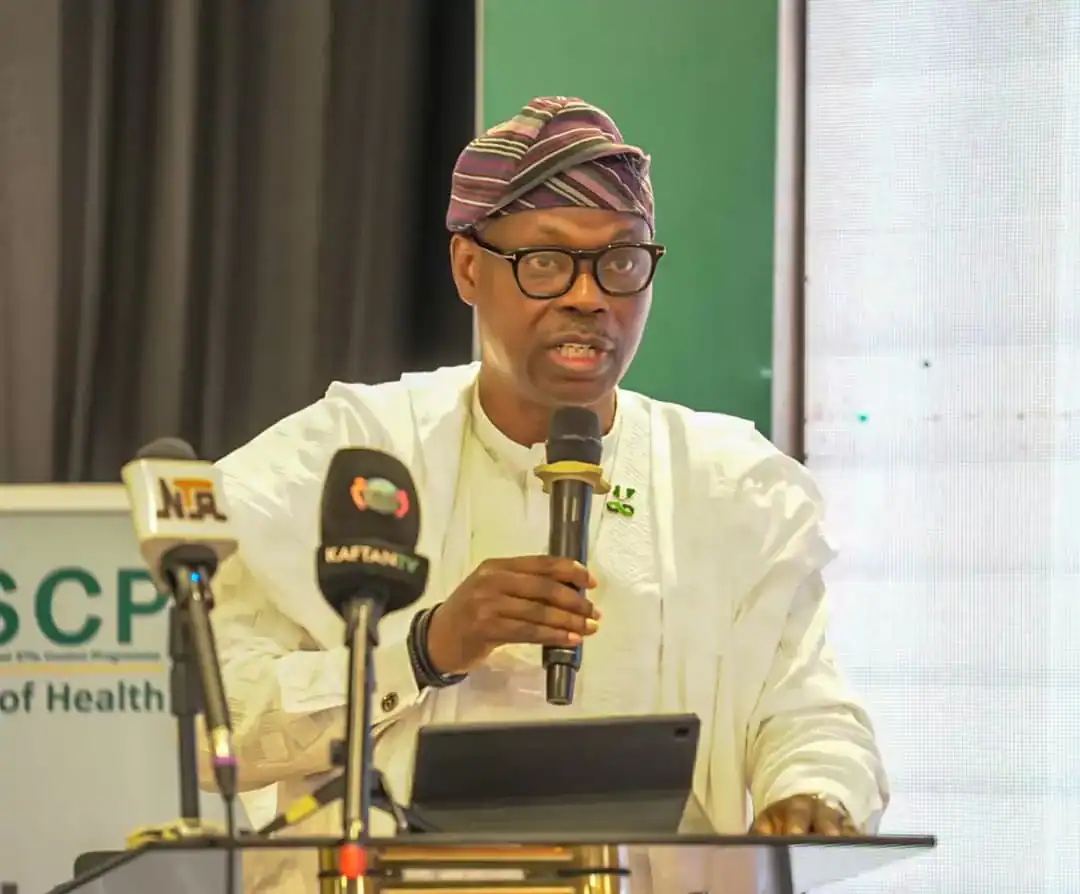
The Federal Government, on Saturday, formally flagged off anationwide free cancer screening programme targeting 6,000 Nigerians across the six geopolitical zones, with the official launch held at the Federal Medical Centre (FMC), Abeokuta, Ogun State.
The awareness and free screening programme was flagged off by the Minister of State for Health and Social Welfare Dr. Iziak Adekunle Salako.
According to the minister, the initiative aligns with activities marking World Cancer Day and is aimed at promoting early detection and prompt treatment of common cancers.
Dr. Salako, while congratulating Ogun State government and its people on the state’s 50th anniversary of the creation of the state, said the launch was a modest contribution by cancer stakeholders to improve public health as part of the golden jubilee celebrations.
Highlighting the growing burden of cancer, the minister said Nigeria bears the highest cancer incidence and mortality rate in Africa, with deaths exceeding those from tuberculosis, malaria and HIV/AIDS combined.
He identified breast, cervical, and prostate cancers as the most prevalent in the country, alongside childhood cancers, which continue to record low survival rates in low and middle income countries due to limited access to treatment.
According to him, breast cancer accounts for significant mortality among women, while cervical cancer, though preventable and curable, remains a major killer with prostate cancer as the most common among men in Africa.
He stressed that late diagnosis and delayed treatment contribute largely to high mortality rates in Nigeria.
Salako said the screening programme reflects the strategic focus of President Bola Ahmed Tinubu’s administration on prevention as the most cost-effective approach to tackling diseases of public health importance.
He explained that the Federal Ministry of Health and Social Welfare is addressing cancer through all levels of prevention, including tackling risk factors such as tobacco use, alcohol consumption, and environmental pollution, as well as expanding access to HPV and hepatitis B vaccines.
He disclosed that nearly 15 million girls aged 9 to 14 had received the HPV vaccine as of late 2025.
The Ogun State Commissioner for Health, Dr. Tomi Coker, commended the Federal Ministry of Health and Social Welfare for bringing the nationwide free cancer screening and awareness programme to Abeokuta.
Meanwhile, a leading cancer advocacy organisation, Project PINK BLUE Health and Psychological Trust Centre, on Saturday, called on the Federal Government to establish a nationwide, structured cancer screening programme to tackle late detection and reduce Nigeria’s rising cancer mortality rate.
The appeal was made on Saturday in Abuja during activities marking the 2026 World Cancer Day, where the group organised a symbolic walk, a 20-kilometre cycling event and a 10-kilometre run against cancer at the Transcorp Hilton.
The organisation also raised concerns over what it described as the “astronomical” cost of cancer treatment in Nigeria, warning that many patients are forced to choose between basic necessities and life-saving medication.
Programme Associate at Project PINK BLUE, Ms. Faridah M. Banwo, said this year’s commemoration, themed “United by Unique,” highlights the distinct and often overlooked challenges faced by Nigerian cancer patients.
“Today, several patients are deciding whether to buy food or purchase their cancer medication. Many are borrowing money to pay for chemotherapy, while family members are selling properties just to afford radiotherapy,” Banwo said.
She described the financial burden of cancer care as overwhelming and urged both federal and state governments to strengthen funding support for patients.
“We are calling on the Federal Government and the National Assembly to increase budgetary allocations to the Cancer Health Fund. State governments should also establish cancer health funds and trusts to assist indigent patients,” she added.
According to the group, Nigeria recorded 127,763 new cancer cases and 79,542 deaths in 2022, with about 62 per cent of diagnosed patients losing their lives to the disease.
Executive Director of Project PINK BLUE, Mr. Runcie C.W. Chidebe, attributed the high mortality rate to systemic weaknesses within the healthcare system rather than patient negligence.
“Late detection, limited access to care, poor survivorship services, inadequate oncology personnel, transportation challenges and poverty are major barriers,” he said. “It is unfair to blame patients. We must fix the system if we want better outcomes.”
Chidebe stressed the urgent need for an organised, government-backed national screening programme, noting that Nigeria currently relies on sporadic and uncoordinated screenings.
“What we have today is fragmented. A national programme would ensure that public hospitals routinely provide clinical breast examinations, cervical cancer screening and other tests to eligible individuals, and actively invite citizens for screenings,” he explained.
Also, the Marcelle Ruth Cancer Centre and Specialist Hospital on Friday mobilised health professionals, cancer survivors, government officials and members of the public for its 2026 Walk Against Cancer, a five-kilometre awareness march aimed at promoting early detection, preventive care and the removal of stigma surrounding cancer in Nigeria.
The annual walk, held to coincide with World Cancer Week, commenced at the Lagos State House, Marina, and ended at the Marcelle Ruth Cancer Centre and Specialist Hospital in Victoria Island.
Participants began the walk at about 7.am, drawing attention from early morning commuters as they moved through major corridors of the city in a symbolic show of solidarity with cancer patients and survivors.
Speaking at the event, Chairman of Marcelle Ruth Cancer Centre, Mr. Bolaji Odunsi, said the walk was designed to reinforce the importance of regular health checks as a vital component of healthy living.
He likened preventive healthcare to routine vehicle servicing, stressing that the human body also requires consistent attention.
“Just as you service your car regularly, you need to service your body every year,” Odunsi said.
“Regular check-ups and prompt medical consultation when you notice anything unusual can make the difference between early treatment and late complications.”
He acknowledged recent government efforts in expanding cancer care infrastructure across the country, noting that the establishment of new cancer centres had improved access to services.
Also addressing participants, Co-founder and Chief Executive Officer of Marcelle Ruth Cancer Centre, Professor Modupe Elebute-Odunsi, explained that the 2026 walk aligned with the global World Cancer Day theme, “United by Unique,” a three-year campaign running until 2027.
She said the theme highlights the individuality of every cancer journey while reinforcing a shared responsibility to support survivors and patients.
“Cancer survivors have unique stories,” she noted. “A young mother with breast cancer has a different experience from a man in his 60s with prostate cancer, but what unites them is the possibility of survival, especially when cancer is detected early.”
Professor Elebute-Odunsi emphasised that early presentation remains the most powerful tool in cancer management, urging Nigerians—particularly those aged 40 and above—to prioritise annual wellness checks.
She warned that unexplained weight loss, persistent lumps, non-healing wounds or unusual bleeding should never be ignored.
She disclosed that Marcelle Ruth Cancer Centre has treated nearly 6,000 patients over the past five years and currently supports more than 400 cancer survivors through its “Marcelle Ruth Friends” group.

