
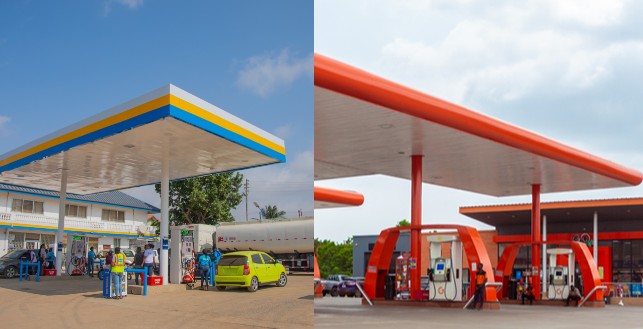
The second pricing window of January 2026 will arguably go down in Ghana’s downstream petroleum sector as a defining moment.
This followed a second consecutive drop in fuel prices at the pump, driven by relatively low crude oil prices on the international market and a relatively stable exchange rate – two critical variables that directly influence pump prices.
Beyond consumer relief, the pricing window sparked broader conversations about the National Petroleum Authority’s (NPA) price floor policy, competitive pricing strategies, and the growing role of social media as a battleground for brand influence among Oil Marketing Companies (OMCs).
What began as routine price adjustments quickly evolved into a high-profile digital exchange between industry leaders, drawing motorists, regulators and social media users into the debate.

The “Night-Time Economy” and the CEOs’ spat.
The seeming banter escalated to the executive level when Star Oil CEO, Kwame Tieku, utilised social media to challenge the National Petroleum Authority’s (NPA) price floor policy.
Kwame Tieku posted a provocative proposal: “Imagine StarOil pricing petrol at 9.50 per litre after 10 pm each night till 4 AM to support the night-time economy when demand is lower… but that will be below NPA floor price…so many possibilities unrealised because of this road block! Anybody who argues that a price floor is what stops or is part of the solution to illicit fuel activities in Ghana doesn’t know what they are talking about, bro”.
 The post effectively positioned the regulator as a barrier to consumer savings and sparked renewed debate about the price floor policy.
Industry observers, including GOIL CEO Edward Abambire Bawa, pushed back, noting that if OMCs were truly capable of lower prices, they should first meet the price floor of GH¢9.80 for PMS before calling for further reductions.
 During the second pricing window of January, Star Oil’s rate for super (petrol) stood at GH¢9.97, prompting critics, including the GOIL CEO, to argue that the proposal did not align with Star Oil’s own pricing at the pumps.
That intervention drew a response from Star Oil CEO Kwame Tieku:
“When in 2022 prices were racing upwards unbearably for Ghanaians, we were the ones who used our 162 stations then, to keep prices as low as possible when the “other inefficient one” who should have known better was busy pricing along with the “obroni” ones! Now they come questioning our credibility in low pricing?? Starsavers are united more than ever before! and we had our highest daily sales on record so far this weekend. We are firmly on course to deliver 90 million litres by the end of the month”.
 The exchange underscored how pricing debates are no longer confined to boardrooms or regulatory offices but now play out in real time on social media, with direct implications for brand perception and consumer loyalty.
From Free Breakfast to Online Shades
The rivalry soon spilt into marketing tactics. GOIL introduced a breakfast initiative at its Nima branch to attract early-morning customers. Star Oil, long known for cultivating a digital-native audience, responded with a viral post featuring an image of a train packed with passengers.
The caption read: “Star Oil customers returning home to fill up after breakfast at GOIL”.
The innuendo suggested that while motorists might enjoy GOIL’s freebies, their fuel loyalty and spending ultimately remained with Star Oil. GOIL’s social media team replied that as long as motorists were buying fuel, they were “always welcome”.
The exchange highlighted how promotions are increasingly amplified or undermined by rapid online reactions.
Quality Fuel Debate Takes Centre Stage
Fuel quality soon became the next flashpoint. Oil Marketing Companies routinely assert the quality of fuels dispensed to consumers, with GOIL historically positioning itself as a quality leader.
 Amid the price floor debate and its attendant price competition, GOIL CEO Edward Bawa reinforced this positioning: “Bernard Avle thank you for your comment on your show Citi 97.3 FM. I respectfully differ, and I believe it is important to clarify that while fuels in Ghana may originate from similar supply sources, fuel quality is not entirely uniform across all Oil Marketing Companies (OMCs).
“The key difference lies not merely in supply, but in how the fuel is treated before it reaches the customer, and this is where GOIL PLC clearly stands apart. GOIL’s primary differentiator is its advanced additive technology. Beyond base regulatory specifications, GOIL enhances its fuels with XP3 performance additives, which are specifically designed to clean critical engine components, improve combustion efficiency, boost power delivery, and enhance fuel economy.
“These benefits are experienced over time and translate directly into better engine performance, protection, and efficiency for motorists”.
On January 26, the GOIL CEO further posted an image featuring a U.S aircraft alongside a GOIL tanker, with the caption: “We are deeply honoured by the trust of the U.S. Air Force in choosing GOIL PLC to fuel its aircraft in Ghana, a confidence earned through the highest standards of quality, reliability, and operational excellence that define our products and service,”.
The post attracted over 5,000 “likes” and 120 “shares”, subtly reinforcing GOIL’s quality credentials by association with the U.S. Air Force.
Star Oil also weighed in on the quality fuel debate. CEO Kwame Tieku wrote on Facebook:
 “When they come shouting …quality quality! Ask them what structures support that claim! Star Oil is built to lead, and we will lead boldly and fearlessly”.
Star Oil also released what appears to be a counter-advertisement, challenging the perception that premium vehicles require premium-priced fuel.
The advertisement aims to debunk the misconception that certain fuel brands are exclusively for commercial vehicles while luxury cars require “premium” alternatives. It challenges the social stigma surrounding affordable fuel by asserting that all fuel in Ghana is subject to the same strict quality regulations. The narrative explains that an engine responds to clean quality fuel rather than the prestige of a logo or expensive marketing.
By highlighting a luxury vehicle’s long-term success with the fuel from Star Oil, the advert promotes the idea of smart value over high-priced branding. Ultimately, it encourages drivers of all vehicle types to prioritise fuel integrity and engine health over public perception.
Following the advert, the Star Oil CEO added: “Now that the “high price equals high quality” myth has finally been laid to rest in Ghana, and we are all comfortably “sitting” on the gasoline price floor (something that they said was impossible just a few days ago), how are the “abrofuor” managing the disappointment by their long time Obibini friend? Long may this continue!! The Ghanaian consumer benefits”.
Data Behind the Drama: A New Market Leader Emerges
Behind the online exchanges lies a significant shift in market fundamentals. Mid-year 2025 industry data confirmed that Star Oil overtook GOIL PLC to become Ghana’s largest OMC. Star Oil expanded volumes by 41.02% to 403.3 million litres, while GOIL recorded a marginal decline of 0.73%.
Star Oil’s growth was largely driven by gains in gasoline and diesel, underscoring how pricing, network expansion and digital engagement are reshaping competitive dynamics in Ghana’s downstream petroleum market.
Competition Goes Digital
What unfolded during January’s pricing window reflects more than a temporary price war. It signals a new era where Ghana’s OMCs are competing not only at the pump, but also in the public square of social media.
The subtle innuendos between Star Oil and GOIL reveal an industry increasingly aware that perception, engagement and storytelling now matter almost as much as price and product. From viral posts and promotional stunts to executive commentary, social platforms have become powerful tools for influencing consumer behaviour and shaping market narratives.
For OMCs, the lesson is clear: social media is no longer optional. When strategically leveraged, it can deepen customer loyalty, amplify promotions and reinforce brand identity. As competition intensifies and consumers become more digitally connected, the companies that effectively combine pricing discipline with authentic online engagement are likely to define the next phase of growth in Ghana’s downstream petroleum sector.
This article was written by Daniel Sackitey, a broadcast journalist with Citi FM/Channel One TV. He writes on socio-political issues, governance, public policy, and business, with an analytical approach. He can be reached at [email protected]

