

 As the world marks Mental Wellness Month in January, it is high time Ghana confronted mental health honestly. Not through whispered conversations behind closed doors, and not only through prayers offered in silence, but through open and informed dialogue that recognizes mental wellness for what it truly is: a health issue, not a moral failure or spiritual weakness.
Across the country, awareness of mental health challenges is rising, yet the response remains constrained by stigma and silence. The issue is acknowledged privately but avoided publicly. This contradiction is costing lives, weakening families, and quietly draining the nation’s productivity.
The impact of mental disorders
Mental health is not a fringe concern. It is a national development issue.
The scale of the problem is significant. Over 2.3 million Ghanaians are affected by mental health conditions. The World Health Organization (WHO) estimates that about 13% of the population experiences a mental disorder, with roughly three percent facing severe conditions and about 10% living with moderate to mild disorders. Mental disorders are also among the leading causes of disability in Ghana. Among those who seek treatment, common diagnoses include substance use disorders, schizophrenia, and mood disorders. Yet between 85% and 98% of people who need care are unable to access the support they require.
These numbers represent real people. They represent the senior high school graduate who cannot concentrate because of anxiety, but is told to “stop worrying.” They represent the university student battling depression who is advised to “just be strong.” They represent the new mother silently struggling with postpartum depression, terrified of being judged as ungrateful or incapable.
As one young Ghanaian once put it, “I didn’t know what was wrong with me. I just knew I was tired of everything, and I couldn’t explain it without being laughed at.”
Cultural attitudes continue to frame emotional distress as personal weakness or spiritual failure. A civil servant experiencing panic attacks is dismissed as someone who “thinks too much.” A teenager showing signs of trauma is labeled stubborn or disrespectful. A young man struggling with addiction is treated as morally broken rather than medically unwell. While many faith leaders and traditional healers provide comfort and community support, harmful narratives can also delay timely treatment and deepen shame.
Stigma and mental health
Stigma does more than wound emotions. It delays help-seeking until distress becomes a crisis. It pushes people to hide their symptoms until they collapse. It isolates those who are already struggling. In extreme cases, it contributes to suicide, a tragedy that remains deeply underdiscussed and poorly understood in Ghanaian public conversation.
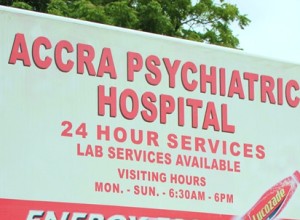
Even when individuals overcome stigma and seek professional help, they face serious structural barriers. According to the WHO, Ghana has only about 39 psychiatrists serving a population of over 30 million people, a ratio of approximately 0.13 psychiatrists per 100,000 persons. The country also has only three major psychiatric hospitals: the Accra Psychiatric Hospital, Pantang Hospital, and Ankaful Psychiatric Hospital. These facilities are concentrated in the southern part of the country, leaving many communities, particularly in the northern regions, with limited access to specialized care.
Shortage of mental health specialists and medication
The shortage does not end with psychiatrists. There are not enough clinical psychologists, psychiatric nurses, social workers, and trained counsellors across the health system. Many facilities also face medication shortages, limited beds, weak referral systems, and inadequate funding for community-based mental health services. This means families often carry the burden alone, trying to manage severe mental illness without training, support, or resources
A caregiver once shared, “We were told to bring him to Accra, but how do we do that when we can’t even afford transport, let alone treatment?” This is where Ghana’s mental health gap becomes most visible. It is not only about awareness. It is about access.
To make matters worse, some available resources are poorly suited to Ghanaian realities. Treatment models imported from Western contexts often prioritize individual therapy, high costs, and limited cultural adaptation. They rarely reflect communal living, extended family systems, spiritual worldviews, and economic constraints that shape everyday life in Ghana. A mental health intervention costing GH₵200 per session is simply out of reach for many households. Ghana deserves better.
Mental health solutions
Mental health solutions must respect cultural realities while remaining grounded in evidence-based care. Prayer and professional support can coexist. Faith can comfort, and medicine can treat. Mental wellness requires integration, not isolation. The passage of Ghana’s Mental Health Act in 2012 was a crucial milestone, but policy without implementation is a promise unfulfilled. Without consistent funding, staffing, training, and enforcement, mental health reforms remain nothing more than words on paper.
For instance, Ghana’s Mental Health Fund, which was established under the Mental Health Act, 2012 (Act 846) to finance mental healthcare and improve services nationwide, has remained dormant since its creation. So, what must change?
Time to reframe narrative around mental health
First, we must reframe the narrative. Mental wellness is health, not weakness. Just as we do not shame people for seeking treatment for malaria, hypertension, or diabetes, we must not shame anyone for seeking support for depression, anxiety, addiction, or trauma. Churches, mosques, schools, workplaces, and media institutions must lead this shift by normalizing mental health conversations and promoting compassion rather than judgement.
Second, Ghana needs culturally appropriate and community-based mental health services. These include training and deploying more psychiatric nurses, clinical psychologists, and counsellors across regions. It also means strengthening referral pathways so district hospitals and community health facilities can identify early warning signs, provide basic support, and refer complex cases quickly. There ought to be investments in public education campaigns that teach people how to recognize symptoms and respond responsibly.
Third, Ghana should expand practical and low-cost interventions that fit the country’s context. This includes school-based counselling, workplace mental health support, and community outreach programmes that reduce stigma. Digital tools, including phone-based and WhatsApp-based support systems, can also help bridge gaps, especially for young people and underserved communities. But these tools must be designed for Ghanaian realities, including affordability, language accessibility, and cultural sensitivity.
Fourth, individuals must play their part. Checking on people must go beyond polite greetings. We must learn to notice when someone is withdrawing, losing interest, sleeping poorly, or speaking in hopeless terms. When someone trusts you with their struggles, respond with empathy, not judgement. That response could be the difference between recovery and collapse.
Act with urgency
Finally, policymakers must act with urgency. Mental health remains underfunded in Ghana, with only about 1.4 percent of government health expenditure going to mental health, far below what is required. The funding gap was what the Mental Health Fund was expected to close. But the Fund has literally been abandoned.
Investment is needed in infrastructure, professional training, medication availability, and nationwide public education. The National Health Insurance Scheme must also expand coverage to include outpatient mental health services and essential psychotropic medications, which remain prohibitively expensive for many families.
The economic case for action is also undeniable. Ghana loses an estimated seven percent of its GDP due to psychological distress, compared to about four percent lost to malaria. Household costs associated with poor mental health can consume up to one-third of monthly earnings. When mental health collapses, productivity declines, school performance suffers, relationships break down, and poverty deepens.
Mental wellness is not a luxury. It is the foundation of national well-being.
This Mental Wellness Month, Ghana must choose action over silence. Build communities where seeking help is seen as strength, not failure, and ensure that no Ghanaian suffers alone simply because they cannot access care or fear judgement.
The conversation begins with everyone involved; The time to talk is now.
By: Priscilla A. Boateng
Special assignment for Ghana Business News
Copyright ©2026 by NewsBridge Africa
All rights reserved. This article or any portion thereof may not be reproduced or used in any manner whatsoever without the express written permission of the publisher except for the use of brief quotations in reviews.

