


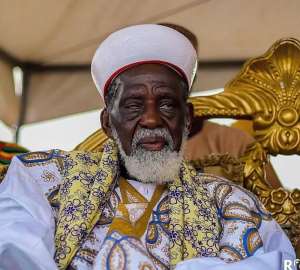
Ghana is widely regarded as one of Africa’s most stable democracies, known for peaceful elections, respect for constitutional rule, and religious tolerance. Christianity and Islam have coexisted for centuries, with traditional African religions also playing an important role in society. Despite this diversity, Ghana has never elected a Muslim president since independence. This raises an important political and social question: what would happen if Ghana produced a Muslim president?
Religious Composition and Political Reality
Ghana is a religiously plural country. Christians form the majority of the population, Muslims are a significant minority, and traditional beliefs remain influential. Although the Constitution clearly states that Ghana is a secular state, religion still influences social identity, voting behavior, and public perception of leadership.
Historically, political leadership in Ghana has been dominated by Christians, partly because of demographics and partly because of long-standing social structures. However, Muslims have played major roles in national development as vice presidents, ministers, legislators, judges, and public servants. This shows that religious identity has not been a formal barrier, even if informal biases exist.
Constitutional Safeguards and Secular Governance
If Ghana were to elect a Muslim president, the Constitution would remain the supreme authority. The president is required to govern in the interest of all citizens, regardless of religion. Ghana’s laws do not permit the imposition of religious rules on the state, meaning that a Muslim president could not turn
Ghana into an Islamic state or govern using religious law.
This constitutional framework would help reassure citizens that leadership is based on democratic principles, not religious dominance. In fact, a Muslim president would be bound by the same oath and responsibilities as any previous leader.
Public Perception and Social Reactions
The election of a Muslim president would likely generate mixed reactions. Many Ghanaians especially younger voters and urban populations may view it as a sign of democratic maturity and inclusiveness. It could strengthen national unity by demonstrating that leadership is open to all qualified citizens.
However, some segments of society might express concern or skepticism, largely due to misinformation, stereotypes, or fear of religious influence in politics. These concerns would likely be shaped more by perception than reality. Media, civil society, and religious leaders would play a crucial role in promoting calm dialogue and national cohesion.
Political Opportunities and Challenges
A Muslim president could help deepen Ghana’s commitment to pluralism. It might encourage greater political participation among Muslim communities and reduce feelings of marginalization. Internationally, Ghana could strengthen diplomatic and economic relations with Muslim-majority countries, especially in the Middle
East and parts of Africa.
At the same time, such a president would face heightened scrutiny. Decisions might be unfairly interpreted through a religious lens, even when they are purely political or economic. To succeed, the leader would need to consistently emphasize inclusivity, transparency, and national unity.
Lessons for Ghanaian Democracy
The possibility of a Muslim president challenges Ghanaians to reflect on the true meaning of democracy. If leadership selection is genuinely based on competence, vision, and integrity, then religion should not be a deciding factor. A peaceful election of a Muslim president would signal that Ghana’s democracy has moved beyond identity politics toward issue-based governance.
Conclusion
If Ghana produces a Muslim president, it would not mark a break from democratic tradition, but rather an evolution of it. Such an outcome would test the nation’s commitment to constitutionalism, tolerance, and equality. Ultimately, Ghana’s strength lies not in the religion of its leaders, but in the resilience of its institutions and the unity of its people.
Mustapha Bature Sallama
Medical Science communicator.
Private Investigator and Criminal
Investigation and Intelligence Analysis,
International Conflict Management and Peace Building. Alumni Gandhi Global Academy United States Institute of Peace.
[email protected]
+233-555-275-880
