


By Esther Bagourdo, Accra
In a context marked by the pursuit of food sovereignty, Ghana is consolidating its agricultural strategy around a key crop: rice. From 20 to 23 December 2025, Accra hosted the Ghana Rice Rising Fair, a major event promoting local rice and highlighting the development of a national value chain. Organized by the Chamber of Agribusiness Ghana, in partnership with the Ministry of Trade, Agribusiness and Industry, and supported by the Ghana Commodity Exchange (GCX) and the John Agyekum Kufuor Foundation, the fair is part of a broader economic transformation strategy led by Ghanaian authorities.
Historically reliant on imports, Ghana has now positioned rice as a strategic pillar of its agricultural and industrial development. The fair showcased local producers, processors, distributors, and investors, while raising consumer awareness about the quality and competitiveness of Ghanaian rice. Several thousand bags of locally produced rice were sold in just a few days, reflecting growing household interest, especially during the holiday season.
Local Production and Imports: A Delicate Balance
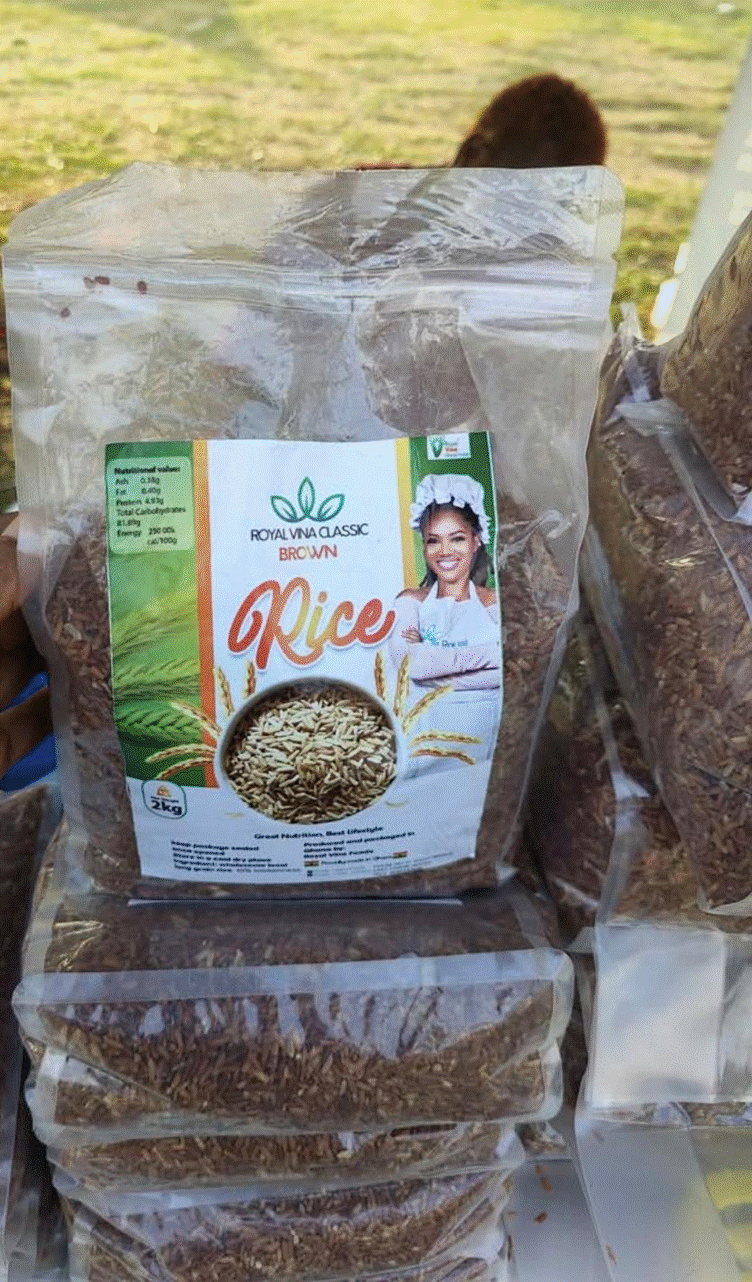
According to USDA data, rice consumption in Ghana is projected to reach 1.8 million metric tons for the 2025/26 campaign, up from 1.75 million the previous season, driven by population growth and urbanization. Local production is expected to reach around 900,000 metric tons, nearly half of the country’s needs, marking an 18% increase compared to the previous season.
However, Ghana remains heavily dependent on imports, which are projected at 1 million metric tons for the same period, primarily from Vietnam, India, and Thailand. Imports represent a significant economic burden. In 2023, Ghana spent around $197.5 million on imported rice, roughly 11% of its total food import bill. This dependence exposes the country to international price fluctuations and exchange rate variations, highlighting the need for robust local production.
Value Chain Structuring and Challenges
Beyond sales, the Ghana Rice Rising Fair highlighted national efforts to professionalize the rice value chain: increasing yields, mechanization, storage, processing, market access, and price transparency through the GCX. These measures aim to create sustainable jobs, increase farmers’ incomes, and attract local and international investment.
Yet, challenges remain. Limited irrigation, low mechanization, insufficient processing capacity, and consumers’ preference for imported rice hinder the competitiveness of local rice. According to the USDA, 70% of rice consumed in Ghana is imported, emphasizing the need for targeted strategies to boost domestic production and meet urban and international market standards.
Objectives and Strategic Vision
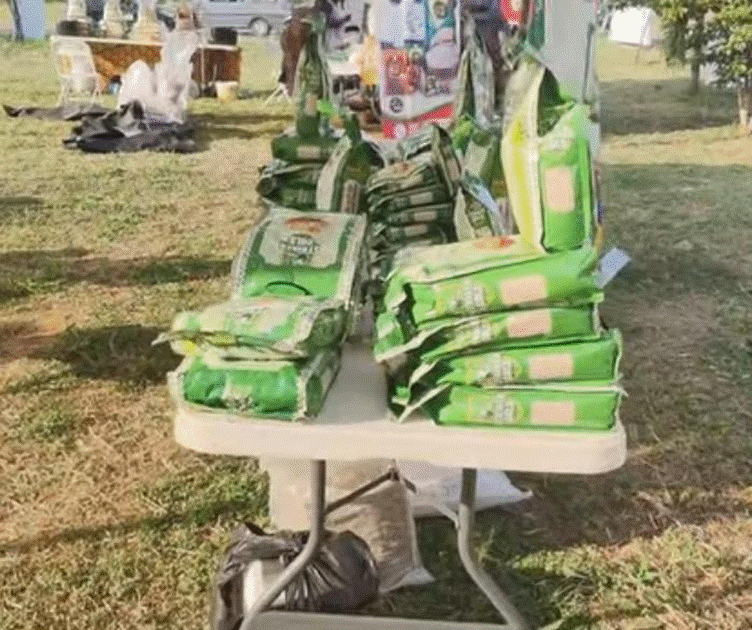
The Ghanaian government, through programs like Planting for Food and Jobs and the National Rice Development Strategy II (NRDS II), aims for rice self-sufficiency by 2028. Key focus areas include improved seed varieties, irrigation expansion, modern farming technologies, and local processing development. These initiatives are designed to stabilize supply, reduce import dependency, and stimulate private investment in agro-industry.
The Ghana Rice Rising Fair demonstrates these efforts. It is not just a commercial fair but a strong signal to producers, consumers, and investors: Ghana is committed to making rice a competitive, structured, and forward-looking sector.
Ghana’s strategy fits into a pan-African context. Many African countries face similar tensions between growing consumption and insufficient domestic production. Successful experiences, such as Ghana’s, show that combining technical support, agricultural innovation, and public-private partnerships can strengthen food security while developing competitive and inclusive value chains.
Local rice production is thus not merely an agricultural issue but an economic and strategic lever for Ghana and West Africa. Efforts to professionalize the sector, modernize infrastructure, and develop domestic markets demonstrate the country’s ambition to transform its agricultural resources into a sustainable growth engine while reducing vulnerability to international market shocks.
