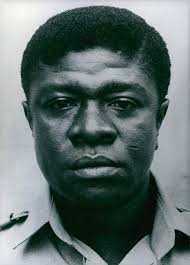
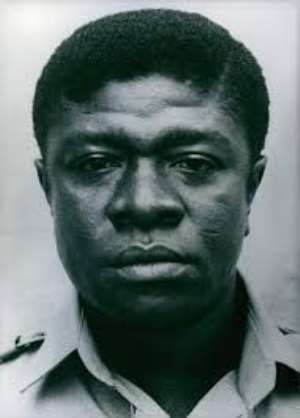
More than four decades after his death, General Ignatius Kutu Acheampong remains one of the most debated figures in Ghana’s political history. To some, he was a nationalist soldier-statesman who restored pride, discipline, and self-reliance after economic decline. To others, he presided over economic hardship, corruption, and an ill-fated attempt to dilute democratic rule. Yet even his critics concede one fact: Acheampong’s era left deep and lasting imprints on Ghana’s national life.
The question many Ghanaians still ask, quietly or openly, is whether Acheampong belongs in the company of Ghana’s great leaders, perhaps even as primus inter pares after Kwame Nkrumah. Answering this requires moving beyond nostalgia and hostility, and grounding the discussion in verifiable history.
The Context: A Soldier Enters Politics
On 13 January 1972, Colonel Acheampong led a military coup that overthrew the Progress Party government of Dr. K.A. Busia. Ghana at the time was burdened by currency devaluation, austerity measures, rising unemployment, and public dissatisfaction. Acheampong justified the takeover as a rescue mission to halt economic decline and restore national dignity. The new regime, first known as the National Redemption Council (NRC) and later the Supreme Military Council (SMC), rejected orthodox economic prescriptions and embraced a nationalist, state-led development approach. This orientation defined both Acheampong’s achievements and his failures.
A Developmental State: Projects That Shaped Daily Life
Unlike some military regimes that ruled largely by decree, Acheampong’s government invested heavily in visible, mass-impact projects, many of which still affect Ghanaian life today.
- Operation Feed Yourself (OFY): Perhaps the most iconic Acheampong policy was Operation Feed Yourself, launched to achieve food self-sufficiency and reduce imports. Citizens were encouraged to farm, from backyard gardens to commercial agriculture, while state support for irrigation and mechanization expanded. OFY succeeded in mobilizing national consciousness around agriculture and restoring dignity to farming. However, while food production improved in certain periods, the programme did not achieve sustained national self-sufficiency. Structural weaknesses, such as poor storage, pricing distortions, limited extension services, and transport challenges, undermined long-term impact. Still, OFY remains one of Ghana’s most ambitious agricultural mobilization efforts.
- Housing and Urban Development: Acheampong’s era witnessed one of Ghana’s most significant public housing drives. The Dansoman Housing Estate in Accra, widely documented as one of the largest housing projects in West Africa at the time, was initiated under his government. Additional housing projects were developed in Teshie-Nungua and other urban centers. These projects reflected a commitment to state-led social infrastructure, aimed at middle- and lower-income households, a contrast to later market-driven housing policies.
- Energy and Industrial Foundations: The Kpong Hydroelectric Project was initiated during Acheampong’s tenure to complement Akosombo, expand power generation, and support irrigation. Though completed later, Kpong stands as part of his administration’s long-term infrastructure vision. This emphasis on foundational infrastructure aligned with Acheampong’s belief that economic sovereignty required energy security.
- Healthcare Expansion: Several regional and specialized hospitals were expanded or modernized during the 1970s, including facilities in Ho, Winneba, Pantang, and Tamale. While documentation varies by institution, the broader record confirms increased state investment in public health infrastructure during the period.
- Two Quiet Revolutions: Keep Right and Metrication: Two reforms introduced under Acheampong continue to shape everyday life. Operation Keep Right, which switched Ghana from left-hand to right-hand traffic, aligning the country with most of the world, and adoption of the Metric System, replacing imperial measurements. Both were logistically complex but successfully implemented, demonstrating the regime’s capacity for nationwide coordination and public education.
Economic Nationalism and the “Yentua” Doctrine
Acheampong’s economic philosophy was unapologetically nationalist. His government repudiated portions of Ghana’s external debt, arguing that the loans were unjust and strangling development. The popular slogan “Yentua” (“We won’t pay”) resonated with many citizens. However, this stance had serious consequences. Ghana’s international creditworthiness deteriorated, access to external financing declined, and shortages of essential goods worsened. While debt repudiation boosted short-term domestic morale, it contributed to long-term economic isolation. It is historically accurate to state that Ghana’s external debt problem evolved across multiple administrations, with restructuring, rescheduling, and repayments spread over decades. Assigning later debt settlements solely to any one president oversimplifies a complex fiscal history.
Union Government (UNIGOV): Vision without Trust
Acheampong’s most controversial legacy remains the Union Government (UNIGOV) proposal. Introduced in 1976, UNIGOV sought to abolish party politics and replace it with a non-partisan governance system combining military officers, civilians, professionals, and traditional authorities. Supporters argued that party politics had deepened ethnic and regional divisions, and that a consensus-based system could promote stability. But then Ghana needed development, not adversarial politics. These arguments resonated with some traditional leaders and segments of the public fatigued by political rivalry. Critics countered that UNIGOV lacked clear constitutional safeguards. It blurred the line between military and civilian authority, and appeared designed to entrench military influence indefinitely.
The 1978 referendum on UNIGOV was deeply contested. Allegations of manipulation, suppression of opposition groups, and restrictions on dissent damaged the credibility of the process. Rather than uniting the nation, UNIGOV intensified resistance, particularly among students, professionals, and labour unions. In hindsight, many scholars argue that UNIGOV failed not because inclusive governance is inherently flawed, but because trust, transparency, and genuine civilian transition mechanisms were absent. A potentially laudable idea collapsed under authoritarian execution.
Decline, Ouster, and Tragic End
By the late 1970s, economic hardship, corruption (popularly referred to as kalabule), and political repression had eroded Acheampong’s legitimacy. On 5 July 1978, he was removed in a palace coup led by Lt. Gen. F.W.K. Akuffo. Less than a year later, in June 1979, the Armed Forces Revolutionary Council (AFRC) executed Acheampong alongside other senior officers. His execution remains one of the most traumatic episodes in Ghana’s post-independence history — a reminder of how violently politics can turn on its own architects.
Acheampong as Primus Inter Pares?
Does Acheampong qualify as first among equals after Nkrumah? The answer depends on the criteria. In nationalist intent, Acheampong clearly echoed Nkrumah — self-reliance, state intervention, and resistance to external domination. In infrastructural ambition, his regime delivered tangible, visible projects that many Ghanaians still remember. In governance, however, his suppression of dissent and flawed political engineering weakened democratic culture. Acheampong was neither a simple hero nor a caricatured villain. He was a leader shaped by Cold War politics, post-colonial economic pressures, and military institutional culture. His greatest strength, decisiveness, also became his greatest weakness.
What History Ultimately Says
General I.K. Acheampong belongs to a rare category in Ghanaian politics. Leaders whose intentions were nationalist, whose actions were consequential, and whose outcomes were mixed. He restored confidence in agriculture, expanded infrastructure, and pursued economic sovereignty with conviction. Yet he also presided over economic decline, tolerated corruption, and misjudged the public’s appetite for non-democratic governance. If Kwame Nkrumah was Ghana’s foundational visionary, Acheampong was its most assertive nationalist corrector — bold, flawed, and unforgettable. History, as it should, remembers him not with slogans, but with evidence.
FUSEINI ABDULAI BRAIMAH
+233208282575 / +233550558008
[email protected]

 Teodoro Obiang Nguema Mbasogo is the President of Equatorial Guinean