4.7 C
London
Monday, December 29, 2025
Home Blog Page 414

Lumba Funeral Dispute: Akosua Serwaa is the victim, not Odo Broni

0

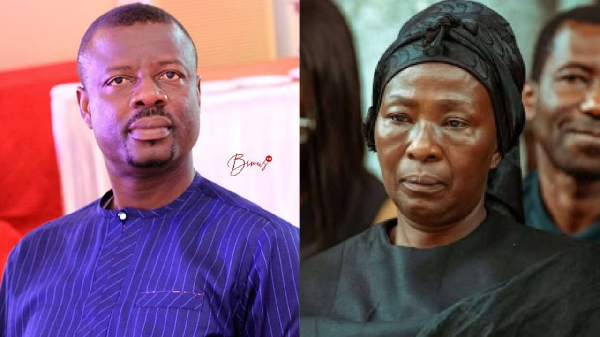
Akosua Serwaa (R) and her lawyer Willian Kusi (L) Akosua Serwaa (R) and her lawyer Willian Kusi (L)
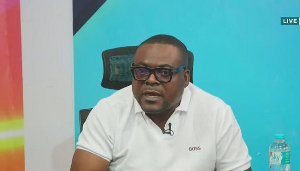
In the wake of heated legal proceedings surrounding the rights to Daddy Lumba’s funeral rites, William Kusi, lawyer for Akosua Serwaa, has strongly defended his client, insisting that she is the true victim in the dispute with Priscilla Ofori Atta (Odo Broni).

He said this following the court session on Thursday, October 16, 2025, which saw the application for an injunction on Daddy Lumba’s funeral adjourned to October 28.

Kusi emotionally addressed the media, accusing the head of Lumba’s external family of instigating the conflict.

“She’s so disappointed; she wishes this had never happened. Unfortunately, you know the posture of the head of the family from the beginning. That is the cause of the problem,” he said.

Akosua Serwaa’s Injunction: Why the court adjourned the case

Kusi argued that when family authorities draft letters denying a wife’s rights, silence is not an option.

“If letters are written to you denying you of your rights as a wife, I’m sure that you won’t keep quiet and let it pass by,” he added.

He maintained that public narratives have unfairly painted Odo Broni as the aggrieved party, whereas in his view, Akosua Serwaa is the one suffering.

“Those out there making noise and talking anyhow, they need to understand and know that Akosua Serwaa is the victim, not Odo Broni. It is Akosua Serwaa who is the victim.

“She has suffered neglect for 15 years, managing three kids in a foreign land. You think it is easy?” he quizzed.

His statements follow filings in which Serwaa seeks court declarations recognising her as Daddy Lumba’s only surviving legal spouse and restraining the defendants (Kofi Owusu Fosu, head of the external family; and Odo Broni) from performing widowhood rites or publicly claiming to be the legitimate wife.

In earlier remarks, Kusi warned that if Odo Broni were legally recognised, Serwaa’s inheritance rights could be jeopardised.

Additionally, he has described Serwaa’s exclusion from funeral decisions as part of a broader pattern of sidelining, saying she was led to believe Odo Broni was merely a househelp before later claims emerged.

As the case unfolds, the next hearing is scheduled for October 28, 2025, when the court will consider whether to grant an injunction halting further funeral arrangements.

Watch the video below:

ID/AE

Watch the latest episode of Health Focus below

https://www.youtube.com/watch?v=AbVtEcsnHag

Here’s how much students in private schools under Free SHS programme will receive

0

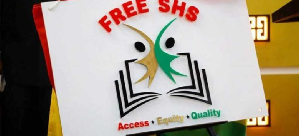
The Free SHS programme was introduced by the NPP government The Free SHS programme was introduced by the NPP government

The Ministry of Education has reaffirmed its commitment to pay GH¢994 per student annually to support private schools participating in the 2025 Free Senior High School (SHS) programme.

According to a report by citinewsroom.com, the Minister of Education, Haruna Iddrisu, made this known during the signing of a Memorandum of Understanding (MoU) between the ministry and the Conference of Heads of Private Second Cycle Schools, formalising the inclusion of selected private SHSs in the Free SHS policy, on Thursday, October 16, 2025.

Know all 25 private schools included in the Free SHS policy

Haruna Iddrisu explained that the support, expected to benefit about 25,000 students, forms part of the government’s efforts to eliminate the double-track system in public schools.

“The government is committed to providing a stipend to support the transition of that category of students moving into private schools—that’s negotiable, we’ll still discuss as and when.

“But for a start, that’s the commitment we make to the Ghana National Council of Private Schools for this pilot inclusion of selected private schools in the provision of Free Senior High School education, as part of the government’s effort to end double track,” he stated.

https://www.ghanaweb.com/GhanaHomePage/features/Deciding-to-review-the-Free-SHS-policy-1972781

President of the Conference of Heads of Private Second Cycle Schools, I K Mensah, commended the government for the initiative and clarified the terms of the pilot programme.

“And the caveat is that, for now, during this pilot system, he’s going to place only day students with us by the payment of GH¢994 per child in private second-cycle schools,” he explained.

The programme was introduced by the Nana Addo Dankwa Akufo-Addo government to improve access to senior high school education.

JKB/AE

‘President Mahama should be in Nsawam Prison’ – Kwamena Duncan fumes

Why Cletus Nombil is a Ghanaian talent to watch

0

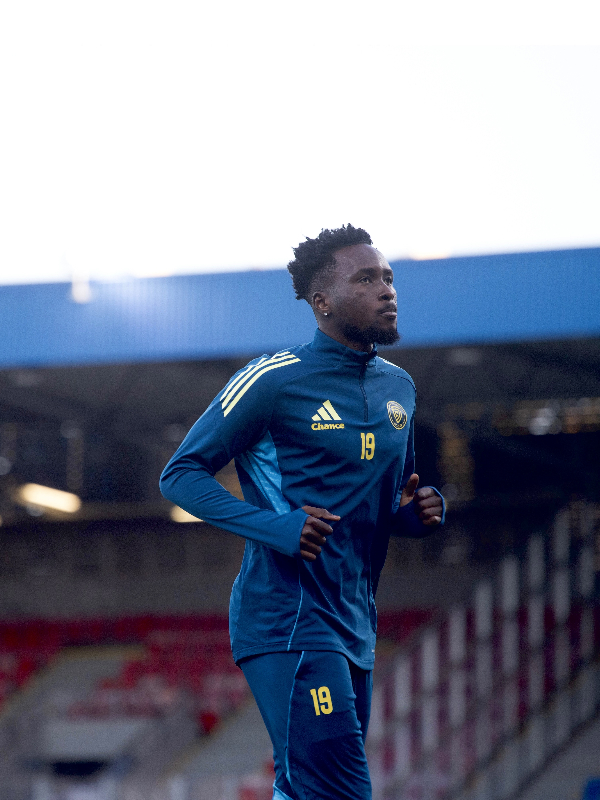
Ghanaian midfielder, Cletus Nombil is commanding presence and solidifying his reputation in the Czech First League.

Currently plying his trade with FC Zlín, his recent performances, along with his crucial role in the squad, suggest he is a name that deserves significant attention from the wider football community and, particularly, from the Ghanaian national team selectors.

The Last Five Games: A Snapshot of Consistency

Cletus Nombil’s strength lies not in spectacular goals, but in the relentless, high-energy control he exerts over the midfield battleground.

A look at his last five competitive outings for FC Zlín in the 2025/2026 season paints a picture of a player who is indispensable, showcasing a valuable blend of tenacity and influence.

The stretch began with a couple of tough league fixtures, starting with an away loss to giants Sparta Prague (3−1), where Nombil managed 46 minutes followed by a home draw against Dukla Prague (1−1), seeing him play 45 minute.

In the next league match, a home loss to Hradec Kralove (1−2), he clocked 73 minutes with a rating of 6.3, showing he maintained a baseline level of performance.

Black Stars set for tough clash against Japan in 2025 Kirin Challenge Cup

Crucially, the period also included two cup victories: a 90-minute performance in the MOL Cup against Usti nad Labem (0−2 Win), and his exceptional defensive masterclass in the away league victory against Plzen (0−1 Win).

In that match, Nombil’s 74 minutes on the pitch earned him an outstanding rating of 7.9, the highest among these league fixtures, highlighting his impact in securing a vital three points. His consistent involvement in every game, often with high minutes, demonstrates the manager’s deep trust in his ability to anchor the midfield across both league and cup competitions.

Cletus Nombil is fast growing into a strong engine room of FC Zlín’s midfield. He combines physical dominance with technical intelligence. His primary role, as highlighted in numerous football articles and statistics, is the defensive midfielder.

However, his influence is far more reaching than a simple ball-winner. He is described as:

• A Holding Midfielder: The anchor who screens the defense, dictating the tempo of the game from deep.

A Ball-Winning Midfielder: His height and strength make him an effective barrier, breaking up opposition attacks with well-timed tackles and Interceptions.

A Deep-Lying Playmaker: Though defensive in nature, he is tasked with

initiating attacks from the back, using his vision to distribute the ball and switch play, keeping the team ticking over.

A Box-to-Box Midfielder: A testament to his stamina, he has the engine to shuttle between both penalty areas, supporting the defense and occasionally pushing forward to link with the attack, having scored one goal in the current league campaign.

Since joining FC Zlín in January 2024 on a long-term contract, Nombil has become a fixture in the starting eleven. He is the tactical pivot the team relies on, expected to partner key midfielders to mastermind the club’s midfield, a clear sign of the high expectations placed upon him by the coaching staff.

He provides the steel and stability required for a team competing in one of Europe’s competitive top-flight leagues.

The attention he deserves as a Ghanaian footballer Cletus Nombil’s journey and current form make a compelling case for him to be considered a rising star among Ghanaian footballers:

1. The European Test of Fire: Nombil has successfully navigated the challenging transition from the Ghana Premier League (Dreams FC) and Israeli football (Hapoel Jerusalem) to the increasingly respected and physically demanding Czech top-flight.

Securing a regular starting berth in European football, especially in a crucial defensive position, speaks volumes about his consistency and professional adaptation.

2. The Exceptional Talent Story: Years ago, Nombil was deemed an exceptional talent by clubs like Hearts of Midlothian, a claim so strong they sought to bypass work permit regulations. Though that move didn’t materialize, his successful career trajectory since then has vindicated the label. He is a player who was scouted early for his potential and is now delivering on that promise in the major leagues.

3. The Next Generation Midfield Anchor: Ghana has a history of producing world-class defensive midfielders. At 25 years old and at the peak of his physical powers, Nombil possesses the height, defensive intelligence, and distribution skills that are perfectly suited for modern international football. His steady progression and vital role in Zlín demonstrate he is ready to translate his European club form onto the international stage for the Black Stars.

Cletus Nombil is more than just a name on a team sheet; he is a model of perseverance and a powerful example of Ghanaian talent flourishing abroad. As he continues to dominate the midfield for FC Zlín, the spotlight should deservedly turn towards this formidable defensive anchor, recognizing him as a pivotal Ghanaian player on the rise deserving a good study by the selecting staff for the Black Stars in the buildup to the World Cup.

Meanwhile, watch highlights of Ghana’s 1-0 win over Comoros in the World Cup qualifiers

Eugene Nobel Welcomes Teams To Maiden U-15 Elite Girls Championship

0

Eugene Nobel


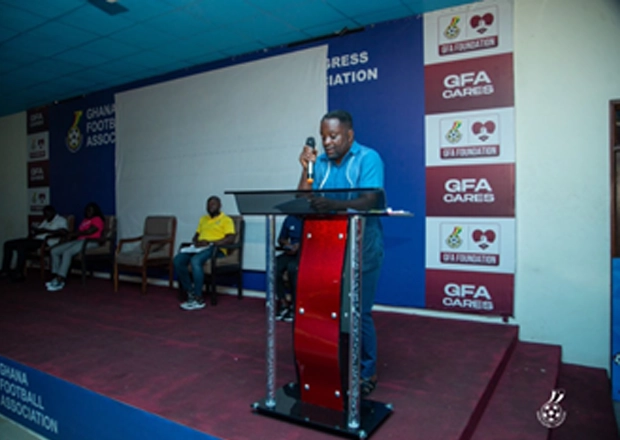
Executive Council member of the Ghana Football Association (GFA), Eugene Nobel, on Tuesday officially welcomed participating regional teams to the maiden U-15 Elite Girls Championship at the Ghanaman Soccer Centre of Excellence in Prampram.

In his address, Mr. Nobel encouraged the young players to make the most of the platform to display their skills and reaffirmed the Association’s commitment to advancing women’s football development across the country.

“On behalf of President Kurt Okraku, it’s my pleasure to welcome you to this historic maiden U-15 Girls Championship,” he said.

“This marks a significant milestone in Ghana’s women’s football, showcasing immense talent and potential. The GFA remains dedicated to providing opportunities for young talents to shine, learn, and grow.”

Mr. Nobel expressed appreciation to GFA President Kurt Okraku for his leadership and vision, which, he noted, had made the championship possible. He further urged the players to see the tournament as a stepping stone in their football journey.

“This championship is about talent identification, skill development, and representing your regions with pride. Seize this opportunity to showcase your abilities, create memories, and build your future in the game,” he added.

The U-15 Elite Girls Championship forms part of the GFA’s broader initiative to nurture young female footballers and strengthen the foundation of women’s football in Ghana.


BY Wletsu Ransford

Agenda 111: ‘3 hospitals were rushed for election 2024, not fit for use’

0

Tony Goodman is Spokesperson for the Ministry of Health Tony Goodman is Spokesperson for the Ministry of Health

The Spokesperson for the Ministry of Health, Tony Goodman, has alleged that three hospitals constructed under the Agenda 111 Hospital project were hastily completed for political campaigning purposes and are currently unusable.

This update was shared on the X page of TV3 on Thursday, October 16, 2025.

It read, “Ministry of Health Spokesperson Tony Goodman alleges that three hospitals under the government’s flagship ‘Agenda 111’ project were rushed for election campaigning and are unusable. He stated, ‘You cannot use any of them… you can’t post a worker there,’ contradicting claims of their completion.”

His remarks follow comments made by former Minister for Health, Dr Bernard Okoe Boye, who urged the incumbent Minister of Health to provide a full and transparent update on the status of all hospitals under construction under the Agenda 111 project.

Ministry of Health debunks former finance minister’s claim on completion of Agenda 111 hospitals

Speaking at a press briefing in Accra on Thursday, October 16, 2025, Dr Okoe Boye accused the current administration of failing to continue hospital projects initiated under the previous government.

He cautioned that the neglect of these facilities is negatively impacting healthcare delivery across the country.

The Agenda 111 project was introduced by the Nana Addo Dankwa Akufo-Addo administration to bridge the country’s healthcare infrastructure gap by constructing hospitals in districts without major healthcare facilities.

Agenda 111: Okoe Boye blames NPP’s defeat for delays

However, the project has faced delays and growing concerns over its completion and operational readiness.

Read the post below:

JKB/AE

‘President Mahama should be in Nsawam Prison’ – Kwamena Duncan fumes

Grenada PM arrives in Ghana ahead of talks with Mahama

0

Prime Minister of Grenada, Dickon Thomas Amiss Mitchell, has arrived in Ghana ahead of a high-level diplomatic engagement with President John Dramani Mahama, scheduled for Friday, October 17.

The Prime Minister and his delegation were warmly received at the Kotoka International Airport by Health Minister, Kwabena Mintah Akandoh and the Minister for Tourism, Culture and Creative Arts, Abla Dzifa Gomashie.

This official visit marks a significant step in strengthening bilateral relations between Grenada and Ghana.

The talks are expected to focus on deepening political cooperation, enhancing cultural exchange, and exploring mutual opportunities in trade, tourism, and healthcare.

The engagement signals a renewed commitment by both nations to foster enduring partnerships across the Caribbean and West Africa.

Read also

Mahama to host Grenada Prime Minister for bilateral talks on Friday

Madagascar’s president rose to power off youth discontent and was taken down by it

0

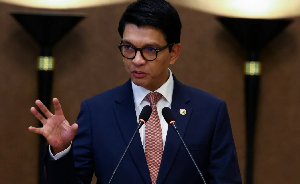
Madagascar's ousted President Andry Rajoelina in Antananarivo, Madagascar on October 6 Madagascar’s ousted President Andry Rajoelina in Antananarivo, Madagascar on October 6

Andry Rajoelina was a young, man-of-the-people mayor when he led popular protests against the Madagascar government 16 years ago.

The uprising resulted in a military-backed coup that brought Rajoelina to power as the transitional leader of his Indian Ocean country at the age of just 34.

He then left the role in 2014 but returned to the presidency in 2019 through elections.

On Tuesday, the same military unit that aided Rajoelina’s rise declared it was taking power in Madagascar and ousting him as president following weeks of youth-led protests – this time against Rajoelina and his government.

Here’s what to know about Rajoelina’s rise and fall, and how the military and the youth were pivotal in both.

Radio DJ

Rajoelina, whose father was a Madagascar army colonel, chose a different path and bought television and radio stations as a young entrepreneur in 2007.

He leveraged his popularity with young people as a radio DJ to form his own political party, Determined Malagasy Youth, and by the end of the year he was elected as mayor of the capital, Antananarivo.

At its inception, his party’s message of transparency on public spending, infrastructure development, and economic reforms resonated with the disenfranchised youth of Madagascar, a country that the World Bank ranks as one of the poorest in the world.

Its anti-establishment posture enjoyed public support among the youth and eventually among the country’s military elite, propelling him to high office.

In 2009, his party led youth protests against then former president Marc Ravalomanana’s government.

A leader of popular protests

Widespread discontent with Ravalomanana’s government over allegations of corruption, inequality and authoritarianism saw protests which ran from January through to March 2009, culminating in the violent torching of government buildings.

Backed by the military, the youth protests spurred Ravalomanana to flee to South Africa. Rajoelina took over as transitional president.

He leveraged his media profile and popularity to spread his anti-government messaging, which resonated with mostly young people.

From there, his ascent to the very top of Madagascan politics was swift.

After the military seized power from Ravalomanana, Rajoelina was appointed transitional president and served from 2009 to 2014, but he faced international isolation and sanctions.

He stepped down in 2014 but returned as president after winning the 2018 elections. His opponents say he has not bettered the lives of his countrymen during his tenure.

Claimed to have a COVID cure

At the height of the COVID-19 pandemic, Rajoelina controversially promoted a tonic that he claimed would cure the illness.

Despite warnings from the World Health Organization against the use of scientifically unproven remedies, Rajoelina distributed the herbal concoction in schools around the capital, Antananarivo, and claimed it had helped reduce cases.

He remained steadfast on his stance about the remedy even when though more than 1,400 people died from the disease in Madagascar between 2020 and 2023.

His COVID pandemic response became a divisive issue, eliciting a sense of pride for a somewhat homegrown remedy but drawing criticism from analysts and the health sector.

A target of youth anger

When protests over water and power cuts took place in the capital three weeks ago, Rajoelina was attending the United Nations General Assembly in New York City.

But he returned to a capital where some shops had been looted and a few newly-installed cable car stations had been torched.

Anger over the water and power cuts expanded to wider issues like corruption and nepotism in government.

Like the youth movement that he led to topple Ravalomanana, the Gen Z movement received the backing of the military and rejected Rajoelina, refusing any form of dialogue and demanding his resignation.

About 75% of the country’s 30 million people are affected by poverty, according to the World Bank, with lack of access to higher education, government corruption, and the cost of living among the issues dominating the recent protests.

Civil society groups, unions, and government workers also joined the protests that led to Rajoelina’s removal, indicating discontent beyond just the young population.

Popular Nollywood Actress Releases Her Wedding Date

0

The actress confirmed her forthcoming marriage by sharing her wedding hashtag.

Nollywood actress Eve Esin is set to wed her lover.

The actress confirmed this in a post on her Instagram page revealing that the wedding will take place this year.

Eve wrote: “I declare the week open in the name of God the Father, God the Son, and God the Holy Spirit, Amen.

Manhyia North MP intervenes to repair rain-damaged school buildings

0

Member of Parliament for Manhyia North, Akwasi Konadu, has swiftly responded to damage caused by recent heavy rainfall to several school buildings within his constituency.

Two major schools — Buokrom M/A Junior High School and Duase M/A Primary School — were severely affected, disrupting academic activities for hundreds of pupils.

Buokrom M/A Junior High School, which was the first to suffer the impact of the downpour, had the roofs of eight classrooms completely ripped off, exposing students and teachers to harsh weather conditions.

Pupils at Duase M/A Primary School were also forced to close and return home whenever clouds gathered, for fear of rainfall due to the roofs of six classrooms being destroyed.

Mr Konadu, who personally visited the schools to assess the extent of the damage, has allocated part of his statutory funds to fully re-roof the affected classrooms.

The MP reaffirmed his unwavering commitment to improving educational infrastructure in Manhyia North, emphasising that education remains a top priority for his leadership.

“My commitment to education as a top priority for the people of Manhyia North remains unwavering. I focus on providing lasting and sustainable solutions to educational challenges rather than temporary or symbolic gestures.

“Education is a cornerstone of development and I am determined to address long-term challenges that affect teaching and learning. We must create a safe and conducive environment where our children can learn and thrive,” he stated.

His swift intervention is expected to restore normal academic activities and provide a safer learning environment for students and teachers alike.

In Black Phone 2, Ethan Hawke’s Grabber may have overreached himself

0

Black Phone 2 (18, 114 mins)

Verdict: Dial M for middling

Rating:

If you can ignore his daft name, the Grabber is one of the creepiest characters in modern horror. He wears hideous, leering masks. He pulls children off the street. And then… let’s just say there’s a whole load of graves beneath his home.

And now this character, played with grisly relish by Ethan Hawke, is back and crueller than ever.

But — hang on — didn’t the Grabber die at the end of the first Black Phone (2021)?

Well, yes. Though if you saw that movie, you’d know that its down-and-dirty 1970s vibes were leavened by a touch of the supernatural. The spirits of the Grabber’s previous victims used a phone to call his latest kidnappee, Finney Blake (Mason Thames), and help him escape.

He's behind you: Gwen (Madeleine McGraw) hides from the Grabber (Ethan Hawke) in the sequel to 2021 horror hit The Black Phone
He’s behind you: Gwen (Madeleine McGraw) hides from the Grabber (Ethan Hawke) in the sequel to 2021 horror hit The Black Phone

Now, in Black Phone 2, it’s four years later, and both Finn and his delightfully foul-mouthed younger sister Gwen (Madeleine McGraw) are having visions of the Grabber. Or perhaps that should be visions within visions within visions.

Because one of the problems with this sequel is that it tries to impose an entire cosmology on what was previously a simple story.

Gwen can now, it seems, share dreams with a decades-ago version of her dead mum, who experienced the Grabber’s earliest crimes at a lakeside camp. 

Nuisance call: Gwen (Madeleine McGraw) on the titular telephone in Black Phone 2

Cooking up trouble: Ethan Hawke's Grabber can now attack people - children - in their dreams, as well as in real life. It's a recipe for disaster, says Peter Hoskin
Cooking up trouble: Ethan Hawke’s Grabber can now attack people – children – in their own dreams. Which complicates things.

The dead Grabber can now attack people, Freddy Krueger-style, in their own dreams. And Finn can… oh, none of it really makes sense, so why bother?

It’s all just setup for a battle between good and evil in the snowy Colorado Mountains, which is well done as these things go, if disappointing when compared to the original movie. 

The Grabber, you feel, has reached for too much this time.

Black Phone 2 is in cinemas now. 

Gabby’s Dollhouse: The Movie (U, 98 mins)

Verdict: Feline fine

Rating:

If you’re a seven-year-old girl, or the parent of a seven-year-old girl, then presumably you’ve watched countless hours of the streaming show Gabby’s Dollhouse.

Whereas if, like me, you’re a 41-year-old man whose interests include football and the pub, this is a cultural phenomenon that has entirely passed you by.

Until now. Because a Gabby’s Dollhouse movie is out, and it’s being advertised on every bus and billboard from here to… er, Cat Francisco.

Hello, Kitty: Laila Lockhart Kraner is Gabby, owner of the magic dollhouse where adventures (with cats) happen, in Dreamworks' big screen version of streaming hit Gabby's Dollhouse
Hello, Kitty: Laila Lockhart Kraner is Gabby, owner of the magic dollhouse where adventures (with cats) happen, in Dreamworks’ big screen version of streaming hit Gabby’s Dollhouse

For that is the setting of this children’s film, a feline version of San Francisco that, for some reason, doesn’t feature the drug and homelessness problems of the real thing.

Instead, everything here is sparkles! Real-human Gabby (the ebullient Laila Lockhart Kraner) uses her sparkle powers to shrink down to the size of her model cats and go on animated adventures with them. It’s a bit like Toy Story, if the toys were all cutesy kitties covered in glitter and stickers and hearts.

But reality bites in the form of the great Kristen Wiig, playing a ramped-down Cruella de Vil type who takes the eponymous dollhouse and keeps all its kitties as display pieces. It’s up to Gabby to rescue them, while learning a little about growing up along the way.

Purr-fectly awful: Kristen Wiig is up to no good, hilariously, in Gabby's Dollhouse
Purr-fectly awful: Kristen Wiig is up to no good, hilariously, in Gabby’s Dollhouse

Juvenile devotees of the show will lap this up. But adults won’t have a terrible time, either. There are some decent jokes for all ages, most of them acted out by Wiig. In fact, her yoga scene, opposite a severe-looking Devon Rex cat, adds another star to my rating all by itself – or a thousand-million sparkles if you’re a seven-year-old girl.

Gabby’s Dollhouse is in cinemas now. 

Former NPP MP hails Mahama’s ‘mature’ leadership style

0

The General Secretary of the newly formed United Party (UP Plus) has praised President John Dramani Mahama for what he describes as a more deliberate and mature approach to governance compared to a decade ago.

Speaking on The Pulse on Joy News, the former Adentan MP and New Patriotic Party(NPP) member said the President has demonstrated a noticeable shift in leadership style since assuming office after the 2028 elections.

“This is not President Mahama of 10 years ago. He has matured, he’s deliberate in his decision-making, and he’s trying to plan. There’s no doubt about it. He has changed. His governance style has changed,” he noted.

According to him, while 10 months is not enough time to fully judge a government’s performance, the President’s early actions suggest a more strategic and inclusive approach. 

He cited the administration’s efforts to tackle illegal mining (galamsey) and its appointment of technocrats and civil society actors as early signs of a different leadership style.

“Sustainable transformation cannot be assessed in 10 months. In 10 months, all you can do is make your appointments, develop some action plans, and try to deliver on some things. Already, you can see the difficulties with galamsey and a couple of other things,” he added.

The UP Plus General Secretary also commended the President’s efforts to build a team based on competence rather than loyalty, describing it as a clear departure from previous administrations.

“He’s tried to reach out into civil society, into other places. He’s trying to populate his government with competence and minds rather than just loyalty,” he said.

Mahama returned to power after winning the 2024 general elections.

The UP Plus General Secretary believes this new phase of leadership reflects lessons learned during his time away from power.

“It really shows that staying at home for 10 years, he studied and he’s learned,” he concluded.

Otto Addo anticipates tough group for Ghana at 2026 FIFA World Cup – Ghana Latest Football News, Live Scores, Results

0

Black Stars coach Otto Addo says he expects Ghana to be drawn into a difficult group at the 2026 FIFA World Cup.

Ghana, making its fifth appearance at the global showpiece, will aim to progress beyond the group stage and make a strong impact in the tournament.

Speaking in an interview with Citi Sports, Addo, who became the first coach to qualify Ghana for the World Cup on two occasions, acknowledged the country’s current FIFA ranking could lead to a challenging draw.

The four-time African champions are currently ranked 75th in the world by FIFA.

“I know that at the moment Ghana is not ranked high, so we will probably get a tough group,” Addo said. “We have to expect stronger opponents and be ready to deal with it.”

He added, “We will see what we get, but I’m excited about it. For me, the most important thing is to overcome the group stage.”

Ghana will learn their group opponents on December 5, 2025, when the World Cup draw is held in Washington, D.C.

‘Raymond Archer is now my best friend; he is God-sent’

0

Shatta Wale and Raymong Archer Shatta Wale and Raymong Archer

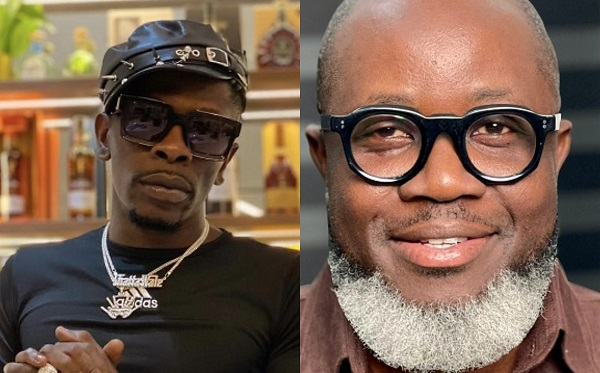
Ghanaian dancehall artiste Shatta Wale has revealed that he now shares a cordial relationship with the Executive Director of the Economic and Organised Crime Office (EOCO), Raymond Archer, months after his arrest over a luxury car.

Shatta Wale was detained by EOCO on August 20, 2025, in connection with a yellow Lamborghini Urus that the United States authorities had flagged as part of a $4 million fraud case being investigated by the FBI and the U.S. Department of Justice.

EOCO said the vehicle was linked to Nana Kwabena Amuah, a Ghanaian currently serving time in the United States for his role in a major fraud scheme.

At the request of American officials, EOCO traced the car in Ghana and eventually seized it from Shatta’s possession in May 2025.

The Shatta Movement boss, at that time, took to his Facebook, accusing Archer of intimidation and harassment.

However, speaking in an interview with George Quaye on Joy Prime on Wednesday, October 15, Shatta Wale said despite the controversy surrounding his arrest, he now considers Raymond Archer as his “best friend.”

“Raymond Archer is now my best friend because I feel God sent him to educate the people of Ghana. He taught us how to buy cars appropriately, from the right sources,” Shatta Wale said.

EOCO-Lambo Saga: ‘I don’t fear anybody in Ghana’ – Shatta Wale

He described the encounter as a “divine lesson”, saying it opened his eyes to the importance of verifying ownership and authenticity when making purchases.

“People might think he arrested me and blah blah, but what he did was God-ordained. He’s opened our eyes to certain things. It’s time the youth become wise and know how to purchase properties,” he advised.

Reflecting on the incident, Shatta Wale added jokingly that the experience has made him more cautious in business and personal transactions.

“Now, if I want to buy something, I’ll be like, ‘Is it stolen?’” he said with a laugh.

ID/EB

Watch the latest episode of Health Focus below

https://www.youtube.com/watch?v=AbVtEcsnHag

Seychelles President-elect invites Asantehene to October 26 inauguration

0

Otumfuo Osei Tutu II is the Asantehene Otumfuo Osei Tutu II is the Asantehene

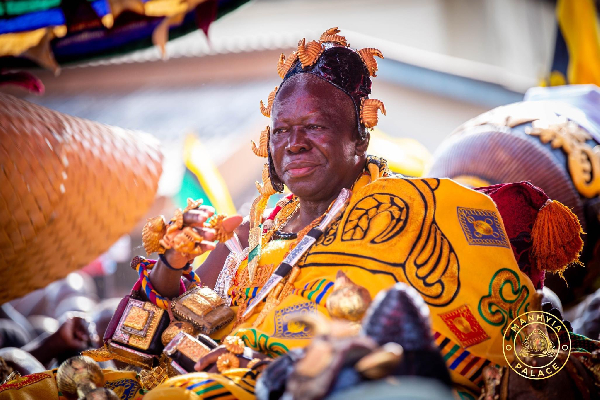
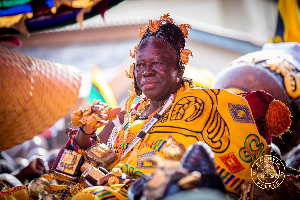
Seychelles President-elect, Patrick Herminie, has officially invited the Asantehene, Otumfuo Osei Tutu II, to attend his inauguration on October 26, 2025.

The announcement was made in a post shared on X by Opemsuo Radio on Thursday, October 16, 2025.

“Seychelles President-elect, Patrick Herminie, invites Asantehene to his inauguration on October 26,” the post read.

Why the Asantehene has postponed the Odwira Festival indefinitely

Former Speaker Patrick Herminie defeated President Wavel Ramkalawan in a run-off election, restoring full control of the archipelago nation’s government to his longtime ruling party, United Seychelles.

His victory with 52.7% of the vote follows the party’s triumph in the first round of the general election in September, when it reclaimed the parliamentary majority it had lost in 2015.

Additionally, the Asantehene has also been invited by the President of Suriname, Jennifer Simons, to attend the country’s Independence Day celebration in November.

Details of Otumfuo gifting two iconic kente fabrics to Parliament House emerges

The Asantehene, renowned for his efforts in promoting culture, peace, and development, is expected to bring a symbolic presence to the ceremonies, reflecting the importance of traditional leadership in fostering regional cooperation.

Read the post by Opemsuo Radio below:

JKB/AE

‘President Mahama should be in Nsawam Prison’ – Kwamena Duncan fumes

Fans react to Captain Traoré’s outburst after Burkina Faso lost playoff spot to Nigeria

0

Captain Ibrahim Traoré is the president of Burkina Faso Captain Ibrahim Traoré is the president of Burkina Faso

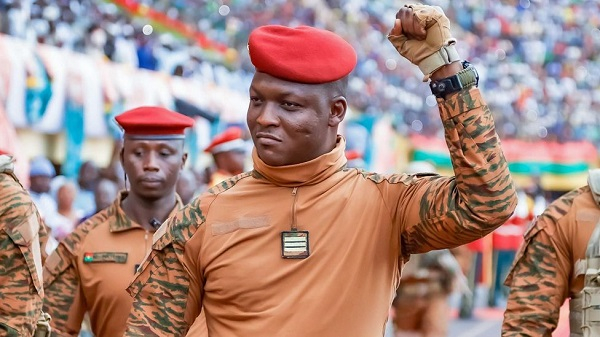
Captain Ibrahim Traoré’s call for an explanation over Burkina Faso’s exclusion from the CAF World Cup playoffs has ignited widespread discussion across the African football community.

The controversy stems from CAF’s regulation that deducts points earned against the bottom-placed teams in each group when ranking the best runners-up because of Eretria’s decision to pull out of the qualifiers.

Under the rule, the four best second-placed teams, Gabon, DR Congo, Cameroon, and Nigeria, advanced to the playoffs. Burkina Faso, despite finishing the qualifiers with 21 points, missed out because six of those points were earned against the last-placed side, Djibouti.

Once deducted, the Stallions dropped below Nigeria, who had 17 points but only two came from the bottom team in their group.

Captain Traoré demands answers after Burkina Faso misses World Cup playoff spot

The outcome left many confused, as teams with higher total points failed to qualify, while others with fewer advanced.

For Burkina Faso, it was particularly painful given the team’s strong resurgence, returning home to the renovated Stade du 4 Août, winning their last matches, and believing they had done enough to progress.

Traoré’s reaction reflects the frustration within the Burkinabè camp, as the nation feels hard done by a rule many argue was poorly communicated and difficult to grasp.

While the teams were aware of the regulation before qualification began, the fallout has reignited a debate about the transparency and clarity of competition rules in African football.

Click on this link to read some of the comments

FKA/JE

Meanwhile, watch highlights of Ghana’s 1-0 win over Comoros in the World Cup qualifiers

Fabio Paratici Returns To Tottenham As Joint Sporting Director After FIFA Ban

0

Fabio Paratici


Tottenham Hotspur have confirmed the return of Fabio Paratici as joint sporting director, two-and-a-half years after the Italian football executive was banned by FIFA for financial irregularities.

Paratici, 53, will share the role with Johan Lange and will oversee the club’s men’s football operations, including scouting, recruitment, and performance development. His comeback follows months of discussions, as previously reported by BBC Sport in May.

The former Juventus sporting director had resigned from his position at Tottenham in April 2023 after his appeal against a 30-month ban was rejected by Italy’s highest sports court.

The suspension stemmed from his time at Juventus, where the club was found guilty of false accounting—resulting in a 10-point deduction in Serie A.

Last month, a judge in Rome approved a plea bargain involving Paratici and other former Juventus officials, meaning he will avoid serving an 18-month prison sentence. Under Italian law, such plea deals do not amount to an admission of guilt.

Expressing his delight at rejoining the London club, Paratici said: “I’m delighted to be returning to a club that I love. I have been working with Johan, Vinai [Venkatesham], and Thomas [Frank] as a consultant for a number of months, and I now look forward to returning to London full-time. I’m convinced that working in partnership with Johan, we can build a special future for the club and our supporters.”

Tottenham said it will soon complete its new leadership structure by appointing a director of football operations to work alongside Paratici and Lange.

Until that appointment is made, the club’s women’s team will remain under the direct supervision of Vinai Venkatesham.

Funeral committee pleads with Daddy Lumba’s wives to reconcile amid legal dispute

0

The Coordinator of the Funeral Planning Committee for the late highlife legend Charles Kwadwo Fosu, popularly known as Daddy Lumba, Collins Owusu Amankwah, has appealed to the musician’s two wives to unite for the sake of peace and understanding as preparations for his funeral continue.

Speaking on Asempa FM’s Ekosii Sen show, Mr. Amankwah urged both women to put aside their differences and work together to give their late husband a befitting burial.

“Customarily, they are both wives, so they should come together and bury their husband. Whatever will bring peace is what we want. All these issues didn’t happen when he was alive, so why now that he is gone? Elders must step in to help resolve this peacefully,” he said.

He added that litigation would not bring lasting peace, stressing the need for an out-of-court settlement since customary rites would still have to be performed, including the Kunayɛ widowhood ritual.

His plea comes in the wake of a legal dispute between the two women. The late musician’s first and legal wife, Akosua Serwah Fosuh, and her children have filed an injunction against the funeral arrangements announced by a committee led by Abusuapanyin Kofi Wusu.

In a statement, Mrs. Fosuh’s family described the announcement of the funeral date, set for December 6, 2025, as “deeply distressing,” saying it was made without their consent.

The Kumasi High Court, presided over by Justice Dorinda Smith Arthur, has adjourned the hearing of the injunction application to October 28.

Mrs. Fosuh is seeking a declaration that she is the lawful and surviving spouse of the late musician and holds the sole right to perform widowhood rites.

She is also asking the court to restrain the Lumba family head from recognizing or engaging with the second defendant, Priscilla Ofori Atta, also known as Odo Broni, as a spouse of the deceased.

Reconsidering classroom practices for developing critical thinkers in Ghana: Insights from the UK

0

Education is widely recognized as the foundation of national growth. Nations that succeed in the twenty-first century provide their citizens with the ability to think critically, address challenging issues, and adapt to a constantly changing environments.

In Ghana, however, many of our classrooms still seem like antiques from the past: inflexible, controlled by teachers, and resistant to change. This fact begs the question: Can pupils educated through traditional pedagogical approaches effectively develop the problem-solving skills required in the modern world?

A comparison of the Ghanaian education system to that of the United Kingdom – our former colonial master, reveals stark contrasts. The UK has spent a lot of money over the years to modernize its education system. It has changed how teachers teach, how students sit, how they are tested, and even how classrooms are set up to get students ready for life beyond school.

On the other hand, Ghana still relies on rote memorization, rigid rows of desks, and tests that check memory instead of reasoning. This issue transcends just aesthetics or comfort. The design and philosophy of education strongly impact the type of individuals a nation cultivates. In the United Kingdom, classrooms are designed to foster cooperation, critical thinking, and inclusion. In Ghana, curiosity is frequently stifled, originality is penalized, and conformity is rewarded.

The Historical Roots: Colonial Legacies and Divergent Paths

Colonial priorities influenced Ghana’s educational system. The main purpose of schools during British administration was to train administrators, clerks, and translators who could work in the colonial administrative apparatus. Instead of creativity or critical thinking, the focus was on rote learning, reading, and obedience. Teachers were seen as absolute authority who imparted information that pupils were supposed to learn and perpetuate.  The UK, on the other hand, began reforming its own education system in the 19th and 20th centuries, long before independence reached colonies like Ghana. By the mid-20th century, the UK had moved towards more child-centred learning, influenced by educational theorists such as John Dewey, Jean Piaget, and Lev Vygotsky. The shift was deliberate: education was seen as not just a means of passing exams, but as preparation for life in a democratic, industrial society. Ghana, however, inherited the colonial system almost wholesale at independence in 1957. While reforms have been attempted from the Accelerated Development Plan in 1951 to the 1987 Educational Reform Programme and the recent Free Senior High School policy – the underlying structure has remained stubbornly exam-driven and teacher-dominated.

Training to Teach in the UK vs Training to become a Teacher in Ghana

One of the most telling contrasts between the UK and Ghana lies in how teachers are prepared for the classroom. In the UK, teacher training is structured, research-informed, and highly professionalised. Prospective teachers typically enter postgraduate programmes such as the Postgraduate Certificate in Education (PGCE) or School-Centred Initial Teacher Training (SCITT). These programmes combine university-based study with extensive school placements, ensuring that trainees learn both the theory and practice of pedagogy. Training emphasises evidence-based approaches, classroom management strategies, differentiated instruction, and inclusive practices that respond to the needs of diverse learners – including those with special educational needs and disabilities (SEND) and English as an Additional Language (EAL). Continuous reflection and mentoring are embedded, and trainees are supported by induction frameworks and professional standards that guide their development into fully qualified teachers.

In Ghana, by contrast, teacher preparation remains largely rooted in traditional training college models. While reforms have introduced degree-level teacher education, many programmes still prioritise subject knowledge and rote methods of delivery over pedagogy and reflective practice. Trainee teachers often experience limited exposure to real classroom environments during their training, and where teaching practice is included, mentoring support is inconsistent. Professional development after qualification is sporadic and underfunded, leaving teachers to rely heavily on outdated strategies such as “chalk and talk.” Furthermore, teaching is not accorded the same societal status and remuneration as in the UK, which affects morale and retention. The absence of clear professional standards also means there is less accountability for continuous improvement.

The implications of these differences are profound. A UK-trained teacher enters the classroom as a reflective practitioner equipped to adapt lessons, differentiate for diverse learners, and integrate technology effectively. A Ghana-trained teacher often enters with limited exposure to such methods, relying on inherited practices and struggling to innovate within resource-constrained environments. While Ghanaian teachers demonstrate resilience and dedication, the systemic gaps in their preparation mean that they are less empowered to transform their classrooms into spaces of critical thinking and creativity.

If Ghana is to cultivate teachers who can nurture critical thinkers, investment in modernising teacher training is essential. Partnerships with universities, greater emphasis on practicum experience, structured mentoring, and the institutionalisation of continuous professional development can help close the gap between training in Ghana and in more advanced systems like that of the UK.

“A UK-trained teacher enters the classroom as a reflective practitioner equipped to adapt lessons, differentiate for diverse learners, and integrate technology effectively. A Ghana-trained teacher often enters with limited exposure to such methods, relying on inherited practices and struggling to innovate within resource-constrained environments.”

Seating Arrangements: Obedience Versus Collaboration

One of the simplest yet most telling differences between Ghanaian and UK classrooms lies in seating arrangements. In the UK, classrooms are carefully designed to foster collaboration. Students often sit in groups around tables rather than in rows. Teachers frequently change seating patterns to reflect different activities: a science experiment, a debate, a group project, or an individual task. This flexibility acknowledges that learning is social and that students benefit from sharing ideas and supporting one another. Equally important, seating is used to balance abilities. Stronger students may be placed with weaker ones to encourage peer-to-peer learning. Teachers often rotate groups so that no student feels permanently labelled as “slow” or “bright.” The underlying philosophy is inclusivity and growth: every child, regardless of starting point, has the capacity to improve. In Ghana, classrooms too often resemble examination halls. Students sit in rigid rows facing the chalkboard. The arrangement symbolises authority: the teacher speaks, the students listen. Interaction is minimal, peer support is accidental rather than planned, and collaboration is rare. The environment is designed for obedience and control rather than creativity and exchange. This matters profoundly. A classroom that trains children to sit silently, copy notes, and fear mistakes is unlikely to produce graduates who can collaborate in teams, take initiative, or challenge assumptionsthe very qualities the modern world demands.
“In the UK, seating is planned for collaboration. In Ghana, it is planned for obedience.”

Assessment: Beyond Recall to Application

Assessment represents one of the most striking contrasts between the two education systems. In the United Kingdom, the philosophy of Assessment for Learning (AfL) underpins classroom practice. Teachers view assessment not merely as a means of measuring achievement, but as a continuous process that supports and informs learning. Formative assessments through questioning, feedback, peer evaluation, and reflective tasks are integral to lesson delivery. Mistakes are treated as learning opportunities rather than failures; pupils are encouraged to explain their reasoning, revisit misconceptions, and build on feedback. Consequently, students participate actively and are unafraid to answer questions in class, knowing that an incorrect response is part of the learning journey, not a cause for embarrassment or punishment.

Moreover, schools employ a wide range of assessment methods written tests, project work, oral presentations, group tasks, and teacher observations to capture the multifaceted nature of learning. These approaches assess not only what students know, but how they apply knowledge in different contexts. For example, a mathematics project may require learners to analyse real-life data, apply statistical reasoning, and communicate findings through graphs and written explanations. Such diversity reflects an understanding that intelligence is not monolithic; it manifests through different modes of expression, whether analytical, creative, or practical.

In contrast, Ghana’s education system remains dominated by high-stakes, summative examinations such as the Basic Education Certificate Examination (BECE) and the West African Senior School Certificate Examination (WASSCE). Success is largely determined by memorisation and the ability to reproduce information under exam conditions. The emphasis on “chew and pour” learning – rote memorisation followed by mechanical regurgitation discourages critical thinking and problem-solving. Furthermore, a wrong answer in class can attract ridicule or even punishment, reinforcing a culture of fear rather than curiosity. This environment stifles creativity and self-expression, causing many students with potential in innovation, design, or applied reasoning to be marginalised. The result is an education system that prioritises recall over understanding, and compliance over exploration – an approach ill-suited to the demands of a rapidly changing world.

This contrast in assessment philosophy inevitably shapes teaching methods and classroom culture. In the UK, where formative assessment and feedback drive instruction, lessons are typically more interactive and dialogic. Teachers adapt their teaching in response to students’ needs, fostering a collaborative atmosphere where inquiry and reflection are encouraged. In Ghana, however, the predominance of summative assessment often dictates a more teacher-centred approach, with instruction focused on content coverage and exam preparation rather than conceptual understanding. The consequence is a classroom culture that values accuracy over exploration and conformity over creativity. Understanding these differences is crucial, as assessment practices do not merely measure learning—they actively construct the kind of learners and thinkers each system produces.

Teaching Methods: Authority Versus Facilitation

In the UK, teachers are trained to be facilitators of learning. They use questioning techniques, project-based learning, and differentiated instruction to meet the diverse needs of students. Lesson plans include activities for visual learners, auditory learners, and kinaesthetic learners. Technology is integrated seamlessly: interactive whiteboards, online research, and digital presentations are part of daily learning. Teachers are encouraged to embrace continuous professional development, reflecting on their practice and adopting new methods supported by research. Importantly, the profession is valued, with teaching standards and frameworks guiding practice across the country. In Ghana, teachers remain largely authority figures. The most common method is “chalk and talk”: teachers dictate notes, which students copy. Questions are often limited to recall, and deviation from the textbook is discouraged. Large class sizes exacerbate the problem, making interactive or differentiated teaching almost impossible. The gap in teacher training is also stark. While Ghana has teacher training colleges, the professional development of teachers is underfunded and often sporadic. Many teachers lack exposure to modern pedagogies or resources that could transform their classrooms.
Infrastructure and Resources

The physical environment of learning also differs markedly. In the UK, even in modest schools, classrooms are designed to be stimulating with posters, learning aids, project corners, and access to libraries and digital tools. Science laboratories and sports facilities are standard, and special educational needs are supported with tailored resources. In Ghana, many schools lack basic infrastructure. Rural schools often operate under trees or in dilapidated buildings. Libraries are rare, laboratories are under-equipped, and ICT facilities are scarce. Where computers exist, they are often outdated or inaccessible due to electricity challenges. This physical deprivation compounds the pedagogical challenges. How can a teacher encourage inquiry-based science learning without functional laboratories? How can digital literacy be taught without reliable access to computers or the internet?

Outcomes: Different Citizens for Different Societies

The result of these systemic differences is visible in the graduates each system produces. UK graduates are generally confident communicators, able to collaborate in teams, analyse problems, and adapt to new situations. They are prepared for economies where knowledge is constantly shifting and where employers value initiative as much as qualifications. Ghanaian graduates, by contrast, are often praised for discipline and diligence but criticised for lack of initiative and creativity. Employers lament the need for retraining, noting that many graduates are unable to translate theoretical knowledge into practical solutions. The irony is sharp: Ghanaian students are no less intelligent than their UK counterparts. The difference lies in the systems that shaped them.

Lessons and the Way Forward

What, then, can Ghana learn from the UK experience? Several important lessons emerge. First, classroom design must be taken seriously. The way pupils are seated, the opportunities for group work, and the flexibility of the physical space all shape how students engage with knowledge. Arrangements that encourage collaboration and participation should be prioritised over those that promote passivity and obedience. Secondly, assessment practices must evolve. Examinations alone cannot capture the full range of human intelligence. While tests have their place, they must be complemented with project work, oral presentations, creative assignments, and teacher observations. Such a system values different learning strengths and gives all students a chance to demonstrate their abilities in multiple ways. Third, teachers themselves are central to educational transformation. They must be supported through continuous professional development, exposure to modern pedagogical strategies, and recognition of teaching as a respected profession. Without well-prepared and motivated teachers, even the best reforms will falter. Equally, resources play a crucial role in enabling pedagogy. Investment in libraries, laboratories, and ICT infrastructure should not be seen as luxuries but as essential foundations for effective teaching and learning. Even gradual improvements, if consistent and well-planned, can have transformative effects. Finally, educational policy must transcend short-term politics. Reforms should not be tied to political cycles but anchored in a shared national vision. Ghana needs the stability of a long-term commitment to quality education that survives changes in government. Only then can meaningful progress take root.

Conclusion: A Call for Courage

The future of Ghana rests heavily on the kind of citizens our classrooms produce. If we continue to rely on rigid, hierarchical, and outdated models, we should not be surprised when our graduates struggle to meet the demands of a rapidly changing world. The comparison with the UK shows that transformation is not only possible but achievable through deliberate investment, innovation, and a commitment to child-centred learning. Ghanaian students are no less capable than their peers elsewhere; the difference lies in the systems that nurture them. Breaking from colonial legacies and exam-driven practices will require bold political will, sustained resources, and a cultural shift that values creativity as much as conformity. The courage to act must come from all stakeholderspolicy makers, teachers, parents, and communities – who share a vision of an education system that equips learners to think critically, solve problems, and contribute meaningfully to national development. The choice before Ghana is clear: continue to replicate the past or reimagine education to secure the future. The time to act is now, for the longer we delay, the more we risk leaving generations of young people unprepared for the challenges and opportunities of the twenty-first century.

“The future of Ghana rests heavily on the kind of citizens our classrooms produce.”

References

Akyeampong, K. (2003) Teacher training in Ghana – does it count? Multisite teacher education research project (MUSTER). Sussex: University of Sussex.

Akyeampong, K. (2017) ‘Teacher Educators’ Practice and Vision of Good Teaching in Teacher Education Reform Context in Ghana’, Educational Researcher, 46(4), pp. 194–203.

Alexander, R. (2010) Children, their World, their Education: Final Report and Recommendations of the Cambridge Primary Review. London: Routledge.

Department for Education (2019) Initial Teacher Training (ITT): Core Content Framework. London: DfE.

Dewey, J. (1916) Democracy and Education. New York: Macmillan.

Foster, P. (1965) Education and Social Change in Ghana. Chicago: University of Chicago Press.

Piaget, J. (1972) The Psychology of the Child. New York: Basic Books.

Vygotsky, L.S. (1978) Mind in Society: The Development of Higher Psychological Processes. Cambridge, MA: Harvard University Press.

World Bank (2021) Improving Teacher Training and Development in Ghana: Policy Brief. Washington, DC: World Bank.

By: Michael Darko, PhD, FHEA

Seychelles’ president-elect set to halt tourist development

0

During election campaign Patrick Herminie promised to heal divisions in the small island nations During election campaign Patrick Herminie promised to heal divisions in the small island nations

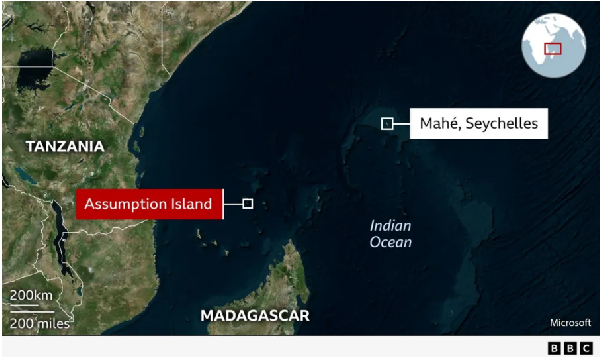
Seychelles’ president-elect says that once sworn in, he will halt the construction of a controversial Qatari-funded luxury resort on an environmentally sensitive island.

Speaking to the BBC, Patrick Herminie, who will come to power in the Indian Ocean nation on 26 October, said his country had “got peanuts in that contract” and added that the current deal was “unacceptable”.

The resort’s construction on Assumption Island was criticised by campaigners because of its potential ecological impact.

The island is the gateway to the Aldabra atoll, which has one of the most pristine and fragile ecosystems in the world and is home to 400 species found nowhere else on the planet.

Via a Middle East investment company, Assets Group, the Qataris are building 40 luxury villas on Assumption Island, which is 1,140km (700 miles) south-west of Seychelles’ main island, Mahé. They are also upgrading the concrete airstrip to receive executive jets.

The project became a major issue during last month’s presidential election campaign. Herminie defeated incumbent Wavel Ramkalawan in a second round run-off last week with 52.7% of the vote.

Ramkalawan had defended the deal, saying the tiny nation needed investment. Under the terms of the original agreement, the Qataris will lease the island for 70 years with a $20m (£15m) down payment.

Herminie told the BBC’s Newsday programme “we will put everything on hold and have a meeting with the investors and express our concerns”.

He added: “They have already started the building of the mansion but there will be no 37 chalets which were originally in the plan – this will not happen. What has been built has been built, and that is it.”

During the BBC interview, Herminie was also asked about the country’s high level of drug addiction.

One estimate suggested that one in 10 Seychellois were addicted to hard drugs, including heroin.

Herminie pointed out that no proper survey has taken place since 2017, but acknowledged that addiction was “an existential threat”.

He pledged that his government would focus on reducing the demand for drugs as well as fighting against drug trafficking.

“Why do you want me to stop at three terms?” – Isaac Adongo asks critics

0

The Member of Parliament for the Bolgatanga Central Constituency, Isaac Adongo, has fired back at critics who are urging him to step down after serving three terms, accusing some of them of campaigning against him.

Mr. Adongo questioned the logic behind such calls, citing examples of other long-serving MPs, including the current Finance Minister, Dr. Cassiel Ato Forson, who has served five terms and is seeking a sixth.

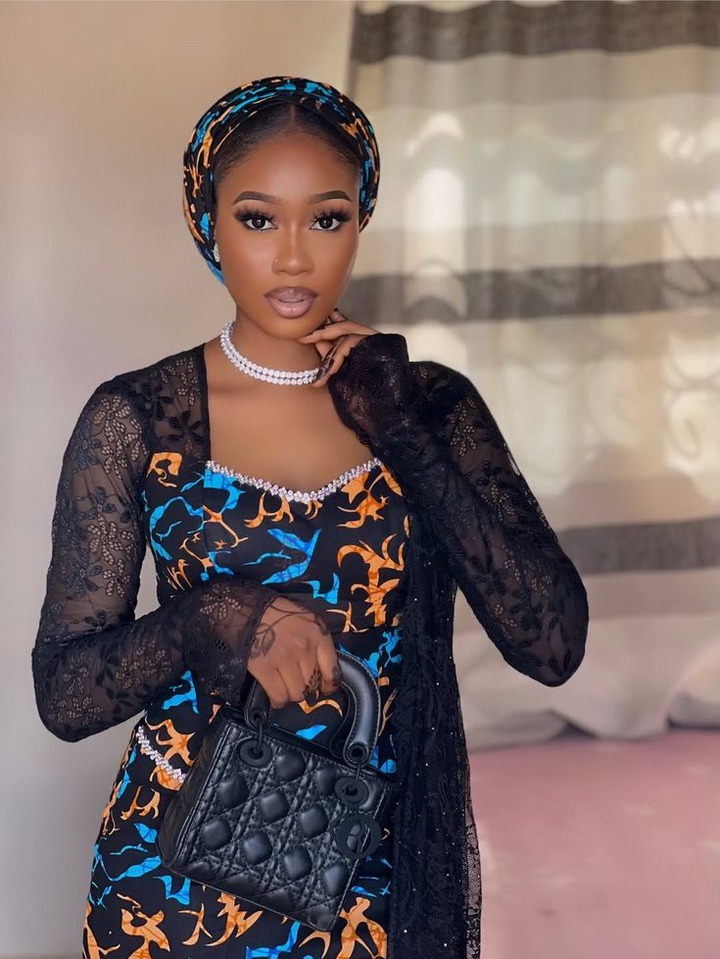
Elegant Ankara and Lace Outfit Combinations Every Stylish Woman Should Try

0

Ankara and lace combinations have become a timeless trend in African fashion, offering a beautiful blend of tradition and elegance. This fusion allows women to create unique and stunning looks that are perfect for weddings, church services, parties, and other special events.

Ankara fabric is known for its bold patterns and vibrant colors, while lace adds a touch of sophistication and delicacy. When paired together, they create a balanced outfit that highlights both personality and grace. Designers often use Ankara for the body of the dress and incorporate lace in the sleeves, neckline, or hem to add texture and elegance.

One popular style is the Ankara and lace mermaid gown, which flatters the figure and is ideal for formal occasions. For a more relaxed look, a peplum top made with Ankara and detailed with lace, paired with a pencil skirt or trousers, makes a chic statement. Fashion-forward women also love Ankara slit skirts with lace blouses, a perfect combo for semi-formal events.

Accessories play a big role in elevating this look. A matching gele (headwrap), clutch, and heels can make the outfit stand out even more. Whether you’re a bride, guest, or simply want to dress stylishly, the Ankara and lace mix offers endless possibilities.

The beauty of these combinations lies in their versatility. You can customize them to fit your body shape, style preference, and occasion. From subtle lace accents to bold statement designs, Ankara and lace outfits are a must-have in every stylish woman’s wardrobe. Try one today and embrace the beauty of African fashion at its finest.

Education Ministry to pay GH₵994 per student to Private Schools under Free SHS

0

The Ministry of Education has pledged to pay GH₵994 per student annually to support private schools participating in this year’s Free Senior High School (SHS) programme.

The commitment was announced during the signing of a Memorandum of Understanding (MoU) between the Ministry and the Conference of Heads of Private Second Cycle Schools, formalising the inclusion of selected private SHSs in the Free SHS policy.

Education Minister Haruna Iddrisu explained that the support, which is expected to benefit about 25,000 students, forms part of government’s efforts to eliminate the double-track system in public schools.

“The government is committed to providing a stipend to support the transition of that category of students moving into private schools—that’s negotiable, we’ll still discuss as and when,” he said.

“But for a start, that’s the commitment we make to the Ghana National Council of Private Schools for this pilot inclusion of selected private schools in the provision of Free Senior High School education, as part of the government’s effort to end double track.”

President of the Conference of Heads of Private Second Cycle Schools, I.K. Mensah, commended the government for the initiative and clarified the terms of the pilot programme.

“And the caveat is that, for now, during this pilot system, he’s going to place only day schools to us by the payment of 994 Cedi for a child in private second-cycle schools,” he explained.

He further noted that parents who wish to have their wards as boarders can make up the difference between the government’s payment and the school’s boarding fees.

“Now, what is happening is that we know some private schools have different payments, different plans, and different payments for boarders and all that. So, if you are placed as a day student and you think your child comes from far and wants to access boarding facilities at that school, then you sit with the school and pay the difference between what the school is charging,” he said.

“For example, if it’s 2,000, it means the government has already paid or is going to pay 994 for that child who has come there. It’s up to you, the parent and the school, to pay the difference of, let’s say, 1,060 Cedi so that the child becomes a full-time boarding student.

So, what the government is giving us now is for day students, and they are to pay, or the government is going to pay, 994 Cedi for this pilot program.”

Chika Ike Expresses Gratitude, Says God’s Blessings Come Without Compromise

0

Chika Ike Expresses Gratitude, Says God’s Blessings Come Without Compromise

News Hub Creator2h

Nollywood actress and filmmaker Chika Ike (@chikaike) has shared an emotional message on Instagram, expressing her deep gratitude for God’s love and faithfulness in her life. The actress, known for her inspiring personality, reflected on how God’s blessings always come to her at the right time and in the most unexpected ways.

In her post, Chika said she often finds herself amazed at how much God loves and cares for her. She described His works as perfectly timed and beyond human understanding, noting that every good thing in her life happens according to His divine plan.

Chika further explained that she never has to compromise her values or go against her principles to receive God’s favor. According to her, God’s blessings do not require her to act out of character because He alone deserves all the glory.

She concluded her message by thanking God for His continuous grace and kindness, saying she remains forever grateful for His unending blessings. Her heartfelt reflection has since inspired many of her followers to express their own gratitude online.

Source: Instagram (@chikaike)

Ashaiman MP, Hon .Dr. Ernest Norgbey Engages Communities

0

Norgbe
Norgbe

…Residents Demand Schools, Roads and Water; MP Pledges Delivery

As part of a post-election “thank-you” tour, Ashaiman Member of Parliament, Hon. Dr.Ernest Norgbey in collaboration for Growth engage a dozen communities in his constituency today.

Residents who used the opportunity to press him for urgently needed development projects, notably new schools, improved roads and reliable water supply.
The engagement; billed by the MP as a gesture of gratitude to voters after the 2024 elections, took Hon. Ernest to villages and townships across the constituency where he held community meetings, listened to concerns and reaffirmed campaign commitments.
According to organisers, the engagement were deliberately grassroots in scope, intended to allow face-to-face conversations with chiefs, assembly members, market women, youth and health workers.
Community needs laid bare
In each stop, recurring themes emerged. Parents asked for additional classroom blocks or refurbishment of existing facilities to ease overcrowding and improve teaching and learning conditions. Road users and commercial drivers pleaded for the grading and surfacing of feeder roads that are often impassable in the rainy season, increasing transport costs and isolating communities.
Women and school principals urged the MP to prioritise potable water projects to reduce waterborne diseases and save children long walks to distant boreholes.
Health concerns were also raised. Community health volunteers and clinic staff appealed for improved staffing, equipment, and medicines at local health posts requests Hon. Dr. Ernest Norgbey said he took seriously.
“People were clear about what they need,” a local assembly member who attended several of the engagements told this paper. “They want practical interventions — classrooms, tarred roads, boreholes and better clinic support. They want to see projects and they want timelines.”
MP pledges to honour campaign promises
Responding to the appeals, Hon. Dr. Ernest Norgbey told residents that his engagement was the start — not the end — of constituency engagement.
He reiterated assurances he gave during the 2024 campaign, saying he would work to mobilise resources and coordinate actions with central government agencies, the Municipal Assembly and development partners to deliver the projects.
“During the campaign I made promises to this constituency and today I am here to tell you I intend to keep them,” Hon. Ernest Norgbey said during one public meeting. “We will prioritise schools, roads and water; we will work with the Municipal Assembly and relevant ministries to secure funding and get contractors on site.”
He outlined a multi-track approach — combining constituency-level interventions (using the MP’s office and constituency development funds), lobbying for central government projects, and seeking partnerships with NGOs and private sector actors — as the pathway to meeting the communities’ demands. The MP also called for patience and community cooperation in monitoring projects and protecting completed facilities.
“We ap said a chief from one of the communities. Parents similarly said they would hold their elected representative to account.
A teacher at a primary school in one of the visited towns described the MP’s promise as encouraging but said immediate action was needed.
Turning pledges into projects will require funding, technical planning and inter-agency coordination. Sources of financing typically include the central government’s sector budgets, the Municipal Assembly Common Fund, GETFund (for education infrastructure), MPs’ Constituency Development Funds, donor or NGO support, and public-private partnerships.
Projects such as road surfacing often require feasibility studies and approvals from agencies like the Department of Urban Roads and the Ghana Highway Authority.
Development partners and local officials will need to be brought on board quickly if the MP’s commitments are to be realised before the next budget cycle.
Community monitoring committees — made up of traditional leaders, youth and women’s groups — could help ensure transparency and guard against delays or misuse of resources.
Why this matters
Ashaiman Constituency requests reflect a broader reality in many Ghanaian constituencies: voters expect visible development — classrooms, clinics, water and roads — and increasingly demand that MPs deliver practical benefits, not only rhetoric. How Hon Mp moves from promise to project will determine local confidence in his leadership and could shape political fortunes in subsequent elections.
A test of accountability
Residents say they will watch closely. “We vote and we hope,” one mother commented. “Now we will monitor the work. If the MP delivers, he will have our continued support. If not, we will ask questions.”

Afrolektra takes 2025 by storm as the standout music producer

0

Afrolektra, born Eyram Gbewonyo is a producer and DJ Afrolektra, born Eyram Gbewonyo is a producer and DJ

In Ghana’s ever-evolving music landscape, one name continues to echo from studio to stage; Afrolektra, born Eyram Gbewonyo, the producer and DJ has his fingerprints on some of the country’s biggest records in 2025.

With production credits on Black Sherif’s Iron Boy, Gyakie’s After Midnight, and Omar Sterling’s VTH 2, Afrolektra’s sound has shaped the year’s top-charting albums with all three reaching No. 1 on Apple Music Ghana’s Albums Chart.

From crafting soulful melodies to hard-hitting rhythms, Afrolektra is proving that the modern Ghanaian producer can fuse depth, culture, and global energy all in one sound. His signature style blends rich African rhythms and traditional textures with modern electronic dance music, a fusion that is pushing African music further into the global conversation.

Speaking of his work with Gyakie, Afrolektra describes their creative chemistry as effortless. “Gyakie is one of my favorite collaborators. She’s not just a great writer, she’s also a very good producer. She knows what she wants to hear, all her many ideas, and I amplify those, taking them to the next level,” he shared.

His synergy with Omar Sterling on VTH 2 is equally special, with Afrolektra producing six records on the album. “Omar Sterling is not just a great rapper and lyricist. He lives whatever he says in his music, from past experiences to his spiritual path. I’m glad to have experienced him in the studio as we put all these records together. He’s a teacher, and I’ve learned a lot from his journey, even beyond the music.”

Afrolektra’s journey began humbly, in 2010, experimenting with Fruity Loops and VirtualDJ while still in school. His early exposure to music through marching bands and church choirs gave him a solid foundation in rhythm and harmony. What began as a hobby quickly turned into a passion-fueled career, and by 2015, he was producing professionally while in university.

Now, his catalog reads like a who’s who of modern Ghanaian music: Black Sherif’s “Rebel Music”, Gyakie’s “Rent Free,” “Unconditional,” “I’m Not Taken” ft. Headie One, Omar Sterling’s “Boom Boom” ft. Reggie Osei, O’Kenneth & Jay Bahd and 6 songs off VTH2, R2Bees’ “Sure Banker,” “Yawa” ft. Sarkodie, Camidoh’s “Brown Skin Girl” ft. Stonebwoy, and Offei’s “I Like” ft. Ayobeatz.

Beyond the studio, Afrolektra commands stages across the continent. His DJ sets have graced festivals such as Afrofuture (Afrochella), Accravaganza, Manifestivities, Chale Wote Street Art Festival, Zaama Disco, and iMullar Sound System and Afrolektra Radio, earning him a reputation for creating immersive sound experiences that blend the familiar with the futuristic.

But behind the music lies an unexpected layer, Afrolektra is also a trained Biomedical Scientist, a fact that mirrors the precision and discipline evident in his craft.

As Ghanaian music continues to expand its global footprint, Afrolektra stands at the intersection of tradition and innovation, shaping the future sound of the continent. From chart-topping albums to genre-bending performances, he has firmly established himself as 2025’s standout producer, redefining what it means to make African music for the world.

Why the Asantehene has postponed the Odwira Festival indefinitely

0

Asantehene Otumfuo Osei Tutu II has postponed the Odwira festival Asantehene Otumfuo Osei Tutu II has postponed the Odwira festival

The planned 2025 Odwira Festival, which was scheduled to begin on October 31, 2025, has been postponed by the Asantehene, Otumfuo Osei Tutu II.

The postponement by Otumfuo follows a decision that was reached and announced at a meeting of the Asanteman Council held at the Manhyia Palace on Thursday, October 16, 2025.

Details of Otumfuo gifting two iconic kente fabrics to Parliament House emerges

According to a report by opemsuo.com, Otumfuo gave reasons for the postponement, stating that per Ashanti tradition, a successor for the late queen mother must be enstooled and the necessary rites performed.

Additionally, the report indicated that the demise of the late Asantehemaa, Nana Konadu Yiadom III, was also part of the reasons for the decision.

“Tradition demands that a successor is enstooled and the requisite stool rites done at Wirempe. After that, we will have to hold a funeral for the late queen,” the report quoted him as saying.

A new date, however, is yet to be announced and will be communicated at the appropriate time.

The report also said that it has been 64 years since the last Odwira Festival was observed.

Okuapemhemaa halts Odwira festival, demands justice over disputed Okuapeman stool

The Odwira Festival is celebrated annually with a series of traditional rituals performed to purify the town, the people, and most importantly, the ancestral stools of the chiefs.

It also marks the celebration of the harvest of new yams.

MAG/AE

‘President Mahama should be in Nsawam Prison’ – Kwamena Duncan fumes

Over one million 2026 FIFA World Cup tickets sold following Visa Presale Draw

0

The 2026 FIFA World Cup tickets are on sale The 2026 FIFA World Cup tickets are on sale

With 28 teams having already secured a spot at the FIFA World Cup 26™ and the whole world gearing up for what promises to be a watershed edition of FIFA’s flagship tournament, fans from 212 countries and territories of residence have already purchased over one million tickets following the closure of the Visa Presale Draw sales phase, which was launched in mid-September.

Residents of the three host countries the United States, Canada and Mexico, in that order have been at the front of the queue, snapping up more tickets than anyone else. England, Germany, Brazil, Spain, Colombia, Argentina and France – in order of demand – round out the top ten countries in terms of ticket sales.

“What an exciting step on our journey toward 2026! As national teams across the globe compete for a place at the historic FIFA World Cup 26, I am thrilled so many football-loving fans also want to be part of this watershed event in North America.

“Today, we celebrate the sale of more than 1 million FIFA World Cup tickets following the Visa Presale Draw. It’s an incredible response, and a wonderful sign that the biggest, most inclusive FIFA World Cup in history is capturing the imagination of supporters everywhere. Already, tickets have been purchased by fans in over 200 countries and territories, led by our enthusiastic hosts in Canada, Mexico and the United States of America,” said FIFA President Gianni Infantino.

Black Stars set for tough clash against Japan in 2025 Kirin Challenge Cup

Fans, including those who were unsuccessful in the presale phase, can look forward to the next ticket sales window, which will begin later in October 2025.

Specifically, on Monday, October 27, the entry period will open for the Early Ticket Draw, in which single-match tickets to all 104 games, along with venue- and team-specific tickets, will be released.

In addition, an official resale platform for eligible ticket holders is already available at FIFA.com/tickets.

This initiative is aimed at safeguarding fans against invalid or unauthorised resale and is available to supporters subject to federal and local regulations; Mexican residents will have access to a FIFA Ticket Exchange Platform.

Moreover, fans can purchase single- and multi-match hospitality packages, which include match tickets, at FIFA.com/hospitality.

FIFA encourages fans to purchase tickets only through FIFA.com/tickets, the official and preferred source of tickets for the FIFA World Cup.

Hospitality packages and tickets sourced from unofficial sales channels may not be valid.

Meanwhile, watch highlights of Ghana’s 1-0 win over Comoros in the World Cup qualifiers

Yaw Buaben Asamoa hails Mahama’s ‘mature’ leadership style

0


The General Secretary of the newly formed United Party (UP Plus) has praised President John Dramani Mahama for what he describes as a more deliberate and mature approach to governance compared to a decade ago.

Speaking on The Pulse on Joy News, he said the President has demonstrated a noticeable shift in leadership style since assuming office after the 2028 elections.

“This is not President Mahama of 10 years ago. He has matured, he’s deliberate in his decision-making making and he’s trying to plan. There’s no doubt about it. He has changed. His governance style has changed,” he noted.

According to him, while 10 months is not enough time to fully judge a government’s performance, the President’s early actions suggest a more strategic and inclusive approach. 

He cited the administration’s efforts to tackle illegal mining (galamsey) and its appointment of technocrats and civil society actors as early signs of a different leadership style.

“Sustainable transformation cannot be assessed in 10 months. In 10 months, all you can do is make your appointments, develop some action plans and try to deliver on some things. Already, you can see the difficulties with galamsey and a couple of other things,” he added.

The UP Plus General Secretary also commended the President’s efforts to build a team based on competence rather than loyalty, describing it as a clear departure from previous administrations.

“He’s tried to reach out into civil society, into other places. He’s trying to populate his government with competence and minds rather than just loyalty,” he said.

Mahama returned to power after winning the 2024 general elections.

The UP Plus General Secretary believes this new phase of leadership reflects lessons learned during his time away from power.

“It really shows that staying at home for 10 years, he studied and he’s learned,” he concluded.

DISCLAIMER: The Views, Comments, Opinions, Contributions and Statements made by Readers and Contributors on this platform do not necessarily represent the views or policy of Multimedia Group Limited.

DISCLAIMER: The Views, Comments, Opinions, Contributions and Statements made by Readers and Contributors on this platform do not necessarily represent the views or policy of Multimedia Group Limited.

NPP has no reason to drop Bawumia for 2028 – Nana Akomea

0

Former Member of Parliament for Okaikoi South and leading member of Dr. Mahamudu Bawumia’s campaign team, Nana Akomea, has stated that there is no justification for the New Patriotic Party (NPP) to replace Dr. Bawumia as its flagbearer ahead of the 2028 general elections.

According to him, the former Vice President’s experience and track record in government place him ahead of his competitors in the party’s presidential race.

“He has served as Vice President for eight years and has acted as President during that period. None of these facts has changed. So, for those contesting him, the question is—why do they want him replaced? When it comes to experience, he is still far ahead of his competitors,” Nana Akomea said.

He further urged delegates to consider the character and attitude of the person they choose to lead the party, noting that leadership goes beyond rhetoric.

“In choosing a leader, we must look at the person’s attitude and character. You need someone who is accessible, respectful, humble, and does not promote division. If you choose someone who tells others not to vote for a person because of their tribe, those comments only make things worse. How can such a person convince members of those tribes or religions to vote for him?” he added.

Dr. Mahamudu Bawumia, who is contesting the NPP presidential primaries with four other aspirants, is currently on day two of his ‘Our Journey Together’ tour in the Bono East Region.

As part of his itinerary, he is expected to visit Pru East, Pru West, and Kintampo North, where he will interact with delegates and party faithful as part of his campaign to lead the NPP into the 2028 polls.

….

Explore the world of impactful news with CitiNewsroom on WhatsApp!

Click on the link to join the Citi Newsroom channel for curated, meaningful stories tailored just for YOU:
https://whatsapp.com/channel/0029VaCYzPRAYlUPudDDe53x

No spam, just the stories that truly matter! #StayInformed #CitiNewsroom #CNRDigital

Wendy Shay credits God’s grace and strategy for her songs’ global reach across 50 countries

0

Award-winning Ghanaian singer Wendy Shay has opened up about her international success, attributing her global recognition to a balance between hard work, strategy, and faith in God.

The award winning artiste reflected on how her songs have reached over 50 countries, topping charts across Africa and the Caribbean, including Togo, Benin, Sierra Leone, and Haiti.

Hopeson Adorye invites Ghanaians to join new United Party

0

A leading member of the newly rebranded United Party, also known as UP, Hopeson Adorye, has called on Ghanaians who feel dejected or oppressed in politics to join the new party, describing it as a better political home for all.

He made these remarks at the launch and rebranding of the Movement for Change into the United Party (UP) at the Coconut Grove Hotel in Accra on Thursday, October 16.

Mr. Adorye explained that the party was fully ready to serve as an alternative political force to address Ghana’s challenges.

He noted that the UP leadership was focused and determined to change the country’s political structure and bring meaningful transformation.

He stated that the party’s vision was to build a united Ghana, stressing that without unity, the nation could not make real progress.

According to him, the mission of the UP was to create a prosperous country where every citizen could provide for themselves and their families.

Mr. Adorye emphasised that the new party was not formed to destroy any existing political organization but to contest and win elections to bring about the needed change.

He expressed confidence that many Ghanaians from different political backgrounds, including those dissatisfied with their current parties, would join UP+ because of its values and inclusive ideology.

He added that the party was building its structures from the grassroots and hoped to complete them by the end of the year as part of efforts to strengthen its national presence.

The Founder of the United Party (UP), Alan Kwadwo Kyerematen, also addressed the gathering and reflected on the transformation of the Movement for Change into the UP+.

He explained that the rebranding marked a new phase of political renewal, symbolized by the monarch butterfly in the party’s logo, which represents transformation, resilience, and endurance.

Mr. Kyerematen noted that the colors of the party yellow, black, and white stood for Ghana’s gold resources, the black star of Africa, and purity, respectively.

He stated that the UP stands for ethical leadership, integrity, and unity, adding that many of its members entered politics to serve the nation, not for personal gain.

He revealed that the party’s Great Transformational Plan (GTP), which has received global recognition, would guide the UP+ government when elected.

“The plan is designed to stabilize the economy, reduce the national debt, and promote industrial growth through ten strategic anchor industries” he added.

He explained that the health policy would emphasize preventive care, community-based services, and the inclusion of traditional and herbal medicine, which many Ghanaians rely on.

Mr. Kyerematen further stated that the UP would promote a strong Pan African agenda, explaining that Ghana’s prosperity must be tied to the wellbeing of the entire continent.

He noted that the party believes in Ghana first, and its policies were anchored on uniting the country and restoring hope in national development.

By: Jacob Aggrey

Why GII is calling for reforms in campaign financing

0

Mary Awelana Addah is Executive Director of Ghana Integrity Initiative Mary Awelana Addah is Executive Director of Ghana Integrity Initiative

The Executive Director of Ghana Integrity Initiative, Mary Awelana Addah, has stressed the urgent need for transparency and accountability in political campaign financing in Ghana.

According to her, the high cost of elections fuels both licit and illicit funding, creating significant risks for corruption.

Mahama’s gift rules in Code of Conduct contradictory – Transparency International

“The fight against corruption, I believe, without a doubt at all, is incumbent on resolving the issue around political financing, particularly where monies come from to ensure the prosecution of the various campaigns by the political parties and also by the various candidates,” Mary Addah stated in an interview on TV3 and monitored by GhanaWeb on Thursday, October 16, 2025.

Addah further explained the difficulties faced by civil society actors entering politics.

“If I had the opportunity to stand for elections… where am I getting that money from? People would have to give me. And the challenge is the fact that we do not have a clear regime in place to ensure accountability for what people are giving us,” she noted.

Transparency is not ideal but a necessity – GII Executive Director

Mary Addah called for stronger legal frameworks, public disclosure, and institutional oversight.

“The Political Parties Act is not clear enough. If you give, like in the American system, it will be reflected in a system where everybody would know how much is being given. We need a vehicle to document and share with the people of Ghana how much, for instance, the NDC or NPP is raising for their campaigns.

“Public officers should not have secrets. If somebody is giving you money, why don’t you want us to know who it is and how much it is? The accountability of parties and candidates should be one critical component we all seek. Whoever is overseeing this must ensure the people of Ghana are informed at every point in time,” she added.

JKB/AE

‘President Mahama should be in Nsawam Prison’ – Kwamena Duncan fumes

Kenya police fire shots and tear gas at crowds gathered to see body of ex-PM Odinga

0

The authorities were overwhelmed by the huge crowds The authorities were overwhelmed by the huge crowds

Huge crowds of mourners in Kenya fled screaming after police fired gunshots and tear gas in a stadium where they had gathered to see the body of former Prime Minister Raila Odinga.

Several people at the arena, located in the capital Nairobi, were reportedly injured in the chaos as security officers sought to disperse the surging crowds.

It is not yet clear whether the police were using live ammunition or rubber bullets.

Odinga’s body was flown back from India, where he died on Wednesday morning. Thousands of supporters had earlier travelled to the country’s main airport to receive the coffin, in an outpouring of grief that forced a brief halt to flights.

The authorities said mourners had gained access to restricted areas, prompting a “precautionary closure” that lasted about two hours.

From the airport, thousands of people moved in a procession to escort the vehicle carrying the body to the stadium, about 10km (six miles) from the city centre.

Because of the unexpectedly large crowds, the public viewing ceremony for Odinga’s body was moved to Nairobi’s Moi International Sports Centre in the Kasarani neighbourhood, rather than inside the parliament building where it was initially scheduled to take place.

Minutes afterwards, a large crowd breached a gate in the arena, prompting the police to fire tear gas. Masses of mourners rushed towards the exits in response.

A BBC reporter at the scene also saw men in civilian clothing beating protesters with batons.

At least three people were visibly injured and one had a serious head wound, the AFP news agency reported.

After the chaos settled, government officials and dignitaries were able to observe the coffin. A public viewing then began in the evening.

A stream of supporters had earlier gathered at Lee Funeral Home, where the body was first expected, and around parliament.

“I came here at six in the morning. We have been at the airport to welcome Baba [Odinga’s nickname],” one mourner had told the BBC near the airport.

“We are sad, we have been left as orphans. He is our father.”

Motorcycle rider William Otieno Adoyo said he was a “Baba die-hard”.

“We want to see Baba, how do we know it’s him in the casket? Let them show us and we’ll be contented,” he told the BBC.

Mourners have been carrying twigs and palm branches, a symbol of mourning and grief among the Luo ethnic group that Odinga belonged to.

The state funeral will be held at the Nyayo National Stadium in Nairobi on Friday and on Saturday his body will be transported to Kisumu, a city in western Kenya on the shores of Lake Victoria – his political stronghold.

Members of the public will get a chance to view the body before he is buried on Sunday at his farm in Bondo, about 60km west of Kisumu.

According to the family, it was Odinga’s wish to be laid to rest within the shortest time possible, ideally within 72 hours.

The 80-year-old former prime minister collapsed during a morning walk in India on Wednesday morning and he was taken to Devamatha Hospital, about 50km (30 miles) east of the port city of Kochi.

A seven-day period of mourning has been declared. Odinga will also be accorded a state funeral with full military honours, Kenyan President William Ruto said.

He was towering figure in Kenyan politics and for many years was the country’s main opposition leader, losing five presidential campaigns, most recently three years ago.

Tens of thousands of mourners took to the streets of Nairobi to escort the coffin of Raila Odinga

Adom Kyei Duah and Wife Look Radiant as Son Richie Ties the Knot in Colourful Ceremony, Video

0

  • Renowned preacher Stephen Adom Kyei Duah and his wife made a graceful appearance at their son Richie’s traditional wedding in Kumasi on October 16, 2025
  • Richie, the son of the founder of Believer’s Worship Centre son tied the knot to his beautiful bride, Bella Sarpong
  • The traditional wedding ceremony served as a precursor to their white wedding, set for October 18 at the Rattray Park Dome in Kumasi

Ghanaian man of God Stephen Adom Kyei Duah and his wife grabbed attention at their son Richie’s traditional wedding ceremony in Kumasi.

Adom Kyei Duah and his wife steal show as they appear at their son’s traditional wedding in Kumasi. Image credit: @philip.adom_hallo.kofi, @phils_events Source: TikTok

The traditional wedding ceremony of Richard Adom Kyei Duah took place on October 16, 2025.

In a video seen by YEN.com.gh, the powerful man of God, founder and leader of the Believer’s Worship Centre, also known as the Philadelphia Church, arrived with his wife.

The two were seen making their way to the venue of the program, where their son was set to tie the knot to his beautiful bride.

In another video, the prophet and his lovely wife were seen seated at the event.

The TikTok video of Adom Kyei Duah and his wife at his son’s wedding is below.

Adom Kyei Duah’s son gets married

The bride and groom for the day, Richie and his beautiful bride, Bella Sarpong, were spotted looking radiant in lovely attire during their traditional wedding ceremony.

Videos showed the traditional dowry items being brought to the wedding by numerous ladies from the groom’s family who were ecstatic that their relative was tying the knot.

The couple were also seated calmly in another video, while they were seen exchanging their wedding vows to adoring looks from all those around in a separate clip.

Richie and Bella’s white wedding ceremony has been scheduled for October 18 at the Rattray Park Dome at Victoria Opoku Ware Street in Kumasi.

Below are TikTok videos from Adom Kyei Duah’s son’s wedding.

Read also

Alhaji Saddique Boniface Blames Ghana’s Woes on Leadership Crisis as United Party Launches in Accra

0

A former Cabinet Minister and Member of Parliament for Madina Constituency, Alhaji Abubakar Saddique Boniface, has attributed Ghana’s current challenges to a crisis of leadership rather than a failure of the nation itself.

Speaking at the official unveiling of the United Party (UP), formerly the Movement for Change, in Accra on Thursday, Alhaji Boniface, now serving as the party’s Interim National Chairman, emphasized the UP’s commitment to redefining Ghana’s political course with inclusive, competent, and visionary leadership centered around its founder and flagbearer, Mr. Alan Kwadwo Kyerematen.

Former NSMQ Star Francisca Lamini Championing Ghanaian Culture in US with Stunning Handmade Sandals

0

In a world where many young Africans abroad often feel pressured to conform to Western fashion norms, Francisca Lamini, the brilliant Ghanaian student who stole the nation’s heart during the 2021 National Science and Maths Quiz (NSMQ), is making a different kind of statement — one rooted in pride, authenticity, and cultural confidence.

Now a Harvard University medical student, Francisca has once again captured public attention, not for academic brilliance this time, but for a simple yet powerful act of patriotism. Photos of her confidently wearing handcrafted Ghana-made sandals on Harvard’s picturesque campus have gone viral, sparking waves of admiration and discussion across social media.

Clad in a casual outfit and a warm smile, Francisca was spotted striding across campus in her uniquely designed locally made leather slippers, complete with traditional patterns that celebrate Ghanaian artistry. What seemed like an ordinary fashion choice to some quickly became a symbol of cultural pride and identity to many Ghanaians.

Social media platforms have been buzzing with reactions. One user wrote, “This is what it means to represent Ghana with pride. Francisca Lamini is not just intelligent — she’s grounded.” Another commented, “She could buy any designer brand in the US, yet she chooses Ghana-made footwear. That’s real patriotism.”

This isn’t the first time Francisca has made headlines for her authenticity and humility. After making history as the first female contestant in eight years to reach the NSMQ finals with Keta Senior High Technical School (KETASCO), she earned national admiration for her brilliance and composure. Her academic excellence later earned her a scholarship to study medicine at Harvard University, fulfilling her dream of becoming a medical doctor.

By choosing to wear Ghana-made sandals in the US — a place where global brands dominate — Francisca is quietly promoting local craftsmanship and the “Made in Ghana” movement. Her gesture sends a powerful message to young Africans: that embracing one’s roots is not a limitation, but a form of strength.

Many local artisans have also expressed gratitude, noting that her viral moment has boosted interest in Ghanaian-made products. “If someone like Francisca can proudly wear our designs at Harvard, then it means our work has global potential,” said one Accra-based shoemaker.

Francisca Lamini continues to be a beacon of hope, not just for her academic achievements but for her unwavering pride in her heritage. In a time when many measure success by how far they drift from home, she’s proving that true greatness shines brightest when it stays connected to its roots.

Her story is more than an inspiring headline — it’s a reminder that excellence and cultural pride can walk hand in hand, one Ghana-mad

e step at a time.

Source

Mahama ends state visit to China 

0

By Iddi Yire, GNA  

Accra, Oct. 16, GNA – President John Dramani Mahama on Thursday afternoon returned home from his five-day state visit to China at the invitation of Chinese President Xi Jinping. 

President Mahama was met on arrival by the Vice President, Professor Naana Jane Opoku-Agyemang at the Kotoka International Airport in Accra. 

President Mahama, who is the African Union Champion for Gender and Development Issues, was in Beijing to participate in the Global Leaders’ Meeting on Women. 

The meeting, which was co-hosted by China and UN Women reaffirmed the commitments made during the Fourth World Conference on Women, 30 years ago aimed at promoting women empowerment. 

During the state visit, President Mahama held discussions with his Chinese counterpart, President Xi Jinping, and with the Premier of the State Council of the People’s Republic of China, Li Qiang. 

President Mahama together First Lady Lordina Mahama also participated in the Presidential Business Forum in Beijing. 

GNA  

Edited by Linda Asante Agyei 

We’ll not return to NPP – United Party rejects amnesty offer

0

The newly rebranded United Party, led by Alan John Kwadwo Kyerematen, has rejected an offer of amnesty extended by the New Patriotic Party (NPP) to former members who left the party.

The United Party, formerly known as the Movement for Change, is a breakaway faction from the NPP. The opposition party had earlier announced its readiness to welcome back individuals and groups who had departed, promising them “amnesty” to return.

However, during the official unveiling of the United Party, the party’s National Chairman, Abubakar Saddique Boniface, dismissed the offer as baseless and morally unjustified.

According to him, the NPP has no authority to grant forgiveness when no wrongdoing had been committed to warrant the expulsion of Alan Kyerematen and his supporters.

“We were sacked from the NPP, but today they want to grant us amnesty?.
What crime did our leader commit? What crime did I commit for you to sack me? And now you are telling me you are giving me amnesty? No way.”

Mr. Boniface likened their split from the NPP to a final divorce, stressing that reconciliation was no longer possible.

“In Islam, when you divorce a woman three times, she’s no longer your wife until thy kingdom come,” he stated.

Alan Kyerematen, a former Minister of Trade and Industry, resigned from the NPP in 2023 following internal disputes and what he described as unfair treatment within the party.

He subsequently launched the Movement for Change, which has now been rebranded as the United Party as part of efforts to broaden its national appeal ahead of the 2028 general elections.

Alan’s Movement for Change now United Party

….

Explore the world of impactful news with CitiNewsroom on WhatsApp!

Click on the link to join the Citi Newsroom channel for curated, meaningful stories tailored just for YOU:
https://whatsapp.com/channel/0029VaCYzPRAYlUPudDDe53x

No spam, just the stories that truly matter! #StayInformed #CitiNewsroom #CNRDigital

Tope Alabi Shares Painful Story On How She Was Physically Abused, Endured Several Rejection From Men

0

Renowned gospel singer has opened up about a deeply painful chapter in her life before marriage, revealing she endured several emotional and physical trauma in her past relationships.

The celebrated music singer in a recent interview recounted how several men she dated left her after claiming to have received spiritual warnings against marrying her.

President Mahama appoints Tony Lithur as Board Chairman of MahamaCares

0

Tony Lithur (pictured) was President John Mahama's lawyer in the 2012 and 2020 election petitions
Tony Lithur (pictured) was President John Mahama’s lawyer in the 2012 and 2020 election petitions

President John Dramani Mahama has appointed renowned private legal practitioner, Tony Lithur, as the Board Chairman of his government’s flagship, Ghana Medical Trust Fund, popularly known as MahamaCares.

Tony Lithur’s appointment was made known in a statement issued in a social media post of the trust, shared on October 14, 2025, introducing him as its newly appointed board chairman.

The post indicated that Tony Lithur, who was President Mahama’s lawyer in the 2012 and 2020 election petitions, was appointed as board chair of MahamaCares because of his commitment to the development of Ghana as a nation.

“His appointment as Board Chair of the Ghana Medical Trust Fund reflects his deep commitment to national development and institutional transformation. Under his leadership, the Fund is poised to drive innovative healthcare financing, strengthen partnerships, and expand access to quality care for all, particularly in the fight against non-communicable diseases.

“This introduction marks the beginning of great things to come, bringing vision, expertise, and a shared dedication to building a healthier Ghana,” parts of the post read.

It also indicated that Tony Lithur, aside from his outstanding legal career, has played very important roles in Ghana’s development process.

“As Founder and Managing Partner of Lithur Brew & Company, Mr Lithur has earned national recognition for his sharp legal insight and integrity, serving as lead counsel to both local and international clients on landmark transactions in project finance, mergers and acquisitions, corporate restructuring, and privatisation. His advisory footprint cuts across public and private sectors — shaping sound investments, good governance, and sustainable growth in some of Ghana’s most dynamic industries.

“Beyond his distinguished legal career, Mr Lithur has served on several major boards, including as Chairman of the Ghana Airports Company Limited and as a Board Member of Vodafone Ghana, Newmont Ghana, and Golden Beach Hotels Ltd — a testament to the trust and respect he commands across multiple fields of enterprise,” the post further said.

About the Ghana Medical Trust Fund (MahamaCares):

Launched by President John Dramani Mahama on April 29, 2025, at the University of Ghana Medical Centre, the MahamaCares Fund aims to cover treatment costs not included in the National Health Insurance Scheme (NHIS).

The fund will be primarily financed by the uncapped National Health Insurance Levy, government budgets, and corporate contributions.

Parliament approved the Ghana Medical Trust Fund Bill, 2025, also known as the MahamaCares Fund, following a contentious debate and resolution on Tuesday, July 22, 2025.

The approval marks a major step toward establishing a dedicated fund to support Ghanaians suffering from chronic non-communicable diseases (NCDs) such as cancer, diabetes, kidney failure, and stroke.

BAI/AE

Watch as Ghanaians share bold ideas to end galamsey

GES to clear salary arrears of 6,249 staff by end of November

0

The Ghana Education Service (GES) has assured that salaries owed to 6,249 teaching and non-teaching staff of the service will be paid by the end of November 2025.

The staff include newly recruited teachers who have not received salaries for nearly 10 months.

This follows Education Minister Haruna Iddrisu’s announcement that the Ministry has secured Cabinet approval for the payment.

Speaking to the media on Thursday, October 16, the Deputy Director-General of GES, Smile Gavua Dzisi, confirmed that processes have begun to ensure the timely disbursement of the salaries.

“Following the approval from the cabinet on the extension of financial clearance granted in 2024,  through the sector minister, Hon. Haruna Iddrisu and his team, we have been given the green light and we have been directed to immediately complete the process of the mechanism and payments of all recruited staff who are yet to be paid.

“And this payment will be done by the end of November 2025. These unpaid teaching and non-teaching staff of GES are about 6,249. We’re going to start the process after the press conference to ensure they will be paid by the end of November,” she assured.

….

Explore the world of impactful news with CitiNewsroom on WhatsApp!

Click on the link to join the Citi Newsroom channel for curated, meaningful stories tailored just for YOU:
https://whatsapp.com/channel/0029VaCYzPRAYlUPudDDe53x

No spam, just the stories that truly matter! #StayInformed #CitiNewsroom #CNRDigital

Empowering Lives Through Every Meal: How Food Delivery is Driving Opportunity in Ghana This World Food Day

0

Ali Zaryab General Manager Bolt Food Ghana

By-Lined by Ali Zaryab, General Manager, Bolt Food Ghana

Food connects us, through culture, community, and increasingly through economic opportunity. World Food Day 2025 is calling for global collaboration in creating a peaceful, sustainable, prosperous, and food-secure future. We must look not only at what we eat, but how access and inclusion are built into the food system.

In Ghana, digital food delivery platforms are evolving beyond convenience to become a pillar in our urban food ecosystem. They are helping small food outlets reach new customers, enabling couriers to earn in more flexible ways, and expanding consumer access to quality meals. Despite market challenges, the industry that persists is strengthening the net of economic opportunity across Accra, Kumasi, and beyond.

According to a recent market forecast by 6W Research, Ghana’s online food delivery services market is projected to grow robustly through 2031, driven by rising internet penetration and growing urban demand. 6Wresearch While precise up-to-date revenue figures are less publicly available, multiple industry observers note the sector remains under pressure, reflecting opportunity.

Across the cities, delivery couriers, many of them youth, are turning to digital platforms for income. Some deliver part-time; others depend fully on this work. The ability to choose hours, routes, and commitment level offers a flexible entry into the digital economy for those underserved by formal labour markets.

Each completed delivery is not just food delivered but opportunity realized.
For small food outlets in Ghana, joining digital platforms opens access to a wider, often urban, customer base far beyond their immediate neighbourhood. They gain tools like order management, delivery logistics, and insights on demand. These are capabilities that, previously, only larger chains could afford. Every order supports a chain: from cooks and packers, to delivery couriers, to order coordinators, each step adding value back into the local ecosystem.

As the sector grows, fairness, safety, and trust must remain nonnegotiable. Platforms are progressively introducing safety kits, training programmes, transparent payments, and fair commission models to protect couriers.

Restaurants, in turn, benefit from clearer dashboards, lower barriers to entry, and more predictable service terms. Consumer trust is boosted via reliability, hygiene standards, and transparent pricing, pillars of sustainable growth.

Ghana’s broader digital transformation adds momentum. Mobile and fintech penetration continue to expand, enabling more consumers to order and pay online. Gig work’s prevalence is growing in response to limited formal employment. According to commentary in national media, platforms like Bolt are contributing meaningfully to the resilience of the gig economy, especially in cities facing high youth unemployment.

This World Food Day’s theme, “Better production, better nutrition, better environment, better lives”, is more than aspiration. In Ghana’s food delivery sector, we see it in practice: better lives, as couriers gain income and autonomy; better production, as small food outlets leverage demand signals to adapt; better nutrition, when consumers access diverse offerings; and a better environment when logistics, routing, and consolidation reduce waste and emissions.

On this day, let us honour the couriers who connect kitchens to communities, the small food joints innovating under pressure, and the customers whose choices fuel this ecosystem. In Ghana’s evolving food economy, the true measure of success lies not in scale alone but in how many people it empowers.

DDP Mwinyelle Hails Increased Feeding Rate For Prison Inmates

0

DDP Ing. James B. Mwinyelle


The Ashanti Regional Commander of Prisons, Deputy Director of Prisons (DDP) Ing. James B. Mwinyelle, who also doubles as the Officer in Charge of the Kumasi Central Prison, has described the increase in the daily feeding rate for inmates from GH¢1.80 to GH¢5.00 as “a wonderful development” that will significantly enhance the welfare of prisoners across the country.

In an exclusive interview with DAILY GUIDE in Kumasi on Tuesday, October 14, 2025, DDP Mwinyelle said the long-awaited adjustment in the feeding rate was a major step towards improving conditions in Ghana’s prisons, where the previous rate had remained unchanged for many years.

“The increase from GH¢1.80 to GH¢5.00 is a big jump, and it will go a long way to improve the quality of meals served. Feeding is one of the topmost welfare issues, and once that is taken care of, the health of the inmates will improve, and the pains of imprisonment will be lessened a bit,” he noted.

He revealed that the Kumasi Central Prison, which currently houses over 1,600 inmates, has already begun revising its food menu to ensure that prisoners feel the full benefit of the increase.

“It will not be business as usual. We are now preparing a new menu to include rice, beans, and groundnuts to meet nutritional and protein requirements. We even hope to serve eggs once a month or every other week,” he disclosed.

To complement the improved diet, DDP Mwinyelle said the prison administration was expanding its vegetable garden at Bekwai Roundabout to reduce costs and supplement meals with fresh produce.

“Our Director General, Mrs. Patience Baffoe-Bonnie, has directed that every prison establishment should have a garden, and here in Kumasi, we are already cultivating vegetables. We plan to expand so that a portion of the GH¢5.00 will go into carbohydrates, while the vegetables will balance the nutrition,” he explained.

He further expressed gratitude to the Minister for the Interior, Muntaka Mohammed-Mubarak, and the Director General of the Ghana Prisons Service for their instrumental roles in securing the increase.

“The Interior Minister has shown great commitment from day one. He told us he would take us out of the ‘orphanage,’ and indeed, we are beginning to see that transformation,” he said, and also commended the Ashanti Regional Minister, Dr. Frank Amoakohene for his support.

DDP Mwinyelle cautioned that inadequate feeding often contributes to disturbances and health challenges within prisons, emphasising that the new rate would help maintain calm and improve overall welfare.

Think Prison 360 Initiative

Touching on the Think Prison 360 Initiative launched earlier this year by the Ghana Prisons Service, DDP Mwinyelle said the project aims to reshape public perception of prisons as reformation centres rather than dumping grounds.

“The initiative is a reset agenda for the Ghana Prisons Service. It reminds society that the prison is not a place to dump people. When the state fails to invest in reforming inmates, everyone becomes unsafe,” he remarked.

He appealed to relatives, philanthropists, and the general public to continue supporting the prison system through donations, partnerships, and advocacy to sustain reforms and improve inmate welfare.

“The increase in feeding rate is a major step forward, and we are exceedingly grateful to the government. But as Oliver Twist, we will always ask for more—perhaps GH¢10.00 next year,” he concluded with optimism.

FROM David Afum, Kumasi

‎"There's A Lot Of Support" – M.I Abaga Explains Why He Prefers To Raise His Kids In Nigeria

0

Popular Nigerian rapper Jude Lemfani Abaga, better known as M.I Abaga, has revealed that he would prefer to raise his kids in Nigeria.

The music executive made this claim in a recent viral interview, explaining that his main reason for his preference of Nigeria to raise his kids is because of the strong support system.

Heavy rain, thunderstorms to hit parts of Ashanti, Eastern Regions

0

The Ghana Meteorological Agency (GMet) has issued a weather warning cautioning the public about heavy rain and thunderstorms expected to hit several parts of the country, particularly within the middle and transition belts.

According to the agency, a weak rainstorm currently gaining intensity is producing thunderstorms with heavy rain over Wenchi, Sunyani, Nsoatre, Kumawu, and Dadieso and their surrounding areas.

The storm, GMet noted, is expected to expand further westwards, affecting more areas in the Bono, Bono East, Ahafo, Ashanti, and Eastern regions. Parts of the Western North, Central, and Western regions are also likely to experience rainfall later this morning.

GMet further cautioned that the developing storm will be accompanied by moderate to strong winds, urging residents in affected areas to take necessary precautions, especially those living in flood-prone communities.

Meanwhile, areas along the coastal belt may experience isolated thunderstorms or rain amid sunny intervals, while the northern sector remains mostly sunny throughout the day.

The state of the sea is expected to be rough, posing potential risks for marine activities.


Ghana sets 2030 target for 10% renewable energy generation

0

The government, through the Ministry of Energy and Green Transition, has planned to increase Ghana’s renewable energy generation to 10 per cent by 2030 and 50 per cent by 2060.

According to the Technical Advisor at the ministry, Dr Yussif Sulemana, this forms part of the government’s long-term strategy to gradually shift the country’s heavy reliance on hydrocarbons toward clean energy as the world continues to transition to clean energy amid climate change.

Speaking at the Africa Sustainable Energy Centre’s (ASEC) event during the World Energy Week 2025, he explained that Ghana’s energy transition framework seeks to balance sustainability with economic growth.

“Our target is that by 2030, about 10% of our energy generation should come from renewables,” he said, adding that this will be driven by innovation and collaboration and investment in green technologies like solar, hydrogen, and carbon capture.

He noted that currently, the country relies heavily on oil and gas for power generation but is taking steps to diversify its energy sources.

“In Ghana, and across our ministry, we are embarking on a lot of innovative technologies, including solar pumps, and building solar on onshore and offshore facilities.

“We are widening our technology base to build resilient systems that can meet our energy demand sustainably,” Dr Sulemana noted.

The energy expert also revealed that the ministry is working to invest in carbon capture technologies, stating that by doing so, Ghana can accumulate carbon credits and continue leveraging the existing energy resources while scaling up renewable investments.

However, Dr Sulemana indicated that these efforts are not to keep up with global trends or catch up to others but to chart a course that aligns with the country’s future without negatively impacting development and the economy.

“As it stands now, we still need to do a lot of work. Renewable energy projects are now becoming more bankable, but we must cement that bankability, especially by finding answers to global energy security. If renewable energy can truly guarantee energy security, the transition will be smooth and stable,” he said.

Dr Sulemana said that natural gas, which is recognised as a transition fuel, will continue to play a role in powering the country and the economy. 

“We already have one gas plant and are building another as part of our transition strategy. This gives us the breathing space to transition at our own pace. Whether we can keep up with the global energy transition pace is too early to tell, but we are doing our best.”

He believes that “if we stay committed to this strategy, we won’t be caught off guard and we can keep pace with what’s happening in the global energy space.”

DISCLAIMER: The Views, Comments, Opinions, Contributions and Statements made by Readers and Contributors on this platform do not necessarily represent the views or policy of Multimedia Group Limited.

DISCLAIMER: The Views, Comments, Opinions, Contributions and Statements made by Readers and Contributors on this platform do not necessarily represent the views or policy of Multimedia Group Limited.

Work in line with President’s vision to retain power in 2028 – Chief counsels NDC appointees

0

Paramount Chief and President of the Ave-Dakpa Traditional Council, Togbui Nyamekor Glakpe V, has advised the NDC National Chairman, Mr. Johnson Asiedu Nketia, to caution government appointees and ministers to work in line with the President’s vision. 

He said Ghanaians had learned lessons from past governments and would no longer tolerate appointees who abandon their responsibilities to chase personal gains. 

“Our people are watching it. Those appointed must know they are there to serve, not to act as bosses or divert development funds for their own use,” Togbui Glakpe stated. 

“We don’t want a situation where monies for projects end up in people’s pockets for campaign purposes. When that happens, yes, they may keep the money, but we will also vote them out,” he cautioned. 

The chief made the remarks during Mr. Asiedu Nketia’s Thank You Tour at Ave-Dakpa in the Akatsi North District of the Volta Region on Wednesday, October 15. 

Togbui Glakpe emphasised that Ghanaians desire genuine development and that when leaders deliver on their mandates, the entire nation benefits. 

In his response, Mr. Asiedu Nketia thanked the chief for his frank advice and assured him that the NDC leadership remained committed to accountability and responsible governance. 

“When you are given responsibility, you must remember that one day you will account for it,” he said.  

“That’s why we are holding former government officials accountable for every pesewa spent. We know when we do that to them, they will do the same to us—but we are ready because we will not waste the nation’s resources.” 

Mr. Asiedu Nketia also urged party members to remain loyal despite any perceived shortcomings in appointments.  

“No one is perfect. If you think you were better qualified for a position but were not chosen, take it in good faith and continue to serve the party faithfully,” he appealed. 

District Chief Executive (DCE) for Akatsi North, Mr. Bless Kojo Katamani, said the government is delivering its promises in areas such as the economy, infrastructure, and social amenities.  

He said that as part of the Big Push initiative, work had begun on the Ho–Aflao road; other key roads in the district—including the Ave-Dakpa–Ave-Vi–Akatsi and Ave-Afiadenyigba–Akatsi routes—would soon be constructed. 

He added that potable water had been extended to eight communities, and the new market building started during Mr. James Gunu’s tenure as DCE would be commissioned in the coming weeks. 

Volta Regional Vice Chairman of the NDC, Mr. Egypt Kwabla Kudoto, expressed appreciation to the people of the district for their sacrifices and continued loyalty during voter registration and the general elections. 

DISCLAIMER: The Views, Comments, Opinions, Contributions and Statements made by Readers and Contributors on this platform do not necessarily represent the views or policy of Multimedia Group Limited.

DISCLAIMER: The Views, Comments, Opinions, Contributions and Statements made by Readers and Contributors on this platform do not necessarily represent the views or policy of Multimedia Group Limited.

Parents, guardians hail Kumawu MP for educational support

0

Parents and guardians in communities within the Sekyere Kumawu District of the Ashanti Region have lauded the Member of Parliament (MP) for Kumawu, Ernest Yaw Anim, for his continued support towards the educational needs of their children.

As part of his annual educational intervention, the MP presented educational materials and cash worth over GH¢150,000 to support 400 Basic Education Certificate Examination (BECE) candidates in the constituency.

The donation package included chop boxes, trunks, exercise books, certificates, and additional cash, aimed at easing the financial burden on parents and encouraging students to pursue higher education.

The presentation ceremony, held at Kumawu, the district capital, brought together education authorities, assembly members, parents, teachers, and students. They praised the MP for his generosity and unwavering commitment to the welfare and development of his constituents.

In his address, Mr Anim underscored his belief that education remains the most powerful tool for community transformation, noting that his motivation is to ensure no child is left behind due to financial challenges.

“It is my fervent prayer that all BECE candidates in the Kumawu Constituency will continue their education to Senior High and Tertiary levels. I am committed to supporting this vision to make sure it becomes a reality,” he said.

The MP revealed that this marks the third consecutive year of embarking on such an initiative to support BECE candidates across the constituency. He emphasised that education remains a top priority on his development agenda, as it is key to nurturing future leaders, professionals, and innovators who can drive Kumawu’s growth.

He explained that although school authorities initially presented a list of 225 candidates, further assessments showed that many more students were in dire need of assistance. The MP personally identified over 100 students from deprived backgrounds, whose parents could not afford the required materials for their children’s secondary education.

To ensure inclusiveness, he extended the support to an additional 50 candidates, bringing the total number of beneficiaries to 400.

“Apart from the chop boxes, trunks, and exercise books, we added some cash so that parents can purchase other prospectus items required for their wards. This is to ease the pressure on families as their children prepare to enter Senior High School,” Mr Anim explained.

He encouraged the beneficiaries to remain disciplined, focused, and committed to their studies as they transition to the next level of their academic journey.

“My vision is to see more engineers, doctors, nurses, teachers, and professors emerging from Kumawu. We can only progress as a constituency when we equip our young people with the knowledge and skills to lead development,” he added.

Parents and guardians expressed deep gratitude for the MP’s intervention, describing it as timely and impactful. Many noted that the cost of preparing their children for Senior High School had been a major challenge.

“Hon. Anim has truly shown leadership. At a time when things are financially tough, this support has come as a blessing. May God continue to bless him for remembering the needs of ordinary families,” one parent said.

Some of the BECE candidates also shared their excitement and pledged to make the MP and the constituency proud through their academic performance.

“We are so thankful for this help. It means a lot to us, and we will make sure to learn hard and achieve our dreams,” one of the beneficiaries expressed cheerfully.

Work in line with Mahama’s vision to retain power in 2028 – Chief counsels NDC appointees

0

Paramount Chief and President of the Ave-Dakpa Traditional Council, Togbui Nyamekor Glakpe V, has advised the NDC National Chairman, Mr. Johnson Asiedu Nketia, to caution government appointees and ministers to work in line with the President’s vision. 

He said Ghanaians had learned lessons from past governments and would no longer tolerate appointees who abandon their responsibilities to chase personal gains. 

“Our people are watching it. Those appointed must know they are there to serve, not to act as bosses or divert development funds for their own use,” Togbui Glakpe stated. 

“We don’t want a situation where monies for projects end up in people’s pockets for campaign purposes. When that happens, yes, they may keep the money, but we will also vote them out,” he cautioned. 

The chief made the remarks during Mr. Asiedu Nketia’s Thank You Tour at Ave-Dakpa in the Akatsi North District of the Volta Region on Wednesday, October 15. 

Togbui Glakpe emphasised that Ghanaians desire genuine development and that when leaders deliver on their mandates, the entire nation benefits. 

In his response, Mr. Asiedu Nketia thanked the chief for his frank advice and assured him that the NDC leadership remained committed to accountability and responsible governance. 

“When you are given responsibility, you must remember that one day you will account for it,” he said.  

“That’s why we are holding former government officials accountable for every pesewa spent. We know when we do that to them, they will do the same to us—but we are ready because we will not waste the nation’s resources.” 

Mr. Asiedu Nketia also urged party members to remain loyal despite any perceived shortcomings in appointments.  

“No one is perfect. If you think you were better qualified for a position but were not chosen, take it in good faith and continue to serve the party faithfully,” he appealed. 

District Chief Executive (DCE) for Akatsi North, Mr. Bless Kojo Katamani, said the government is delivering its promises in areas such as the economy, infrastructure, and social amenities.  

He said that as part of the Big Push initiative, work had begun on the Ho–Aflao road; other key roads in the district—including the Ave-Dakpa–Ave-Vi–Akatsi and Ave-Afiadenyigba–Akatsi routes—would soon be constructed. 

He added that potable water had been extended to eight communities, and the new market building started during Mr. James Gunu’s tenure as DCE would be commissioned in the coming weeks. 

Volta Regional Vice Chairman of the NDC, Mr. Egypt Kwabla Kudoto, expressed appreciation to the people of the district for their sacrifices and continued loyalty during voter registration and the general elections. 

Cedi firms to GH¢10.62 per dollar

0

Ghana’s local currency, the cedi, has extended its upward momentum on the interbank market, recording strong gains against major trading currencies, particularly the US dollar.

As of 4:00 p.m. on Thursday, October 16, 2025, the Ghana cedi was trading at approximately GH¢10.62 to the US dollar, according to Bloomberg data sighted by GhanaWeb Business.

This marks a significant appreciation from earlier in the month, when the cedi crossed the GH¢12 mark to a dollar.

Cedi gains ground, trading at GH¢11.25 to $1

The Bank of Ghana’s official interbank mid-rate for the same day stood at GH¢11.25 per US dollar.

The cedi’s strong recovery comes amid tighter monetary policy conditions and renewed investor confidence.

The Bank of Ghana has reiterated its commitment to anchoring inflation expectations and ensuring a gradual build-up of foreign exchange reserves.

SP/MA