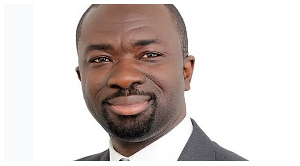
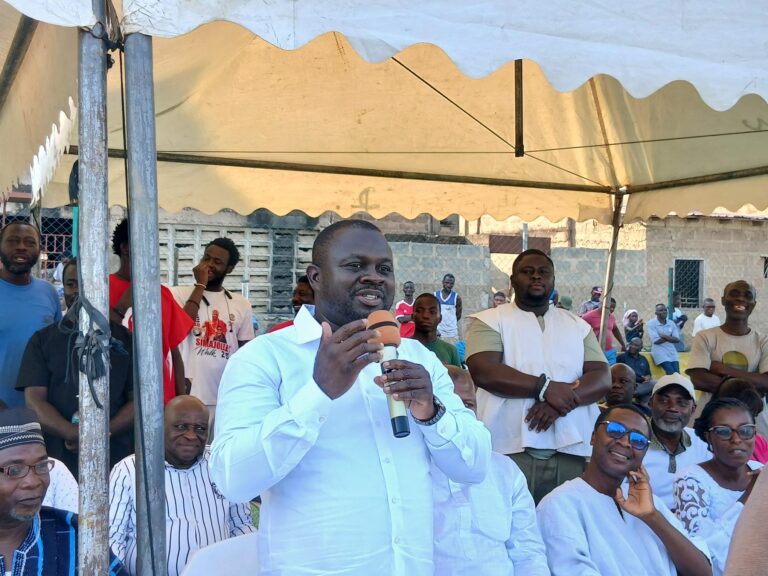
The Member of Parliament for Manhyia South, Nana Agyei Baffour Awuah, has cautioned Ghanaians to pay close attention to proposals to amend key constitutional provisions, warning that some of the recommendations could quietly clear the path for future extensions of presidential term limits.
Writing on Sunday, January 4, 2026, on the work of the Professor H Kwasi Prempeh Committee, the MP argued that the suggested changes to Article 290 of the 1992 Constitution, alongside the proposal to extend the presidential term from four to five years could fundamentally alter how presidential powers are checked in Ghana’s democracy.
According to Manhyia South legislature, “It may not be enough to simply vote ‘No’ if a referendum is held on extending the presidential term. Ghanaians must also ensure that any proposal that weakens the entrenched protection around Article 66 is rejected.”
Article 66(1) currently states:
“A person elected as President shall, subject to clause (3) of this article, hold office for a term of four years beginning from the date on which he is sworn in as President.”
Baffour Awuah explained that under the existing constitutional arrangement, Article 66(1) forms part of the entrenched provisions and therefore cannot be amended unless subjected to a national referendum.
Removal of entrenched protection
However, he noted that the Committee proposes to remove Article 66(1) from the entrenched provisions, effectively making it easier to amend in the future.
“If adopted, the amendment would mean Article 66(1) could be changed not by the people in a referendum, but by two-thirds of Members of Parliament,” he warned. “In practical terms, only 184 MPs would be needed to extend the President’s term again at any time.”
The report, he argued, introduces a new category known as “semi-entrenched provisions”, but deliberately excludes Article 66 entirely, meaning the clause governing presidential tenure would automatically fall into the class of ordinary provisions.
“Once Article 66(1) is excluded from both entrenched and semi-entrenched provisions, it becomes non-entrenched by default,” he stressed. “That makes future term extensions legally easier, whether by design or inadvertence.”
Future Amendments Benefit a Sitting President
He further dismissed arguments that such an amendment could never benefit any sitting President, citing Article 107 of the Constitution.
“Those who believe the change cannot have a retrospective effect should read Article 107 carefully,” he said. “Its protections are limited and do not provide a blanket safeguard.”
Call for vigilance and transparency
The Manhyia South MP concluded by urging citizens, legislators and civil society to approach the reform process cautiously.
“We must not unknowingly create loopholes that undermine the spirit of term limits,” he added. “Safeguards exist for a reason to protect democracy, not convenience.
Baffour Awuah urged stakeholders, including Parliament, civil society, legal scholars and faith-based organisations, to scrutinise every clause of the review proposals rather than focusing only on headline recommendations.
He said constitutional change must be guided by national consensus, not political expediency.
“We must read beyond the surface and ask what each amendment ultimately empowers or removes,” he cautioned.
He further stressed that transparency in the review process was essential for building public trust.
According to him, citizens deserve clear explanations in plain language about what each proposed change means for governance and accountability.
“Reforms must not be shrouded in legal jargon that hides their true implications from ordinary Ghanaians,” he noted. “People must understand what they are voting for or against.”
The Manhyia South MP also called for patience, warning against rushing reforms that could permanently reshape the balance of power.
He argued that constitutions are meant to protect future generations, not serve short-term political goals.
“If we get this wrong, we may spend decades trying to correct avoidable mistakes,” he said. “Strengthening democracy requires vigilance and transparency every step of the way.”