The Story That Should Haunt Us All
It was just after dawn in a quiet farming village near Tadzewu. Mama Esi, a 72-year-old widow, had risen early to make her way to the district hospital. Her knees had been troubling her for weeks, and her daughter had finally saved enough for transport and consultation.
She never made it.
Halfway to the roadside, a speeding motorcycle—unregistered, unlicensed, and uninsured—struck her down. The rider, a teenage boy with no helmet and no training, fled the scene. By the time help arrived, Mama Esi was gone.
Her family buried her with borrowed money. The rider was later found, fined GH₵200, and released. No insurance. No justice. No accountability.
A National Pattern of Neglect
Mama Esi’s story is not an isolated tragedy. It is a symptom of a national failure to regulate the very vehicles that have become the backbone of rural mobility. Ghana is home to an estimated 2.5 to 3 million motorcycles and tricycles, yet up to 40% remain unregistered. These vehicles are essential for transporting food, goods, and people—but when left unregulated, they become instruments of chaos and death.
What the World Is Doing Right
Other nations have faced similar challenges—and acted decisively:
– Rwanda implemented a digital registration and GPS tracking system for all commercial motorcycles, reducing crime and improving tax collection.
– India mandates third-party insurance and helmet use, with biometric-linked licenses and vehicle registration tied to mobile apps.
– Vietnam launched a national motorcycle inspection program, phasing out old and unsafe bikes while offering subsidies for compliance.
These are not just safety measures—they are economic strategies. Ghana, too, can turn this crisis into opportunity.
A Policy for Progress: Register to Empower
A nationwide registration policy, when embraced and enforced by all Metropolitan, Municipal, and District Assemblies (MMDAs), can:
– Save lives by ensuring only trained, licensed riders operate roadworthy vehicles
– Generate revenue through road taxes, estimated at GH₵120 per vehicle, potentially yielding over GH₵300 million annually
– Create jobs in inspection, enforcement, insurance, and digital registration services
– Support planning by providing accurate data for transport infrastructure and safety campaigns
A Shared Responsibility: What Stakeholders Must Do
The DVLA must decentralize its operations, deploying mobile registration units to rural and peri-urban areas. It should simplify the process, reduce bureaucratic delays, and integrate biometric ID systems for traceability.
The Ministry of Transport must lead a national campaign—“Ride Right, Ride Registered”—with clear messaging, community ambassadors, and incentives for early compliance. This campaign should be backed by legislation that mandates registration and insurance for all two- and three-wheel vehicles.
MMDAs must see registration not as a burden, but as a revenue stream and a public safety imperative. Assemblies can partner with local chiefs, youth groups, and transport unions to organize mass registration drives, offer flexible payment plans, and enforce compliance through community by-laws.
The Ghana Police Service must shift from sporadic crackdowns to consistent, community-based enforcement. Officers should be trained to educate first, enforce second, and always act with fairness and transparency.
Civil society and the media must keep the spotlight on road safety, tell the stories of victims like Mama Esi, and hold institutions accountable. Advocacy groups can also support legal aid for victims’ families and push for stiffer penalties for unlicensed operation.
Riders’ Associations must take ownership of the solution. By registering their members, offering peer training, and collaborating with authorities, they can transform their image from rogue operators to responsible partners in national development.
From Tragedy to Transformation
Mama Esi’s death was preventable. So are the hundreds of others we lose each year to unregulated motorcycles and tricycles. Ghana cannot afford to look away any longer.
Let us honor her memory—not with silence, but with action. Let us register every ride, insure every journey, and build a transport system that values life, order, and opportunity.
The road to safety begins with a signature, a license plate, and the will to do better.
A Call for Immediate Action by Stakeholders
Ghana stands at a crossroads. The unchecked proliferation of unregistered motorcycles and tricycles is not just a transport issue—it is a national emergency. The time for debate has passed. The time for action is now.
The DVLA must urgently decentralize its operations. Mobile registration units should be dispatched to every district, especially in rural and peri-urban areas. The process must be simplified, digitized, and made affordable for first-time owners and youth cooperatives.
The Ministry of Transport must lead a bold, nationwide campaign—“Ride Right, Ride Registered”—with clear messaging, community ambassadors, and incentives for early compliance. This campaign should be backed by legislation that mandates registration and insurance for all two- and three-wheel vehicles.
MMDAs must embrace registration as both a safety measure and a revenue opportunity. Assemblies can organize mass registration drives at markets, lorry parks, and community centers. They must also enforce local by-laws that penalize unregistered operation and reward compliance.
The Ghana Police Service must shift from sporadic crackdowns to consistent, community-based enforcement. Officers should be trained to educate first, enforce second, and always act with fairness and transparency. Repeat offenders must face real consequences—not token fines.
Civil society and the media must keep the spotlight on road safety, tell the stories of victims like Mama Esi, and hold institutions accountable. Advocacy groups can support legal aid for victims’ families and push for stiffer penalties for unlicensed operation.
Riders’ Associations must take ownership of the solution. By registering their members, offering peer training, and collaborating with authorities, they can transform their image from rogue operators to responsible partners in national development.
Let this be the moment Ghana chooses order over chaos, safety over silence, and progress over paralysis. Let every stakeholder rise—not just to regulate, but to protect, empower, and build a transport system worthy of our people.
By Retired Senior Citizen
Creative Strategist & Editorial Contributor
Teshie-Nungua
[email protected]

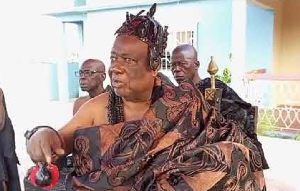 Nana Adu Ameyaw II is known in private life as Professor Emeritus Osei Kofi Darkwa