
Mahama–Kufuor visit signals reset of Ghana’s political culture – Dr. Apaak 3News
“We didn’t deserve to lose against Medeama SC” – Hearts of Oak coach Didi Dramani lament

Mas-Ud Didi Dramani, Head Coach of Hearts of Oak is perturbed for failing to harvest a point away in Tarkwa against Medeama SC on Sunday.
Medeama SC stunned the Phobias to remain top of the 2025/26 Ghana Premier league table. A scoreline of 1-0, kind courtesy Salim Adams, in the second department was brilliant to guide the host over Accra Hearts of Oak SC. Medeama SC midfielder Salim Adams find the net against his former club, Hearts of Oak in the 74th minute to silence them.
The Continental Club Masters who are amongst the few teams to record wins at the Tarkwa stadium fell short this time. The Rainbow lads had won two of their last three visits to Tarkwa and were hoping to win their fourth game at the away venue, however Coach Didi Dramani tasted defeat.
Accra Hearts of Oak entered Tarkwa as the team with the highest points accumulated in away games this season yet returned this time without a point.
Medeama SC going 13 games without a defeat and settling at the summit of the Ghana Premier League table with their last home league game, amassed a win for their numerous home fans.
For falling at a venue that has offered 6 points to Hearts of Oak SC, Didi Dramani says his side deserved a point and not lose to Medeama SC.
“I don’t think the better team won. We didn’t deserve to lose today against Medeama SC”
“We controlled greater part of the game, they also had their moment and I think they scored a very beautiful goal”
Didi Dramani admitted goalscoring is really a huge problem in his team; “Absolutely, goalscoring is really a problem. You saw the chance we had in the first half and the one in the second half. This chances you don’t miss them bit we’re still in work in progress”.
This defeat leaves Hearts of Oak SC 5th on the league standings with 17 round of matches with 28 points.
Their next game comes off in a week time away against Hohoe United FC – Sunday January 11, 2026.
New Regulatory framework brings stability to Ghana’s 10 billion dollar crypto market

The recent enactment of the Virtual Asset Service Providers (VASP) Bill, signed by President John Dramani Mahama on December 29, 2025, represents a definitive transition from reactive monitoring to active sovereign regulation.
This move officially integrates digital assets into the national financial framework, providing a structured “reset” for a sector that has operated in a legal gray area for nearly a decade. By codifying these activities, Ghana is not merely legalising a trend but is asserting its authority over a market that has already reached critical mass.
Economic Necessity Drives Legislative Action
The scale of Ghana’s digital economy made formalisation an urgent priority. Data from the Securities and Exchange Commission (SEC) reveals that transaction volumes surged to $10 billion (approx. 113 billion GHS) by November 2025, a sharp increase from the $6 billion (approx. 67.8 billion GHS) recorded in 2024. SEC Deputy Director-General Mensah Thompson described these figures as “extremely significant” and noted that they “cannot be ignored” by the state. The legislation addresses a period of national “overexposure” to unregulated crypto assets, where an estimated 3 million Ghanaians were participating without institutional safeguards.
A Collaborative Regulatory Architecture
The VASP law introduces a dual-oversight model that leverages the expertise of Ghana’s primary financial institutions. Under the new framework, the SEC and the Bank of Ghana (BoG) share responsibility for licensing and supervising service providers.
Governor Dr Johnson Pandit Asiama confirmed that this collaboration effectively ends “years of regulatory ambiguity,” bringing emerging activities within “clear, accountable, and well-governed boundaries.” The SEC will govern virtual asset exchanges and tokenisation, while the BoG focuses on broader financial stability and the potential integration of gold-backed stablecoins to support the Cedi. The Financial Intelligence Centre (FIC) joins this partnership to enforce international anti-money laundering and counter-terrorist financing protocols.
The Digital Shift: Business and Retail Impact
For the average Ghanaian, the law transforms a high-risk gamble into a legitimate economic tool. Dr. Cassiel Ato Forson, Minister of Finance, emphasised that the bill is about “unlocking the potential of our youth while ensuring their hard-earned money is protected from fly-by-night operators.” Local fintech entrepreneurs have welcomed the move, noting that regulatory clarity allows them to partner with traditional banks for the first time.
“This is the green light we’ve been waiting for,” says Paa Kwesi Adjei, a tech startup founder in Accra. “We can now build blockchain solutions for remittances and cross-border trade without the fear of sudden crackdowns. It changes everything for our credibility with international partners.”
The Diaspora Factor: Securing the Remittance Bridge
The law’s impact extends far beyond Ghana’s borders, offering a new level of security for the nearly 3 million Ghanaians living abroad. For the diaspora, the VASP framework serves as a “regulatory green light” to move away from expensive traditional remittance channels toward faster, blockchain-based solutions.
“For those of us in the U.K., sending money home has always been a balance of speed versus cost,” says Dr Araba Koomson, a tech investor based in London. “This law is the assurance we needed. By bringing crypto platforms under the Bank of Ghana’s supervision, the government has turned a ‘shadow’ market into a legitimate investment asset. I can now support Ghanaian fintech startups with the same confidence I have when investing in London or New York.”
Geopolitical Positioning and Investor Confidence
By formalising its virtual asset market, Ghana is positioning itself as a regional leader alongside other major African economies. This shift signals to international investors that Ghana offers a “safe, efficient, and transparent” environment. Notably, Governor Asiama provided further assurance to the public during a December 19 address by highlighting a “no-arrest” policy for legitimate traders, stating that “legitimate trading is now a protected economic activity.” This legal shield is expected to foster a new wave of institutional investment and lower cross-border payment costs for small businesses. Broad bipartisan support in Parliament and backing from the Presidency further solidify Ghana’s reputation as a stable hub for digital finance.
Prioritising Consumer Protection and Market Integrity
A central pillar of the new legislation is the commitment to safeguarding the public from fraud. Thompson noted that the “most consultative bill” ever passed by the government was specifically designed to identify and close loopholes. This oversight extends to digital marketing; the SEC has explicitly warned that unlicensed celebrities and influencers promoting crypto assets without authorisation will face strict sanctions. Moving into 2026, the SEC and the BoG will roll out the National Virtual Asset Literacy Programme to ensure that every citizen understands the risks and rewards of the new digital frontier.
Operational Timeline and Compliance
Regulators plan to issue detailed guidelines and regulatory instruments in early 2026. These rules will specify capital requirements, risk management standards, and mandatory reporting obligations for all VASPs. The newly established Virtual Assets Regulatory Office (VARO) within the Bank of Ghana will lead the supervisory effort. Existing operators must prepare for a phased licensing process beginning in the first quarter of 2026. This period marks the final transition from voluntary registration to mandatory legal compliance.
The Cost of Modernity
Ghana’s embrace of the VASP framework is an act of economic pragmatism rather than a simple endorsement of decentralised finance. By choosing to regulate a $10 billion (approx. 113 billion GHS) shadow market, the Mahama administration has acknowledged that digital assets are now an inseparable component of West African commerce.
This law achieves a delicate balance: it grants individuals the freedom to innovate while equipping the state with the tools to prevent systemic contagion. Success will now depend on the efficiency of the SEC and Bank of Ghana in processing licenses without stifling the very startups that the law aims to protect. If executed with transparency, Ghana’s “crypto-pivot” may serve as the definitive blueprint for emerging markets seeking to harmonise innovation with national security.
DISCLAIMER: The Views, Comments, Opinions, Contributions and Statements made by Readers and Contributors on this platform do not necessarily represent the views or policy of Multimedia Group Limited.
DISCLAIMER: The Views, Comments, Opinions, Contributions and Statements made by Readers and Contributors on this platform do not necessarily represent the views or policy of Multimedia Group Limited.
Importers and Exporters credit BoG for Cedi recovery, lower trade costs
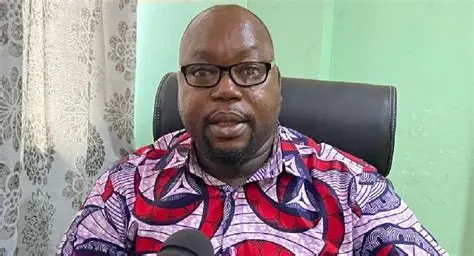
The Importers and Exporters Association of Ghana (IEAG) has come to the defence of the Bank of Ghana (BoG), describing recent criticisms of the central bank’s monetary operations as lacking context and technical understanding, while crediting BoG’s policies for the strong recovery of the Cedi and improved trade conditions in 2025.
Speaking at a media get-together and New Year engagement in Accra on Saturday, January 3, Executive Secretary of the Association, Samson Asaki Awingobit, said some public commentary surrounding alleged losses by the Bank of Ghana and the Gold Board had “clouded public appreciation” of the central bank’s role in stabilising the economy.
“While robust public discourse is vital in a democratic society, we at IEAG believe that some negative reportage has lacked context and technical nuance, ultimately clouding public appreciation of the BoG’s strategic contributions to economic stability, growth, and the Cedi’s performance,” he stated.
According to the IEAG, Ghana’s currency experienced a significant turnaround in 2025 following earlier depreciation, appreciating strongly as a result of coordinated policy interventions and improved market confidence.

“By mid-2025, the Cedi had strengthened by over 40 per cent against the US dollar, significantly easing the cost of imports and reducing exchange-rate induced cost pressures on traders,” Mr Awingobit noted.
He explained that the stronger Cedi translated into direct relief for importers who depend on foreign inputs and finished goods for domestic distribution and manufacturing.
The Association attributed the currency’s performance to improved foreign exchange buffers and a rebound in export earnings, noting that gross international reserves rose to over $11 billion by mid-2025, providing nearly five months of import cover.
“These outcomes demonstrate that Ghana’s macroeconomic groundwork, anchored by robust monetary policy, has restored confidence and enhanced stability in foreign exchange markets,” the IEAG Executive Secretary said.
From the perspective of importers and exporters, Mr Awingobit stressed that the appreciation of the cedi was not accidental but reflected deliberate policy choices.
“The observable appreciation of the cedi is not accidental but reflects disciplined monetary policy, improved market confidence, and heightened foreign exchange market activity that supported stronger market fundamentals,” he stated.
He added that strong export performance, including significant trade surpluses and an estimated 60 per cent growth in export earnings in the first part of 2025, helped ease pressure on the local currency and reduced the cost of doing business.
The Association also used the occasion to publicly acknowledge the Bank of Ghana for what it described as steady stewardship during a challenging economic period.
“While no institution operates without challenges, the technical, statistical and observable outcomes speak to a central bank that has been purposeful in supporting macro-economic resilience, trade continuity, and currency stability,” Mr Awingobit said.
Looking ahead, the IEAG expressed optimism about Ghana’s economic outlook in 2026, calling for continued prudential monetary policy and closer engagement between policymakers and the private sector to sustain confidence and expand trade volumes.
The Association further appealed to the media to adopt balanced and informed reporting on economic issues, particularly those affecting currency stability and key state institutions.
“Your continued support in accurate, contextual reporting is invaluable to building Ghana’s economic narrative,” Mr Awingobit added.
Trading loss is commercial, not administrative – Bright Simons tells GoldBod
Ghana, Germany deepen economic partnership: A new era of investment, cooperation

President John Dramani Mahama has stated that his team had built a solid economic foundation in 2025 and pledged to work hard to accelerate and expand it in 2026.
“My dear compatriots, as satisfying as our achievements of 2025 are, they are but the foundation. The architecture of the Ghana we want must now be built on this foundation. In 2026, we shall accelerate and expand,” President Mahama declared.
This optimism was contained in his televised New Year’s message he delivered on January 1, 2026.
Since taking over the helm of affairs on January 7, 2025, inflation has declined from 23 per cent to 6.3 in November, and the local currency, the Ghana Cedi, appreciation by 40.6 per cent against the US dollar over the period amongst other positive economic indicators.
The indices, President Mahama said were accelerating economic growth and creating opportunities for Ghana’s young people.
“We have restored business confidence and have seen a significant increase in both domestic and foreign direct investment. We have restored Ghana’s credibility with international partners, successfully completed the renegotiation of our debt obligations on terms that protect our sovereignty while ensuring sustainability,” he stated.
“This is our moment. This is Ghana’s moment to lead,” he emphasised.
To fellow African countries, President Mahama said Ghana’s story was part of Africa’s renaissance, noting that the challenges faced were not unique, but the common inheritance of shared history and the collective responsibility of a shared future.
“We in Ghana have proved in 2025 that democracy works, that peaceful transitions of power strengthen us rather than weaken us, and that African solutions to African problems are not just slogans but achievable realities. As Ghana rises, we extend our hands to our neighbours and partners across Africa. Together, we shall build the Africa we want,” he underlined.
According to President Mahama, government is beginning the process of ending the three-year extended credit facility agreement with the International Monetary Fund with “dignity, not as supplicants, but as partners”.
Ghana’s image in the international community, he noted, has been positively boosted by Government’s “world-acclaimed” Reset Agenda which involves a new way of looking at things both domestically and globally; an agenda which is delivering a leaner and more efficient administration, greater accountability and a reenergised fight against corruption.
Additionally, President Mahama assured that government would continue to keep a tab on the economy in order to ensure it delivered in the areas of education, health, infrastructure, agriculture, and energy, amongst other areas.
He said government would see through the amendment of the 1992 to make it a greater guide for the consolidation of Ghana’s democracy.
With a rallying call on the youth, entrepreneurs and business leaders, civil society, media, watchdog institutions, traditional leaders and faith-based communities, public servants, and the diaspora community, he stated that “governments do not build nations alone. They do that with the citizenry”.
In the view of President Mahama, Ghana and its citizens have only one destiny; a wish to see the country progress irrespective of political, religious or ethnic considerations.
“Let us reject the politics of division and embrace the patriotism of nation-building. Let us disagree without being disagreeable. Let us compete in the marketplace of ideas without treating our opponents as enemies. The challenges we face are too urgent, and the opportunities before us are too precious for us to waste time and energy on needless conflict,” he preached.
President Mahama envisaged a Ghana where every child achieves their dreams, hard work rewarded, corruption punished, young people given the opportunity, senior citizens live in dignity, the sick are cared for, the vulnerable protected, and the country respected for the quality of its democracy, the vibrancy of its economy, and the character of its people.
“This is not wishful thinking. This is the Ghana we are building together. This is the Ghana that is within our reach. As we enter 2026, let us move forward with confidence, determination, and faith. Faith in God, faith in Ghana, and faith in ourselves,” he rallied.
GHANA and Germany deepen economic partnership in 2026
Ghana is rapidly positioning itself as Africa’s most compelling investment destination, combining political stability, progressive reforms, and privileged access to the 1.4 billion-consumer African Continental Free Trade Area (AfCFTA) market.
In recent months, a series of high-level engagements between Accra and Berlin — culminating in the state visit of German President, Frank-Walter Steinmeier, the Ghana–Germany Business Roundtable, and a targeted investment webinar for the German business community — have injected fresh momentum into bilateral economic relations.
German President Frank-Walter Steinmeier’s landmark visit to Ghana
In a powerful reaffirmation of Germany’s commitment to West Africa’s most stable democracy, President Steinmeier undertook an official state visit that blended symbolism with substantive financial pledges.
During the visit, he announced €65 million (approximately GH¢823 million) in new German development cooperation funding, pending Bundestag approval, focused on renewable energy, technical and vocational training, and youth employment; pillars that align seamlessly with President John Dramani Mahama’s “Reset Agenda” for sustainable industrialisation.
Tributes and Green-Tech Investments
President Steinmeier’s itinerary included a moving tribute at the Kwame Nkrumah Memorial Park, underscoring Germany’s respect for Ghana’s historic role in African independence and Pan-Africanism.
He also inaugurated a €5.6 million Green Tech Centre at Kumasi Technical University, a state-of-the-art facility designed to drive research, innovation, and skills development in renewable energy technologies.
Ghana–Germany Business Roundtable: Building Investor Confidence
The Business Roundtable, co-chaired by senior officials from both nations, provided German enterprises with direct access to Ghana’s leadership.
Mr Simon Madjie, CEO of the Ghana Investment Promotion Centre (GIPC), reassured participants that ongoing tax regime reforms, including the newly established Tax Appeal Board, are enhancing transparency and predictability.
Germany’s Trade Interest in Key Sectors
Dr Thomas Steffen, Secretary of State at Germany’s Federal Ministry for Economic Affairs and Energy, praised Ghana’s peace and governance record while signalling strong interest in expanding bilateral trade and investment, particularly in:
- Green technologies
- Pharmaceuticals
- Agribusiness
GIPC Investment Webinar: Targeted Outreach to German Investors
Complementing the state visit, GIPC hosted a high-impact virtual webinar exclusively for the German business community, organised in partnership with Afrika Verein der deutschen Wirtschaft.
The webinar showcased priority national projects including:
• 24 Hour Economy and Accelerated Export Programme
• Volta Economic Corridor
• Big Push infrastructure programme
• Black Star Experience tourism initiative
• Marine Drive Project
• Agriculture for Economic Transformation
• Digital Jobs Initiative
Investor Incentives for German Businesses
Participants received detailed briefings on Ghana’s generous incentive package:
- Tax holidays
- Full repatriation of profits
- Investment guarantees
- Streamlined business registration through GIPC
Diplomatic Support & ESG Alignment
H.E. Professor Ohene Adjei, Ghana’s Ambassador to Germany, pledged full backing of the Berlin Mission in deal facilitation and market intelligence.
GIPC also emphasised its ESG-compliant investment focus and highlighted its newly created Regional and Global Operations Division, collaborating with Ghana’s 71 diplomatic missions worldwide to support investors at every stage.
Clean-Tech Collaboration & Trade Platforms
Khadi Camara, Deputy Head of Countries & Markets at Afrika Verein, welcomed the initiative and flagged the upcoming Clean Technology Trade Fair as a key platform for German clean-tech firms to engage with Ghanaian counterparts.
German investors were encouraged to act swiftly.
A Partnership Primed for Growth
The engagements signal a new chapter in Ghana–Germany relations defined by:
- €65 million funding support for green energy and youth skills development
- €5.6 million Green Tech Centre in Kumasi
- Improved tax transparency and investor protection frameworks
- Strategic alignment between Germany’s development priorities and Ghana’s Reset Agenda
As President Mahama stated during the Roundtable:
“Ghana is not just open for business – we are ready to partner for shared prosperity.”
For German enterprises seeking stable, high-growth opportunities in Africa, Ghana offers an unmatched combination of political stability, progressive policy, and proactive investment facilitation.
Email: rapetorgbor@ gmail.com
SOURCE: RAPHAEL APETORGBOR, POLICY ANALYST AND COMMUNICATIONS SPECIALIST
🔗 Follow Ghanaian Times WhatsApp Channel today.
🌍 Trusted News. Real Stories. Anytime, Anywhere.
✅ Join our WhatsApp Channel now!

‘Paulo Will Not Like This’

Nollywood actress, Iyabo Ojo, has sparked reactions from netizens after a video of her and a male colleague, Oluwole Akeem Cole, also known as Baraka, surfaced online.
Naija News reports that the movie stars attended the All-White New Year Party Fest of the Fuju musician, King Wasiu Ayinde Marshal, better known as K1 De Ultimate.
In the video shared by CityEdgeTV on Instagram, Baraka, popularly known for rugged and street-style roles in Nollywood movies, was seen hugging Iyabo Ojo before engaging in a conversation with her.
During their discussion, Baraka wrapped his arms around Iyabo Ojo’s waist and, at some point, briefly hugged her tightly before pulling apart.
As expected, some netizens expressed their thoughts on the gesture, while some dismissed the moment as harmless and friendly, others suggested that Iyabo Ojo’s partner, Paulo Okoye, also known as Paulo, might not be pleased with the closeness displayed in the video.
pevelyn68 said: “Queen mother’s P.A is always alert. I like the guy.”
arpitksafezone wrote: “I no fit lock in a position like this with woman, will not be comfortable as in even if am in that position, no eye contact, only my woman.”
bb_banna said: “Paulo no get like these settings O..iyabo don high.”
fashipemonolape commented: “If oga Paulo catch you.”
imisi86 wrote: “I mean what’s here no to smile about? They love her❤️❤️❤️we love her”
big11836 said: “All of them just they use style collect current”
mrsrashy commented: “They no dey respect married women for this side o”
Krontihene Abo-Dade III has not been destooled – Asuom royal family

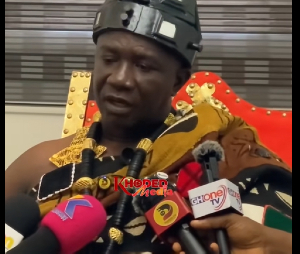 Nana Amponim Abo-Dade III is said to have been destooled after he criticised the NPP and Akufo-Addo
The Mmerewasan royal family of Akyem Asuom in the Eastern Region has refuted claims that Nana Boadi Amponim Abo-Dade III has been destooled as Krontihene of Asuom.
The royal family, therefore, urged the people of Asuom and the general public to disregard such information, stressing that Nana Boadi Amponim Abo-Dade remains the legitimate Krontihene in the community.
Nana Abo-Dade (known in private life as Kwasi Raingold) is alleged to have been destooled by the Chief of Asuom, Osabarima Ofosuhene Apenteng II, after expressing disappointment in former President Nana Addo Dankwa Akufo-Addo’s administration shortly after the 2024 general elections.
In a scathing attack, he openly condemned former President Nana Addo Dankwa Akufo-Addo’s administration while expressing unwavering support for the then President-elect, John Dramani Mahama.
In December 2025, the traditional leader allegedly criticised the New Patriotic Party (NPP) presidential hopefuls, describing all five as “sankwas” (unfit for the role), suggesting none had the necessary qualities to lead Ghana as president.
He argued that the NPP has seen a decline in leadership quality compared to the party’s past leadership.
Opanyin Kofi Agyapong, head of the Asuom Asona Mmerewasan family, has debunked the alleged destoolment, urging the public to treat such pronouncements with caution.
Why the five NPP presidential candidates don’t qualify to be president – Obo-Dade III explains
At a family gathering in Asuom on Saturday, January 3, 2026, he challenged the purported traditional ritual performed for the destoolment of the Asuom Krontihene.
“We only heard on the radio that Nana Boadi Amponim Abo-Dade, Krontihene of Akyem Asuom, has been destooled. I put it on record that no one has performed any ritual to destool Abo-Dade as Krontihene, and he remains the legitimate Krontihene of Asuom,” he reiterated.
Opanyin Agyapong explained that Nana Boadi Amponim Abo-Dade can only be destooled by the Mmerewasan royal family and that no one, not even the Chief of Asuom, Osabarima Ofosuhene Apenteng, could do that.
Opanyin Kofi Amoako (Alhaji), head of the Mmerewasan royal family, affirmed the position taken by Opanyin Agyapong and the entire family.
He questioned the legitimacy of Osabarima Ofosuhene Apenteng and his capacity to pronounce the Krontihene stool vacant.
Opanyin Amoako was resolute in his determination to restore peace in the area and appealed to the youth to remain calm and allow the law to take its course.
The youth attributed the lack of development in the area to persistent and unresolved chieftaincy issues and appealed to Osagyefo Amoatia Ofori Panin, Overlord of the Akyem Abuakwa traditional area, to intervene to ensure lasting peace in Akyem Asuom.
Meanwhile, watch President John Dramani Mahama’s 2026 full New Year Message below:
Meanwhile, watch as Rev. Owusu-Bempah drops major prophecies for 2026
Bank of Ghana introduces new regulatory guidelines for international money transfer companies

The Bank of Ghana has issued comprehensive new regulations governing the registration and operations of all International Money Transfer Operators (IMTOs), facilitating money flows into the country.
The “Guidelines for the Registration and Operations of International Money Transfer Operators (IMTOs) in Ghana,” dated December 2025, establishes a rigorous framework aimed at strengthening oversight, consumer protection, and the integrity of the vital remittance sector.
Citing remittances as “a vital pillar of Ghana’s socio-economic development,” the Central Bank states the evolving digital landscape necessitates a “robust regulatory framework” to uphold public trust and safeguard financial stability. The guidelines apply universally to IMTOs, banks, payment service providers, and any institution approved to terminate inward remittances.
A cornerstone of the new regime is a strict licensing process. Prospective IMTOs must already be licensed in their home country and submit a detailed application to the Bank of Ghana, including shareholder structures, profiles of ultimate beneficial owners, and internal control systems.
The Bank pledges to grant or refuse an application within “ninety (90) days” of receiving a complete submission. Crucially, the issued “registration status accorded to an IMTO shall not be transferable.”
Operationally, the guidelines impose significant restrictions. Registered IMTOs are confined strictly to inward remittance services on a “person-to-person transfer” basis.
They are explicitly prohibited from a suite of financial activities, including outbound international transfers, deposit-taking, lending, and forex trading. In a major shift, IMTOs shall not “allow termination of inward remittances into business/corporate accounts,” mandating payouts only to individuals.
Furthermore, the Bank of Ghana has mandated specific settlement rules. All inward transactions must be settled in Ghana Cedis through a designated bank account. The conversion rate must use the “Average Opening Bloomberg USD/GHS Regional (REGN) bid–ask range, or the corresponding Currency Pair Rate range” on the day the transfer is received for same-day conversion.
Compliance obligations are stringent. IMTOs and their agents must collect detailed transaction data, including the purpose of transfer and beneficiary gender, and maintain records for at least six years. Monthly electronic data returns must be submitted by the “ninth (9th) working day of the ensuing month,” while suspicious transaction reports must be filed within 24 hours.
The guidelines also enforce a clear chain of accountability. While IMTOs must operate through approved agent banks or payment service providers, they bear ultimate responsibility for compliance. All agents must operate under a formal Service Level Agreement, and IMTOs are required to “monitor compliance of their agents with AML/CFT/CPF requirements.”
Sanctions for non-compliance are severe, ranging from fines—such as an administrative penalty of not less than 1,000 penalty units for unauthorised material changes—to suspension and outright de-registration. Existing operators have a three-month transitional period to align with the new rules upon publication.
“The operations of an IMTO and their agents shall be guided by a Service Level Agreement (SLA) specifying the terms and conditions of the partnership,” the document states, underscoring the formalised relationships now required within the remittance ecosystem.
Ghana Premier League: “Medeama deserved to finish on high” – Ibrahim Tanko

Medeama SC finished the first half of the season on top of the league following a slim yet important 1-0 win over Hearts of Oak in week 17.
The two time FA Cup winners collected all three points after Salimd Adams scored the only goal in the 64th minute at the Tarkwa TnA Park on Sunday.
Head coach of Medeama SC, Ibrahim Tanko addressed the important victory at the end of the game.
“It’s very important, I mean the game was really tactical and we had to dig our minds into the ninetieth minute but I think we had most of the ball, we possessed very well and kept controlling the game and I think it’s a deserved win for us,” Ibrahim Tanko said.
The former Ghana U-23 coach opened up on the tactics that helped his side rake in the win over Hearts of Oak.
Kotoko dropped to third on league table with 30 points
“I told the players that we are doing everything right right, the only thing we had to do was to use our chances and then I think Salim Adams did it very well and three points very happy.”
Medeama’s win over Hearts of Oak made it 14 games without a defeat, keeping them at the top on 34 points, two better than reigning champions GoldStars after 17 games.
Asante Kotoko dropped to third on the league table with 30 points after suffering a 2-1 loss at All Blacks on Sunday with two time winners Aduana FC surprisingly losing 1-0 at home to Vision FC.
Unlike someone, Mahama wouldn’t say ‘stand before you greet me’ – Owusu Bempah jabs Akufo-Addo

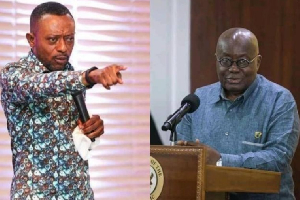 Rev Owusu-Bempah (L) takes subtle swipe at President Akufo-Addo (R)
The founder and leader of the Glorious Word Power Ministries, Rev Isaac Owusu Bempeh, had nothing but praise for President John Dramani Mahama while speaking to his congregation on Sunday, January 4, 2025.
He said that he would continue to pray for Mahama so that he can continue the good works he has started, which every Ghanaian can attest to.
He asserted that the thing he admires about Mahama the most is the president’s humility, citing a viral video of him (Mahama) sitting among the worshippers at his church.
“When I speak about the president, please understand why I do so. When you go before the Lord, pray for the president of Ghana, and continue to do the good works without blemish, spotless. I admire his humility, the way he does things, and the way he talks.
“He went to church, and when he got there, there was a presidential seat reserved for the seat he and his wife were supposed to sit on. But when he went there, he didn’t go and sit on that chair. He didn’t sit in the midst of the elders or pastors… He’s the president of Ghana, but he sat in the congregation like any member of the church,” Owusu Bempah said in the Twi dialect.
He then went on to take a subtle jab at the former President Nana Addo Dankwa Akufo-Addo, saying that Mahama would never order people to stand up before they could greet him.
“This is what we call humility. He does not make himself or think of himself more highly than he ought to. He wouldn’t say to you, ‘stand on your feet before you greet me,’” he said.
Even though Owusu Bempah did not directly mention Akufo-Addo’s name, the former president was heavily criticised for ordering some traditional rulers to stand before greeting him at public events while he was in office.
Owusu-Bempah blasts Akufo-Addo government, NPP over ‘broken’ promises
Watch a video of Owusu Bempah’s remarks below
Rev. Isaac Owusu Bempah eulogises H.E John Mahama @JDMahama. I like his HUMILITY and his GOVERNANCE, he doesn’t tell or order people to STAND up and GREET him 😂. The CHANGE we VOTED 🗳️ for 💯👏.#AbanPapaAba#JmWillDeliver pic.twitter.com/qu1TPnUIGe
— Aristotlektv (@aristotledada) January 4, 2026
BAI
Meanwhile, watch President John Dramani Mahama’s 2026 full New Year Message below:
Meanwhile, watch as Rev. Owusu-Bempah drops major prophecies for 2026